
British Gold Sovereigns: History, Specs, and Buying Guide
The British gold sovereign has been struck continuously since 1817, making it one of the longest-running gold coin designs in the world. According to the source, the modern sovereign carries 7.988 grams of 22-karat gold and bears Benedetto Pistrucci’s St. George and the dragon reverse — a design that has survived more than two centuries of monarchs, wars, and currency reforms.
Specifications below are sourced from Numista (catalogue entry N#1526 and related sovereign types). Historical details reflect the source’s catalogue data. This article is educational; it is not investment advice.
Weight and Metal Content
| Coin | Stated Metal + Weight | Mintage | Packaging |
|---|---|---|---|
| British Gold Sovereign (modern) | Gold (.9167 fine), 7.988 g total weight | Varies by year and monarch | Individual coin; often supplied in tubes of 25 |
| British Gold Half Sovereign (modern) | Gold (.9167 fine), 3.994 g total weight | Varies by year and monarch | Individual coin |
A Coin Born from the Great Recoinage
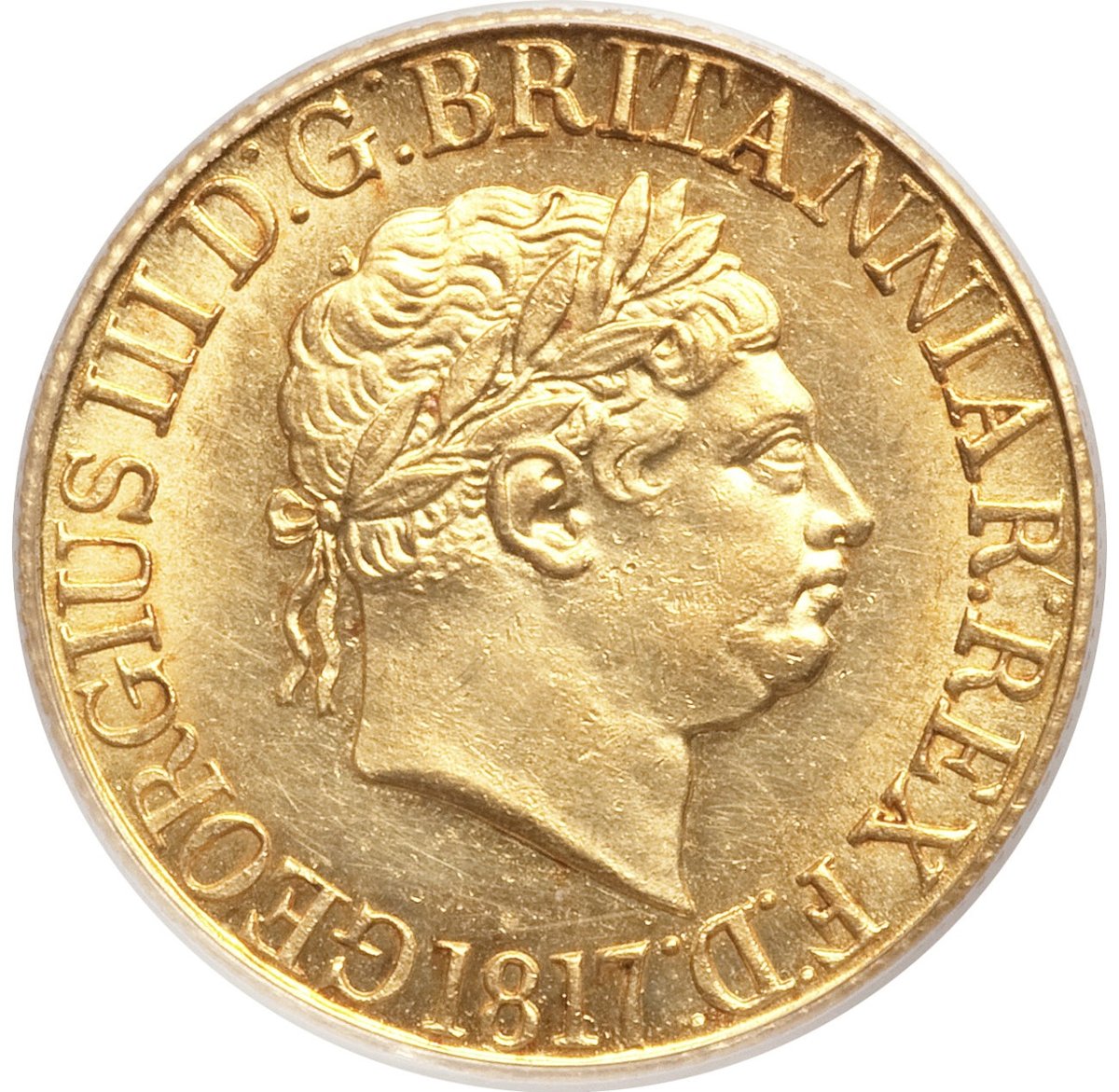
According to the source, the modern sovereign was introduced in 1817 as part of the Great Recoinage that followed the Napoleonic Wars. Britain moved to the gold standard, and the sovereign — valued at one pound sterling — became the backbone of British commerce and international trade for the next century.
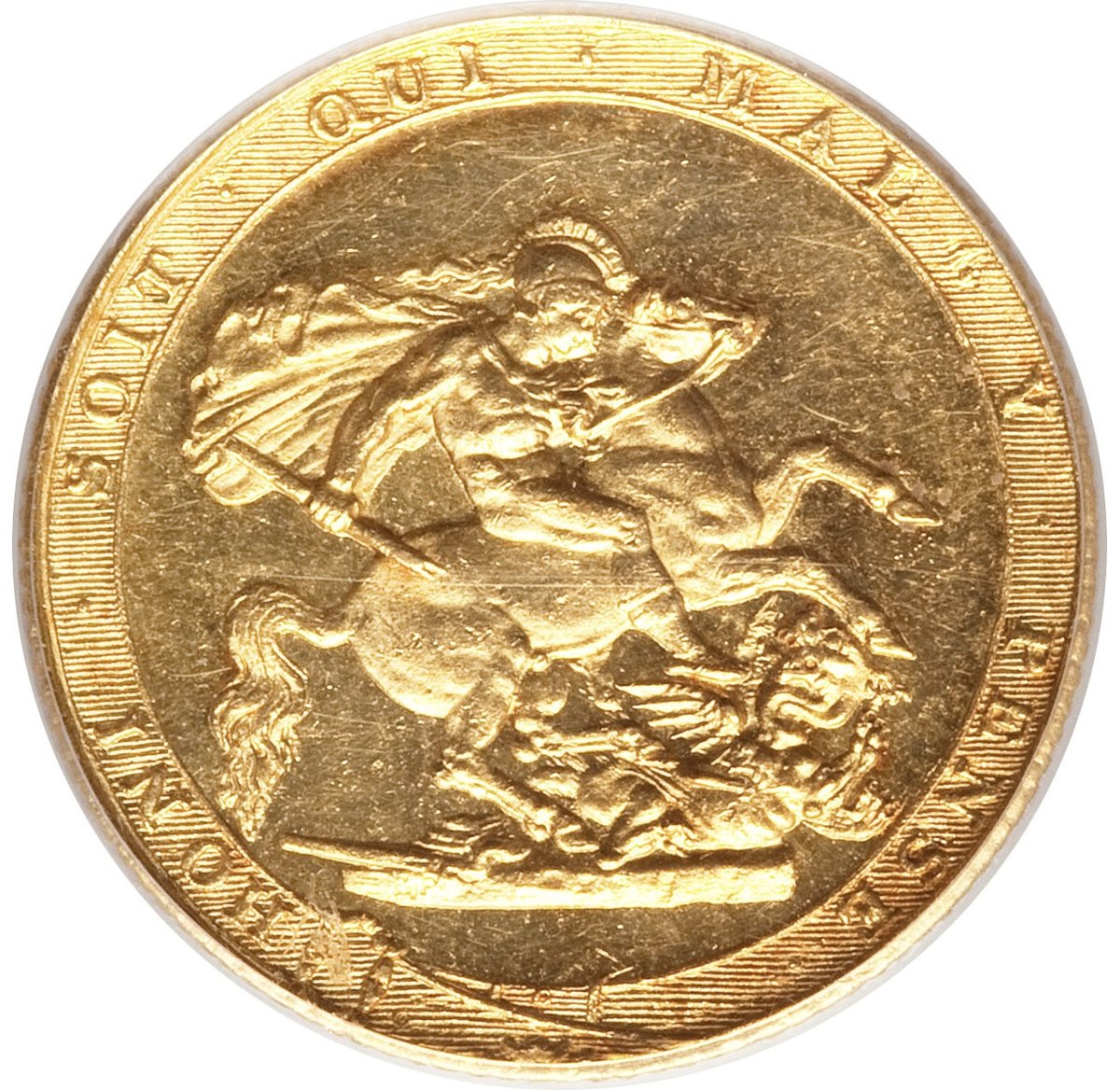
The source notes that Italian engraver Benedetto Pistrucci created the now-famous St. George and the dragon reverse for that first 1817 issue. The design proved so enduring that it remains on the sovereign’s reverse to this day, with only brief interruptions (shield-back reverses were used in parts of the Victorian era).
Branch Mints Across the Empire
According to the source, sovereigns were not struck only in London. As the British Empire expanded, branch mints opened to serve colonial gold rushes:
- Sydney (S mint mark) — struck sovereigns from 1855, identifiable by the S below the horse’s hoof on St. George reverses
- Melbourne (M mint mark) — struck sovereigns from 1872
- Perth (P mint mark) — struck sovereigns from 1899
- Ottawa (C mint mark) — struck sovereigns from 1908 to 1919
- Bombay (I mint mark) — struck sovereigns in 1918 only
- Pretoria (SA mint mark) — struck sovereigns from 1923 to 1932
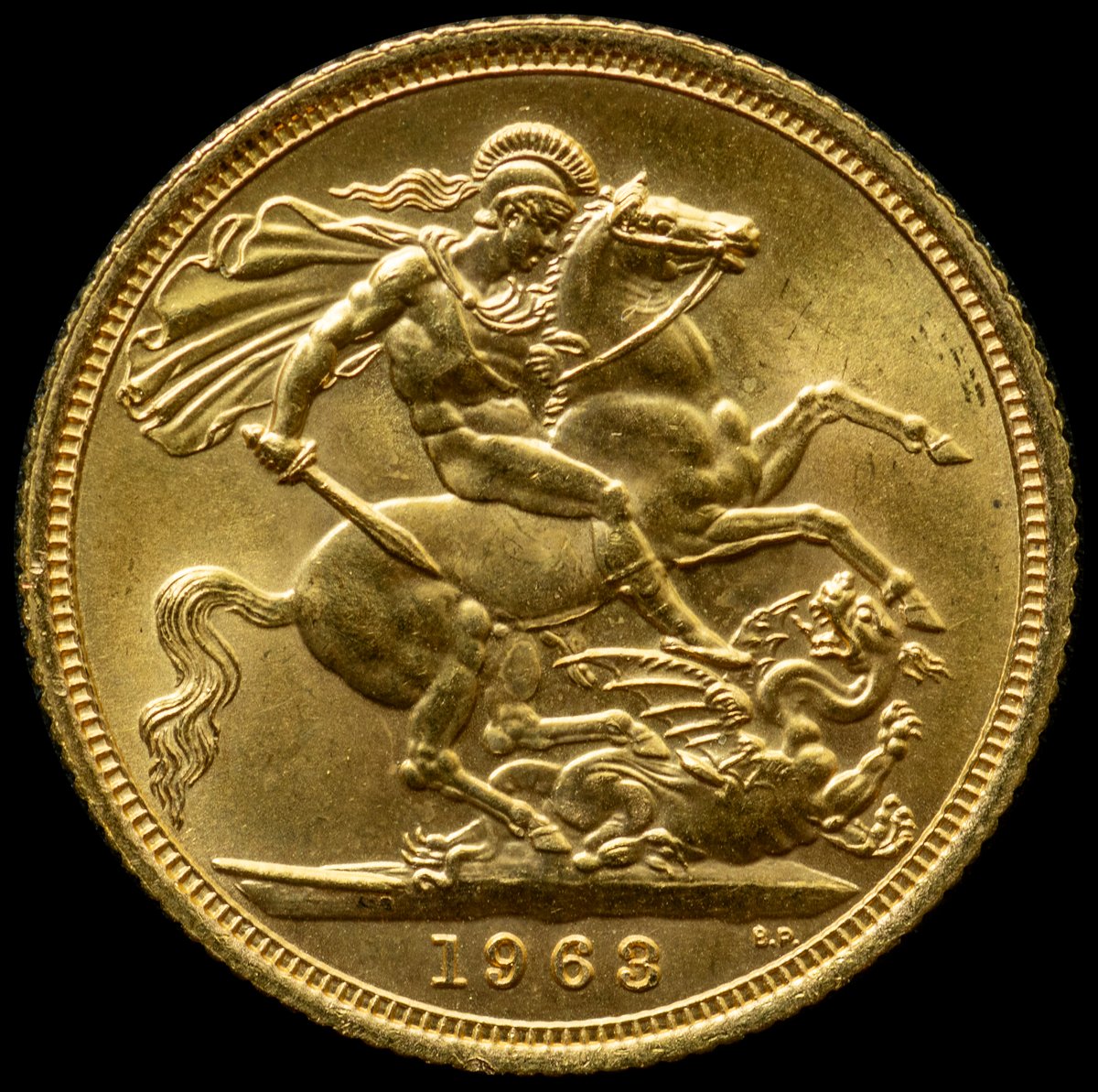
The source notes that mint marks appear below the horse’s right rear hoof on St. George reverse types — a key detail for attribution.
The Design Through the Monarchs
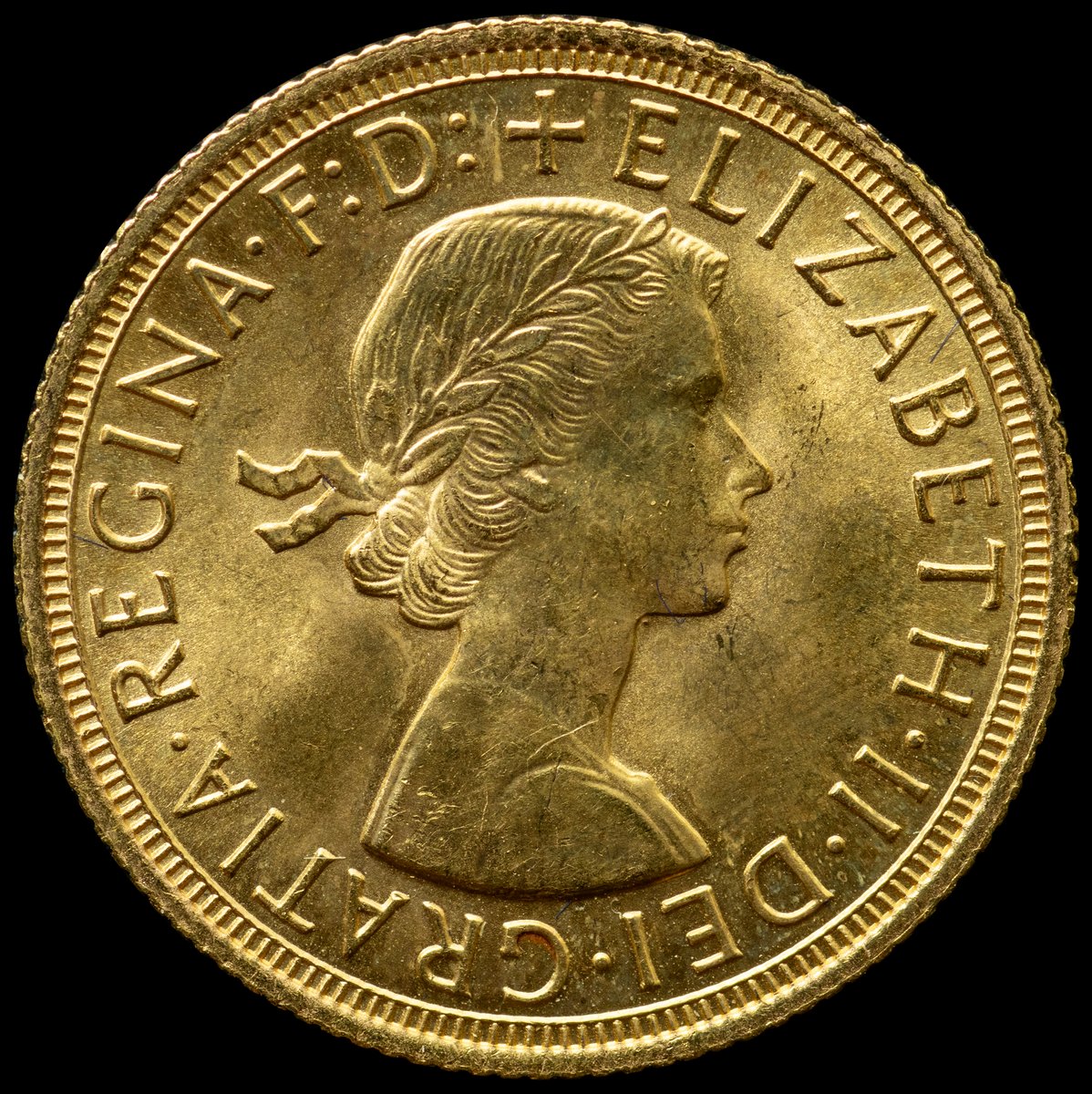
According to the source, the sovereign’s obverse has carried the reigning monarch’s portrait since 1817:
- George III (1817–1820) — laureate head by Pistrucci
- Victoria (1838–1901) — Young Head, Jubilee Head, and Old Head portraits across three major types
- Edward VII (1902–1910) — uncrowned portrait by George William de Saulles
- George V (1911–1932) — uncrowned portrait by Bertram MacKennal
- Elizabeth II (1957–2022) — Mary Gillick’s young portrait, later Machin and Rank-Broadley portraits
- Charles III (2023–present) — Martin Jennings portrait
Mintage and Format
According to the source, the sovereign’s standard weight is 7.988 grams (123.3 grains), with a pure gold content of approximately 7.3224 grams. The coin measures 22.05 mm in diameter and is struck in 22-karat gold (.9167 fine) — an alloy chosen for durability in circulation.
The source notes that sovereigns were struck for circulation until 1932, then resumed as bullion coins. Modern bullion sovereigns are struck to the same historic specifications, making them one of the few coins where a 2024 issue is dimensionally identical to an 1817 original.
What the Design Shows
According to the source, Pistrucci’s reverse depicts St. George — patron saint of England — on horseback, driving a broken lance into the dragon beneath the horse’s hooves. The date appears in the exergue below, and Pistrucci’s initials (B.P.) are visible at the right edge on most issues.
The source describes the obverse as carrying the reigning monarch’s portrait facing right (since Victoria, monarchs have alternated facing direction with each reign), surrounded by the Latin legend naming the sovereign.
What Buyers Should Verify
- Weight and diameter: a genuine full sovereign weighs 7.988 g and measures 22.05 mm — significant deviation suggests a counterfeit or a different denomination
- Non-magnetic: gold is not magnetic; a sovereign that sticks to a magnet is not genuine
- Edge: sovereigns have a milled (reeded) edge; check for uniformity
- Mint mark position: branch-mint sovereigns carry their mint mark below the horse’s hoof — verify it matches the claimed origin
- Date and portrait match: confirm the monarch’s portrait corresponds to the date (e.g., no Victoria portrait on a 1963-dated coin)
- Gold content: at .9167 fine, the coin contains approximately 7.32 g of pure gold — verify any “pure gold weight” claims against this figure
Bottom Line
According to the source, the British gold sovereign combines two centuries of continuous production, a universally recognized design, and a standardized gold content — qualities that have made it one of the most traded gold coins in the world. Whether struck in 1817 or 2024, every full sovereign carries the same 7.988 grams of 22-karat gold.
Frequently Asked Questions
How much gold is in a British sovereign?
According to the source, a full sovereign weighs 7.988 grams at .9167 fineness, giving approximately 7.3224 grams of pure gold content.
Who designed the St. George reverse?
According to the source, Italian engraver Benedetto Pistrucci designed the St. George and the dragon reverse for the sovereign’s introduction in 1817.
Are sovereigns still made today?
According to the source, the Royal Mint continues to strike bullion sovereigns to the historic specifications, and Charles III portrait sovereigns are the current issue.
What do the letters under the horse mean?
According to the source, letters below the horse’s hoof on St. George reverses are branch-mint marks: S for Sydney, M for Melbourne, P for Perth, C for Ottawa, I for Bombay, and SA for Pretoria.
Is the sovereign the same as a “pound coin”?
According to the source, the sovereign was historically valued at one pound sterling. It is a gold coin, distinct from modern base-metal pound coins.
Related Products
We carry British sovereigns spanning three reigns:
This article is for educational purposes. Specifications sourced from Numista. Images: Wikimedia Commons, public domain. Coin designs by the Royal Mint; St. George reverse by Benedetto Pistrucci, Elizabeth II portrait by Mary Gillick.