
Saint-Gaudens $20 Double Eagle: America’s Most Beautiful Gold Coin
The Saint-Gaudens $20 double eagle is widely considered the most beautiful coin ever struck by the United States. According to the source, sculptor Augustus Saint-Gaudens created the design at President Theodore Roosevelt’s personal request in 1907, and the coin carried 33.44 grams of .900 fine gold — nearly a full ounce of pure gold in every piece.
Specifications below are sourced from Numista (catalogue entry for the 1907 Saint-Gaudens double eagle, KM 126). Historical details reflect the source’s catalogue data. This article is educational; it is not investment advice.
Weight and Metal Content
| Coin | Stated Metal + Weight | Mintage | Packaging |
|---|---|---|---|
| $20 Saint-Gaudens Double Eagle (1907–1933) | Gold (.900 fine), 33.44 g total weight | Varies by year and mint | Individual coin; often certified in holders |
| 2009 Ultra High Relief Double Eagle | Gold (.9999 fine), 1 oz total weight | Modern commemorative issue | Original Mint packaging with box and papers |
Roosevelt’s Renaissance of American Coinage
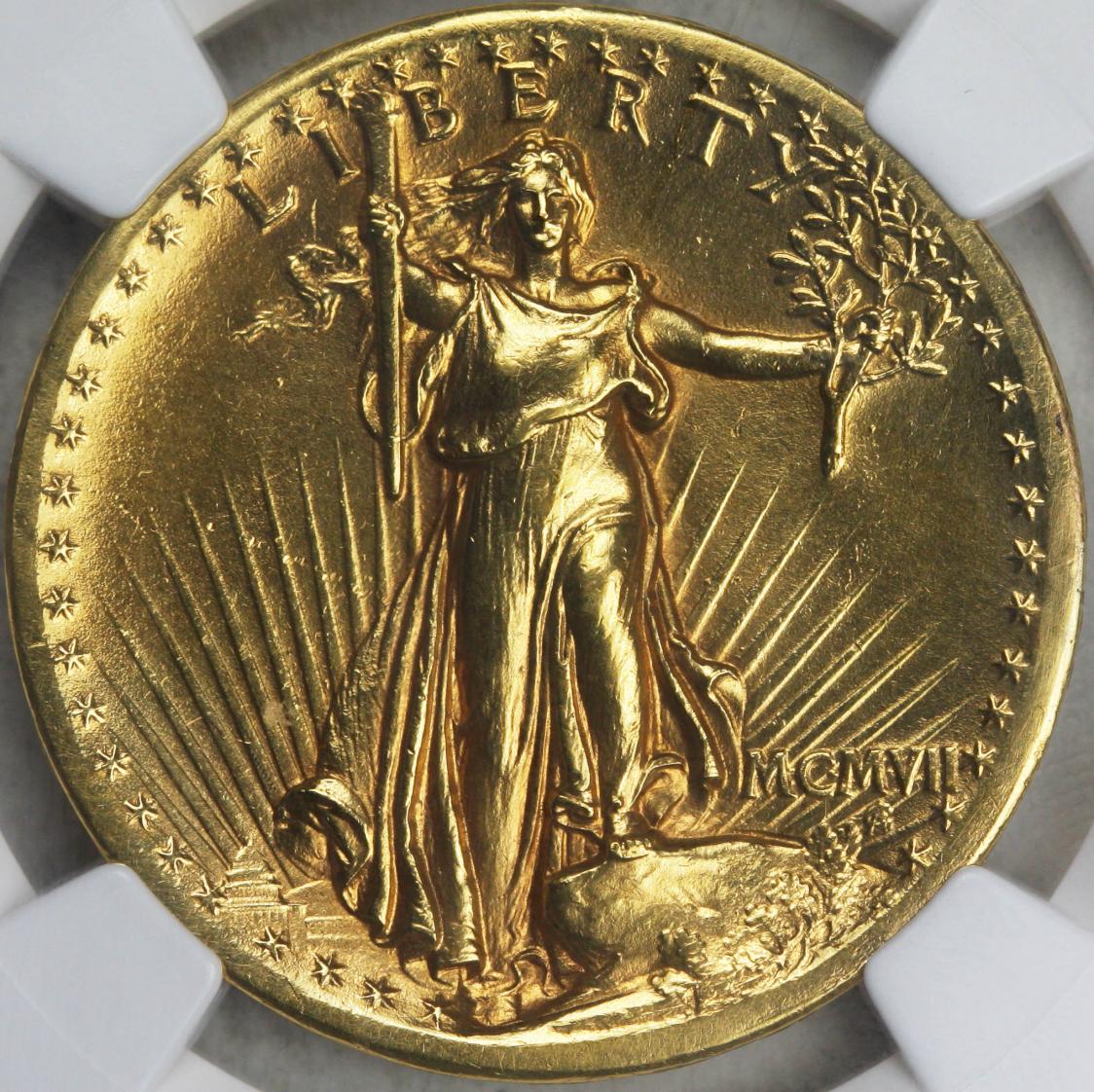
According to the source, the Saint-Gaudens double eagle was born from President Theodore Roosevelt’s dissatisfaction with American coin designs. Roosevelt believed U.S. coinage was artistically inferior to ancient Greek and Roman coins, and in 1905 he commissioned renowned sculptor Augustus Saint-Gaudens — famous for his Civil War monuments — to redesign the nation’s gold coinage.
The source notes that Saint-Gaudens produced a design of Liberty striding forward with a torch in one hand and an olive branch in the other, backed by the rays of the rising sun. The date appeared in Roman numerals (MCMVII), a classical touch that Roosevelt admired.
High Relief vs. Low Relief
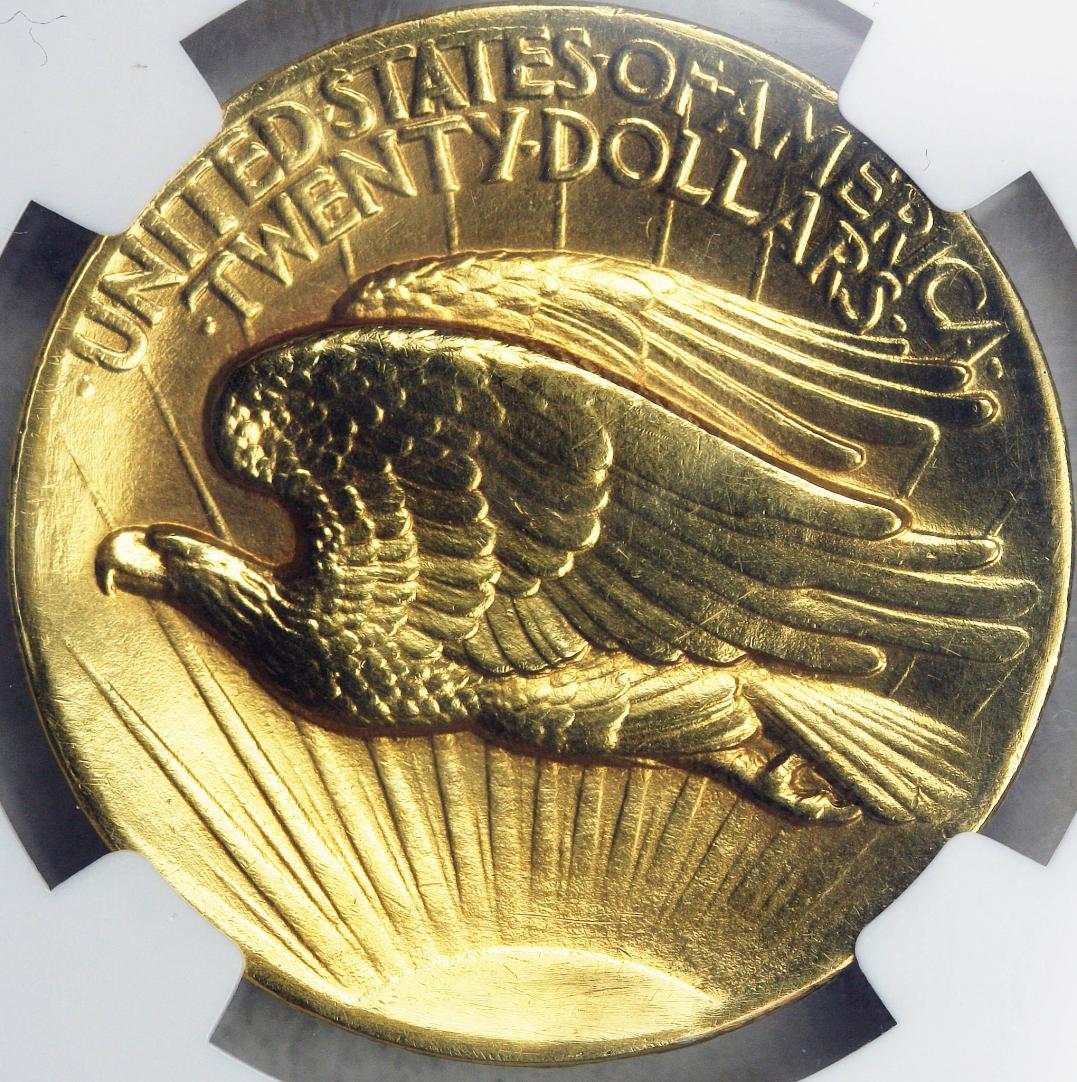
According to the source, Saint-Gaudens originally intended the coin to be struck in ultra-high relief, like an ancient Greek medallion. The first 1907 issues — the High Relief pieces — required multiple blows from the coining press to bring up the full design, making them impractical for mass production.
The source describes how the Mint quickly modified the design to a lower relief that could be struck with a single blow. The High Relief coins of 1907 are now among the most prized of all American gold issues, while the standard low-relief type continued through 1933.
The Design Through the Years
According to the source, the Saint-Gaudens double eagle was struck from 1907 to 1933:
- 1907 High Relief — Roman numerals date (MCMVII), no motto; wire rim and flat rim varieties
- 1907–1908 No Motto — Arabic numerals date, “IN GOD WE TRUST” absent (Roosevelt considered it sacrilegious on coinage; Congress overruled him)
- 1908–1933 With Motto — “IN GOD WE TRUST” added above the sun on the reverse
- Branch mints — Denver (D) and San Francisco (S) issues throughout; no Philadelphia mint mark
Mintage and Format
According to the source, the Saint-Gaudens double eagle weighs 33.44 grams (516 grains) at .900 fineness, giving approximately 0.9675 oz of pure gold content. The coin measures 34 mm in diameter with a reeded edge.
The source notes that production ended in 1933 when President Franklin D. Roosevelt took the United States off the gold standard. The 1933 double eagles were struck but never officially released; nearly all were melted, making surviving examples among the most famous rarities in all of numismatics.
What the Design Shows
According to the source, the obverse depicts Liberty as a classical figure striding forward confidently, holding a torch aloft in her right hand and an olive branch in her left — symbolizing enlightenment and peace. She is framed by the rising sun’s rays below and forty-six stars around the rim (representing the states of the Union in 1907).
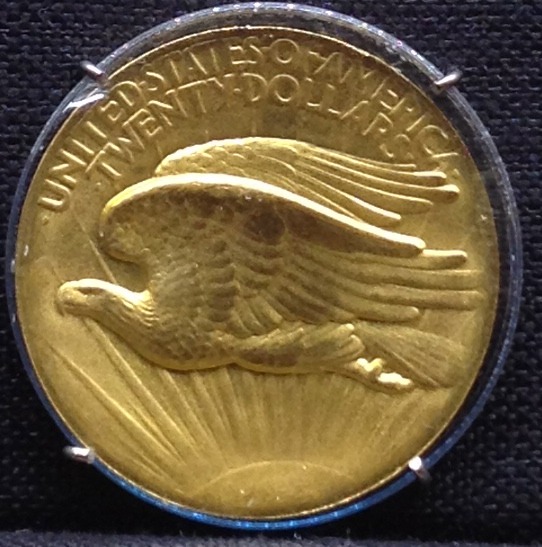
The source describes the reverse as an eagle in flight, wings spread, soaring over the sun’s rays with “UNITED STATES OF AMERICA” and “TWENTY DOLLARS” curved above. On motto issues, “IN GOD WE TRUST” arcs over the sun.
What Buyers Should Verify
- Weight and diameter: a genuine double eagle weighs 33.44 g and measures 34 mm — significant deviation suggests a counterfeit
- Gold content: at .900 fine, the coin contains approximately 0.9675 oz of pure gold — verify any gold-weight claims against this figure
- High Relief vs. standard: true 1907 High Relief coins have Roman numeral dates and distinctly sculptural relief; they command significant premiums over standard strikes
- Motto presence: 1907–1908 coins without “IN GOD WE TRUST” are the No Motto type; verify the motto matches the claimed date
- Mint marks: D (Denver) and S (San Francisco) appear on the obverse above the date; Philadelphia issues carry no mint mark
- Certification: given the values involved, third-party grading (PCGS or NGC) is strongly recommended — counterfeit double eagles are among the most commonly faked U.S. gold coins
Bottom Line
According to the source, the Saint-Gaudens double eagle combined nearly an ounce of gold with a design that redefined American coinage. From the sculptural 1907 High Relief pieces to the final 1933 issues, every Saint-Gaudens $20 carries the same 33.44 grams of .900 fine gold — and a design that remains unmatched more than a century later.
Frequently Asked Questions
How much gold is in a Saint-Gaudens double eagle?
According to the source, the coin weighs 33.44 grams at .900 fineness, giving approximately 0.9675 oz of pure gold content.
What is the difference between High Relief and regular Saint-Gaudens coins?
According to the source, the 1907 High Relief issues were struck with multiple blows to achieve deep sculptural relief, with the date in Roman numerals. Standard issues from late 1907 onward used lower relief for single-strike production.
Why is the 1933 double eagle so famous?
According to the source, 1933 double eagles were struck but never released after the U.S. left the gold standard. Nearly all were melted, and surviving examples are among the most valuable coins in the world.
Who designed the Saint-Gaudens double eagle?
According to the source, sculptor Augustus Saint-Gaudens designed the coin at President Theodore Roosevelt’s request as part of the 1907 coinage redesign.
Does the coin say “IN GOD WE TRUST”?
According to the source, the motto was added in mid-1908 after Congress mandated it. 1907 and early 1908 issues are the No Motto type.
Related Products
We carry Saint-Gaudens double eagles in multiple grades, plus the modern Ultra High Relief tribute:
This article is for educational purposes. Specifications sourced from Numista. Images: Wikimedia Commons, public domain. Coin design by Augustus Saint-Gaudens, commissioned by President Theodore Roosevelt.