
Athenian Owl Tetradrachm: The Ancient Silver Coin That Ruled Trade
The Athenian owl tetradrachm is the most famous silver coin of the ancient world — struck from the silver of the Laurion mines, it financed the Athenian navy, paid the builders of the Parthenon, and became the first truly international trade currency. According to the source, the classic type (circa 454–404 BC) carries about 17 grams of silver and pairs the helmeted head of Athena with her owl, an olive sprig, and a crescent moon.
Specifications below are sourced from Numista (catalogue entry N#34551, Athens tetradrachm 454–404 BC). Historical details reflect the source’s catalogue data. This article is educational; it is not investment advice.
Weight and Metal Content
| Coin | Stated Metal + Weight | Mintage | Packaging |
|---|---|---|---|
| Athenian Owl Tetradrachm (classical, 454–404 BC) | Silver, approx. 17.0–17.3 g | Varies; struck in enormous quantities over decades | Individual coin; certified examples often slabbed |
| Athenian Owl Tetradrachm (later “new style,” 2nd century BC) | Silver, approx. 16.8 g | Varies by magistrate issue | Individual coin; certified examples often slabbed |
The Coin That Built an Empire
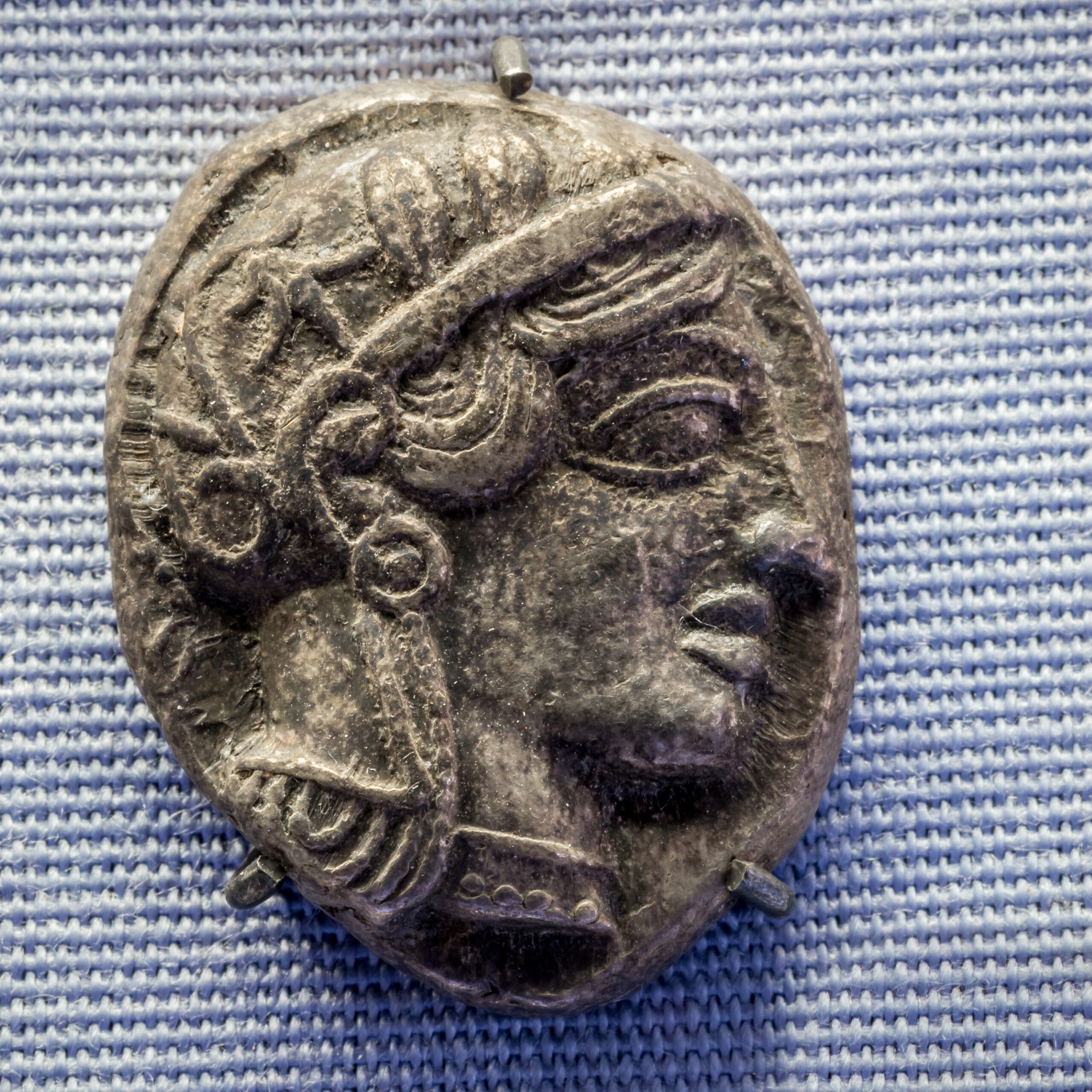
According to the source, Athens began striking large silver tetradrachms in the 6th century BC, but the famous “owl” design crystallized around the mid-5th century BC. The timing was no accident: Athens had just discovered fabulously rich silver veins at Laurion, in the hills southeast of the city. The statesman Themistocles persuaded the Athenian assembly to spend the windfall on a fleet of 200 triremes — the navy that would defeat Persia at Salamis in 480 BC.
The source notes that for the next century and more, Athenian tetradrachms poured out of the mint in staggering numbers. Because the coins were struck to a consistent weight and high purity, merchants from Egypt to Sicily accepted them without question. The owl became, in effect, the ancient Mediterranean’s reserve currency — the dollar of its day.
The Silver Mines of Laurion
According to the source, the Laurion mines were the economic engine behind the owl tetradrachm. Worked by tens of thousands of enslaved laborers in deep, narrow shafts, the mines produced silver that the Athenian state coined directly. The phrase “owls to Laurion” — meaning to bring something to a place already overflowing with it — survives from the comic playwright Aristophanes, a testament to how completely the coin and the mines defined Athenian wealth.
The source notes that the mines’ output funded not only the navy but the great building program of Periclean Athens, including the Parthenon itself. When the mines eventually declined, so did Athens’ power — a direct link between bullion supply and geopolitical strength that precious-metals buyers still recognize today.
What the Design Shows
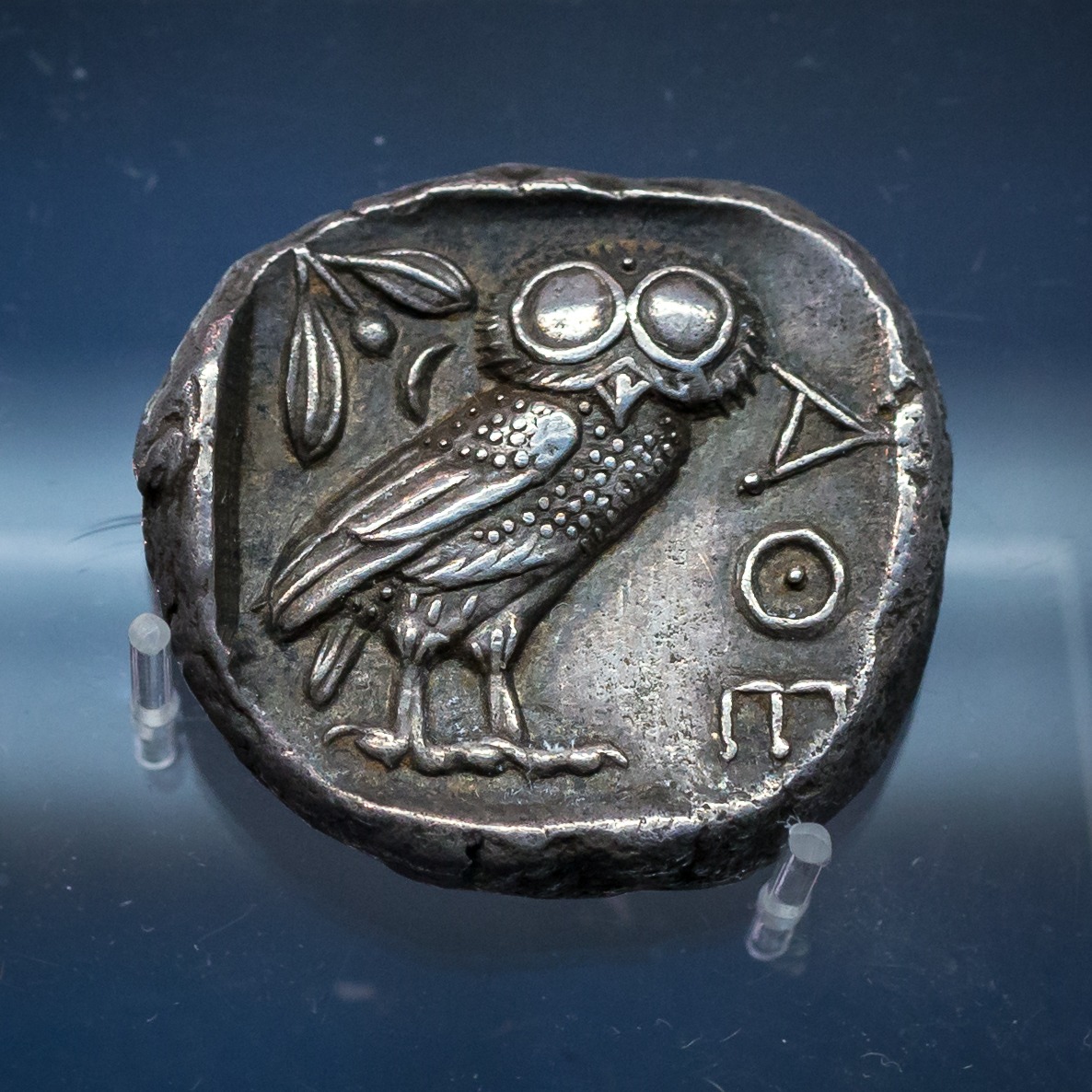
According to the source, the obverse shows the head of Athena — goddess of wisdom and patron of Athens — wearing a crested Attic helmet, usually facing right. The reverse shows her sacred bird, the little owl (Athene noctua), standing with head facing the viewer. Behind the owl runs an olive sprig (Athena’s gift to the city) and a crescent moon; to the right, the ethnic legend AΘE — short for “of the Athenians.”
The source notes that the design stayed essentially frozen for over a century. Unlike modern coins that change portraits with each ruler, the owl’s unchanging types were a feature: merchants trusted the coin precisely because it always looked the same. Later “new style” owls of the 2nd century BC added magistrates’ names and symbols in the fields, but the Athena-and-owl core remained.
Mintage and Format
According to the source, the classical owl tetradrachm weighs approximately 17.0 to 17.3 grams of silver and measures about 24–26 mm across, though flans are characteristically irregular — hand-cut and hand-struck, no two are perfectly round. The coins were struck with the obverse die set in an anvil and the reverse punched in, which is why many owls show a slightly “dished” reverse.
The source notes that surviving examples number in the tens of thousands, with major hoards still surfacing. Mass production plus 2,400 years of burial mean genuine owls remain obtainable — but the same popularity has made them one of the most faked ancient coins in existence.
Genuine vs. Tourist Fakes: How to Tell
According to the source and standard numismatic references, the owl tetradrachm’s fame makes it a prime target for forgers, from crude tourist copies to dangerous struck fakes. Key diagnostics include:
- Weight: a genuine classical owl weighs about 17.0–17.3 g — significant deviation is a red flag
- Style: genuine dies were cut by skilled engravers; Athena’s helmet, the owl’s feathers, and the AΘE lettering show crisp, confident work even when worn
- Surfaces: authentic ancient silver develops a natural patina and flow lines from striking; cast copies show pitted, grainy surfaces and soft details
- Edges: hand-struck flans have irregular, sometimes cracked edges — perfectly round, uniform edges suggest modern manufacture
- Test cuts: many genuine owls bear ancient “banker’s marks” or test cuts where merchants verified the silver — paradoxically, these marks support authenticity
- Provenance: reputable dealers provide find-spot or collection history; a “fresh from a Greek fisherman” story with no paperwork deserves skepticism
What Buyers Should Verify
- Weight and diameter: about 17 g and 24–26 mm for the classical type — deviation suggests a fake or a different denomination (drachm, didrachm)
- Silver content: genuine owls are high-purity silver; a magnet test (silver is non-magnetic) screens out iron-based fakes
- Certification: for significant purchases, buy examples certified by NGC Ancients or PCGS — the grading services authenticate as well as grade
- Style match: compare against museum references (the Staatliche Münzsammlung München and British Museum publish excellent images); the owl’s proportions and Athena’s helmet are hard for forgers to nail
- Price realism: genuine owls in decent grade command strong premiums — a “bargain” owl at bullion-plus-a-little is almost certainly not genuine
Bottom Line
According to the source, the Athenian owl tetradrachm is where the story of silver money begins: a standardized, trusted, widely circulating silver coin that underwrote the world’s first democracy and its greatest navy. Whether you collect ancients or stack modern silver, the owl is the ancestor of every silver coin that followed — from the Morgan dollar to the Silver Eagle.
Frequently Asked Questions
How much silver is in an Athenian owl tetradrachm?
According to the source, the classical owl tetradrachm weighs approximately 17.0 to 17.3 grams of silver — roughly half a troy ounce.
What does AΘE on the coin mean?
According to the source, AΘE is an abbreviation of “AΘENAION” — “(coin) of the Athenians” — the ethnic legend identifying the issuing city.
Why is there an owl on the coin?
According to the source, the little owl was sacred to Athena, the patron goddess of Athens. The olive sprig recalls her gift of the olive tree to the city; the crescent moon is a civic symbol.
Are owl tetradrachms rare?
According to the source, genuine owls survive in large numbers thanks to mass production and hoard finds, so they remain obtainable — but high-grade, well-centered examples with full crests command significant premiums, and fakes are widespread.
Can I buy a genuine owl tetradrachm today?
According to the source, genuine owls trade regularly through reputable ancient-coin dealers and auction houses. Always buy from established dealers, verify weight and style, and consider certified examples for higher-value purchases.
Related Products
While we don’t currently carry ancient coins, these silver pieces continue the tradition the owl started:
This article is for educational purposes. Specifications sourced from Numista (catalogue entry N#34551). Images: Wikimedia Commons, CC BY-SA 4.0 (Staatliche Münzsammlung München; Staatliche Antikensammlungen München). This article is not investment advice.