
Raw vs. Graded Morgan Dollars: Which Should You Buy?
Agate Precious Metals Buyer Guide
Raw vs. Graded Morgan Dollars: Grading Chart and Buyer Guide
Primary topic: raw vs graded Morgan dollar. Educational content; verify live product and market details before ordering.
Buy a raw Morgan dollar when you want a lower-cost, hands-on coin and can evaluate the date, mint mark, surfaces, and dealer description; buy a graded Morgan when third-party authentication, a numerical grade, and protective encapsulation are worth the added cost. Neither format is automatically the better value.
Verify Every Morgan Listing
- Date and mint mark
- Raw condition description or certified numerical grade
- PCGS/NGC holder and certification number, when applicable
- Cleaned, damaged, altered, or other problem disclosure
- Toning and whether the image is the exact coin
- GSA holder, box, and COA when included
Raw and Graded Morgans Compared
| Factor | Raw Morgan | Graded Morgan |
|---|---|---|
| Authentication | Dealer/buyer evaluation | Third-party service opinion and holder |
| Condition | Adjectival or dealer-described category | Numerical grade when straight graded |
| Handling | Coin can be inspected directly | Protected in tamper-evident holder |
| Price comparison | Requires careful surface and detail comparison | Grade helps organize comparisons, but eye appeal still differs |
| Risk | More grading and problem-coin judgment falls on buyer | Holder can be counterfeited; certification must be verified |
| Typical purpose | Circulated history, albums, type sets | Known-grade sets, registry collecting, higher-value dates |
What “Raw” Means
Raw means the coin is not encapsulated with a numerical grade from a third-party grading service. It does not mean fake, damaged, or low grade. A raw Morgan may be described as Good, Very Good, Fine, Extremely Fine, About Uncirculated, or Brilliant Uncirculated. Those descriptions require judgment and may span a range of eye appeal.
Raw coins let you see edges and surfaces directly, but careless handling can add marks. Hold them by the edge over a soft surface. Do not clean a Morgan. Cleaning can alter luster and surfaces, and a problem coin can trade differently from an original coin with similar remaining detail.
What a Certified Grade Means
PCGS and NGC authenticate a submitted coin, assign a grade or problem designation according to their standards, and encapsulate accepted coins. PCGS explains that its standards use the 1–70 Sheldon scale. AU means About Uncirculated; MS means Mint State. MS60 through MS70 indicate uncirculated numerical grades, but grade alone does not capture every element of eye appeal.
A holder is evidence, not a profit guarantee. Verify the certification number with the grading service and compare the holder, label, and coin. Even two correctly graded MS63 Morgans can differ in strike, luster, marks, and toning.
GSA Morgans Are a Third Category
Carson City dollars sold through the General Services Administration often appear in distinctive government holders, sometimes with an outer box and certificate. They are not simply “raw” in the everyday sense, and the GSA presentation can carry collector importance separate from a modern PCGS or NGC grade. Confirm exactly which packaging accompanies the coin.
Joe’s dealer note: Never price a Morgan from “MS64” alone. Date, mint, holder, surfaces, color, strike, certification, and market demand all matter. I will not appraise an unseen coin from a one-line description.
Decision Tree
- Want an affordable piece of nineteenth-century history? Start with a common-date circulated raw Morgan.
- Want visible detail without a slab premium? Compare dealer-described XF or AU examples and inspect photographs.
- Need a known numerical grade? Choose a verified PCGS or NGC coin.
- Buying a key date or high-value grade? Third-party authentication can reduce uncertainty, but specialist review still matters.
- Want Carson City history and original presentation? Compare GSA-packaged pieces and check box/COA inclusion.
- Focused on resale comparability? A recognized certified grade can simplify comparison, while market spreads still vary.
How to Compare Prices
For raw pieces, match date range, mint, problem status, condition, and eye appeal. For certified pieces, match grading service, numerical grade, designation, and holder status. Do not compare a generic raw pre-1921 Morgan with a certified Carson City coin as if the slab created the entire price difference.
Use Agate’s Morgan Dollar Value Guide for the larger date-and-condition framework. Record the exact coin purchased, especially when the product photograph represents a condition category rather than one individually imaged piece.
Transparent limitation: Photographs and broad condition categories cannot communicate every surface characteristic. Grading is an expert opinion, market values move, and a numerical grade does not guarantee future performance.
Bottom Line
Raw Morgans reward careful study and can be excellent for circulated collections. Graded Morgans add independent authentication, a grade opinion, and protection. Pay for the holder when those services solve a real problem—not merely because plastic looks more official.
Roadmap Upgrade: Morgan Dollar Grading Decision Chart
A grading chart is an orientation tool, not a substitute for seeing the coin in hand. Morgan Dollars are evaluated by the amount and location of wear, remaining luster, strike, contact marks, cleaning or damage, and overall eye appeal. The first places to inspect include Liberty’s hair above the ear, cheek, cap, cotton leaves, eagle’s breast, wing feathers, and wreath.
| Grade Band | What to Look For | Decision |
|---|---|---|
| G-VG | Heavy overall wear; major design remains outlined | Usually buy raw unless date/mint is scarce |
| F-VF | Moderate wear; increasing hair, feather, and wreath detail | Check date, mint, originality, and problems |
| XF | Light wear on high points; much detail remains | Look closely for cleaning and altered surfaces |
| AU | Trace wear with substantial luster | Distinguish true friction from weak strike |
| MS60-MS62 | No wear; many marks or weaker eye appeal | Certification may help on better dates |
| MS63-MS64 | No wear; fewer or less distracting marks | Compare exact certified examples and eye appeal |
| MS65+ | Strong luster and increasingly clean surfaces | Third-party grading often becomes more important |
Are Morgan Dollars worth grading? Consider certification when the likely increase in market confidence or value exceeds grading, shipping, insurance, membership, and waiting costs. Do not submit a common or problem coin simply because it is old.
The product examples below include raw dealer-described coins and PCGS/NGC-certified coins. Use them to understand categories, not as a photographic promise that every coin in one grade looks identical. Strike, toning, and eye appeal vary within the same number. Never clean a Morgan before seeking a grading opinion.
Compare Raw, Certified, and GSA Morgan Dollars
These modules illustrate different condition and packaging categories. Verify the exact date, mint mark, grade, holder, certification, toning, box, and COA on the live page.
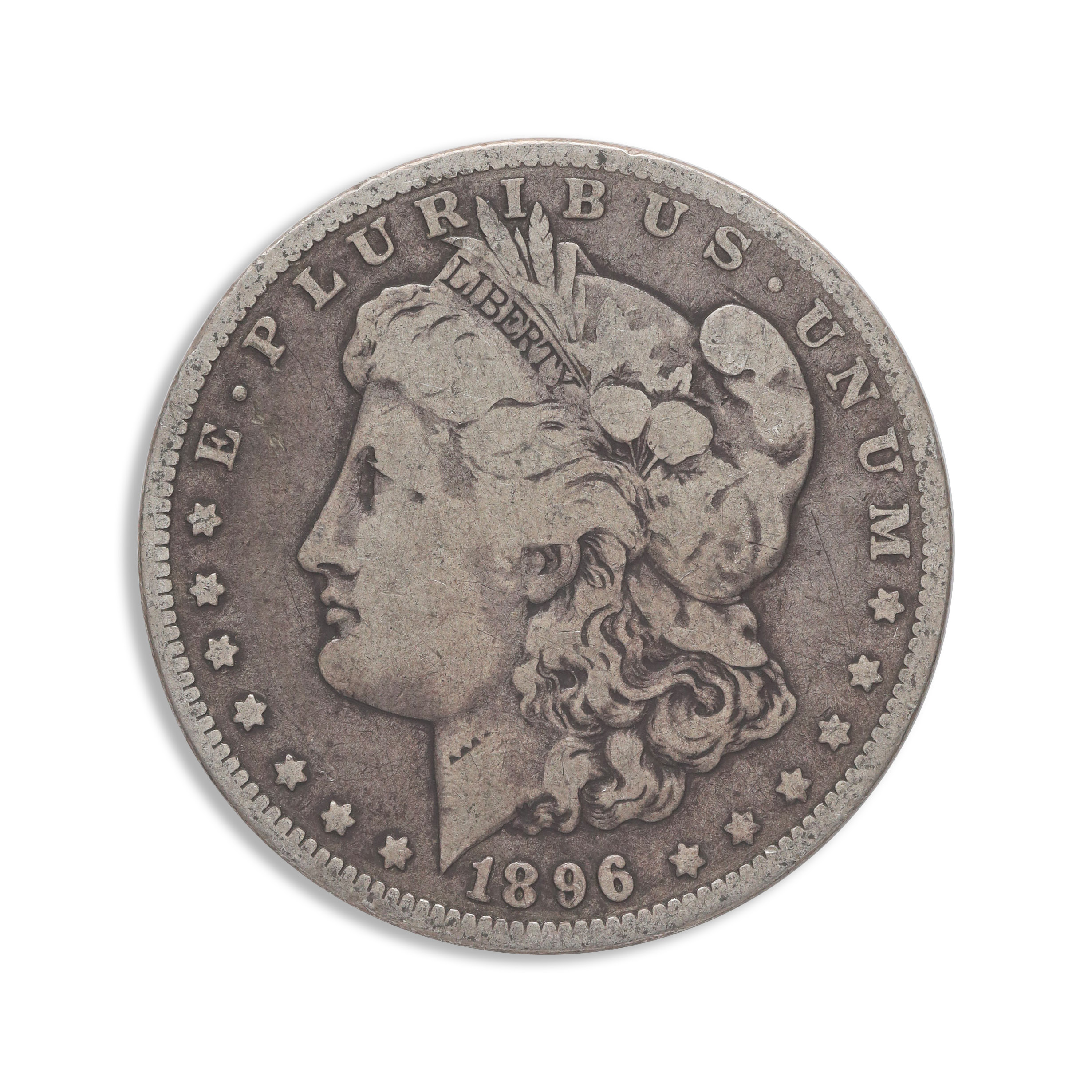
1878–1904 Morgan Silver Dollar – VG
A raw circulated pre-1921 Morgan offered with a dealer condition description.
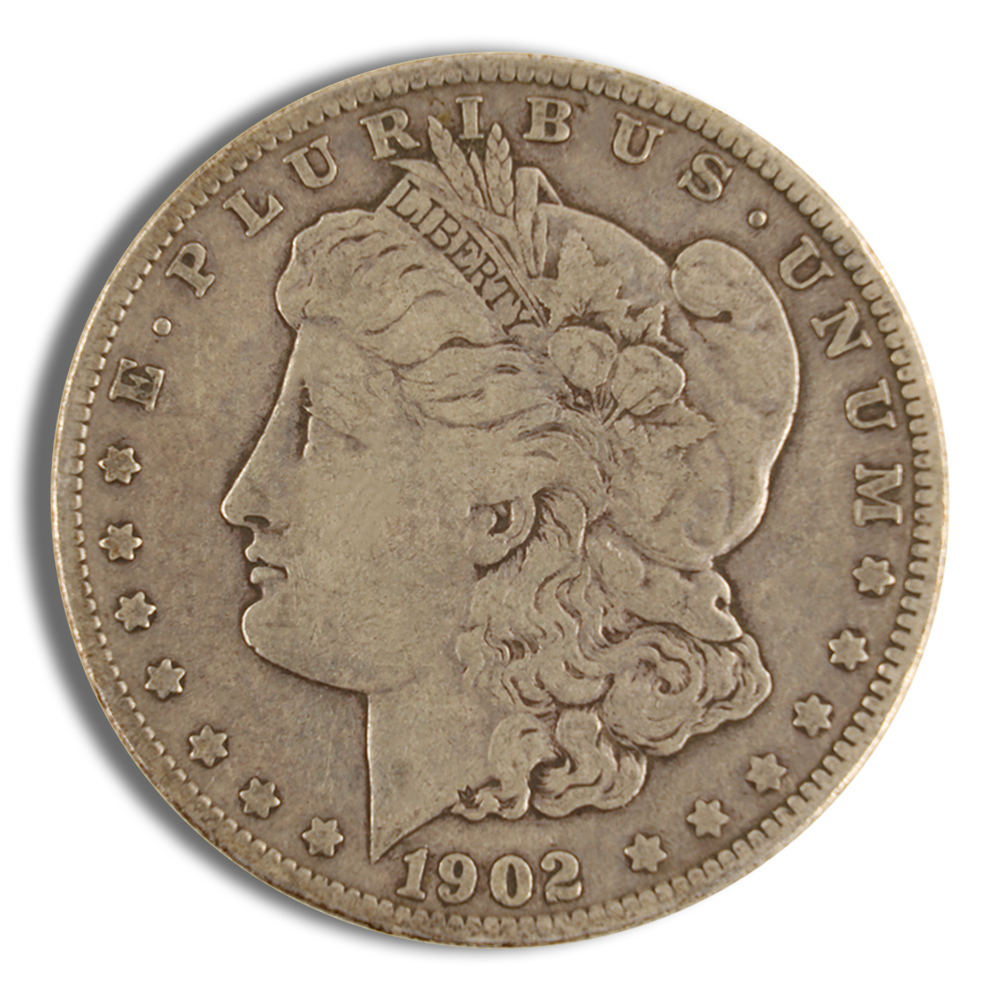
1878–1904 Morgan Silver Dollar – F+
A raw pre-1921 Morgan in a Fine-plus dealer-described category.
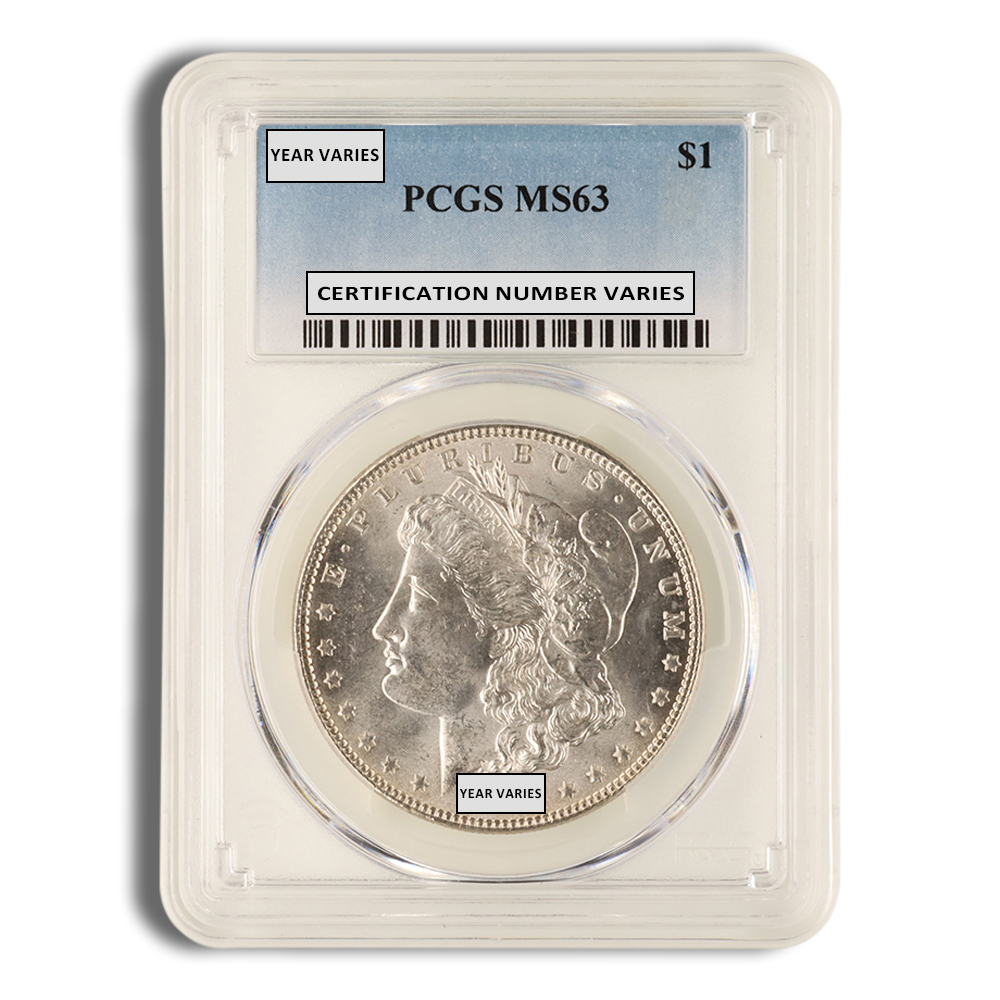
Pre-1921 Morgan Dollar – PCGS MS63
A pre-1921 Morgan authenticated, graded MS63, and encapsulated by PCGS.
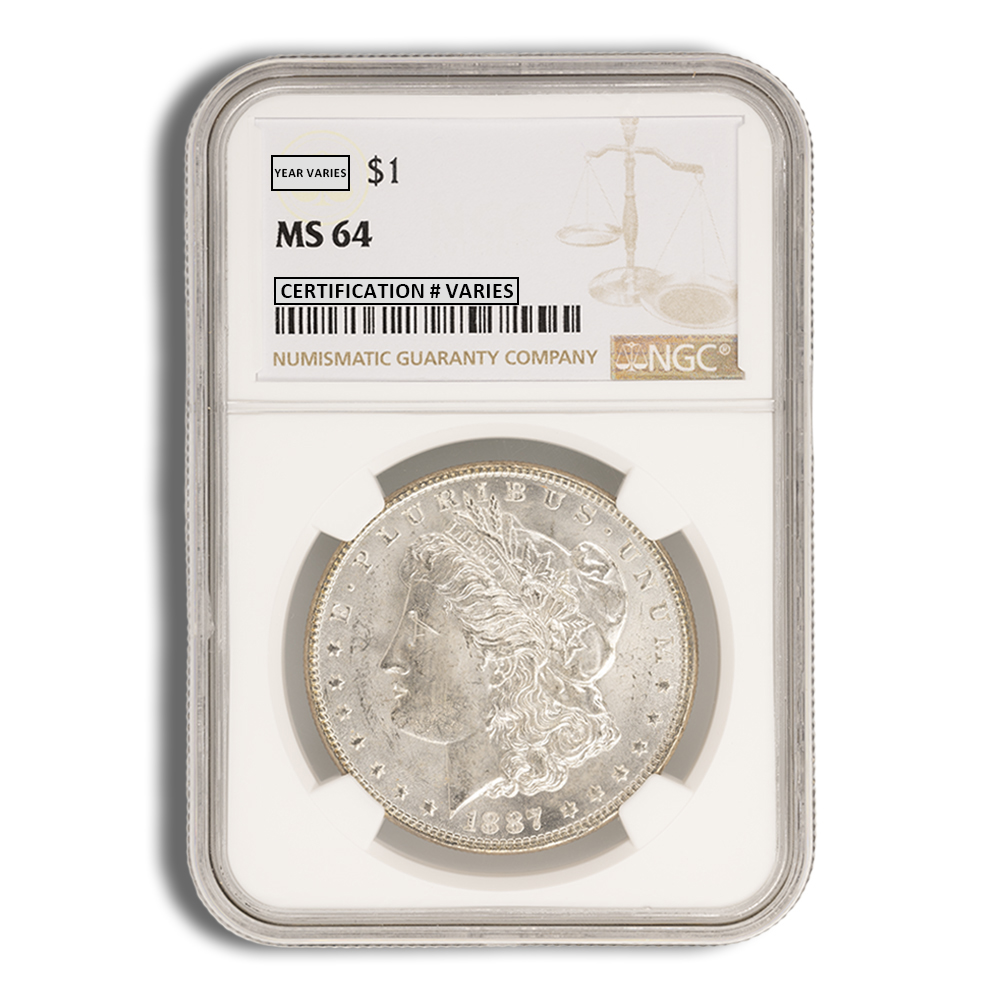
Pre-1921 Morgan Dollar – NGC MS64
A pre-1921 Morgan authenticated, graded MS64, and encapsulated by NGC.
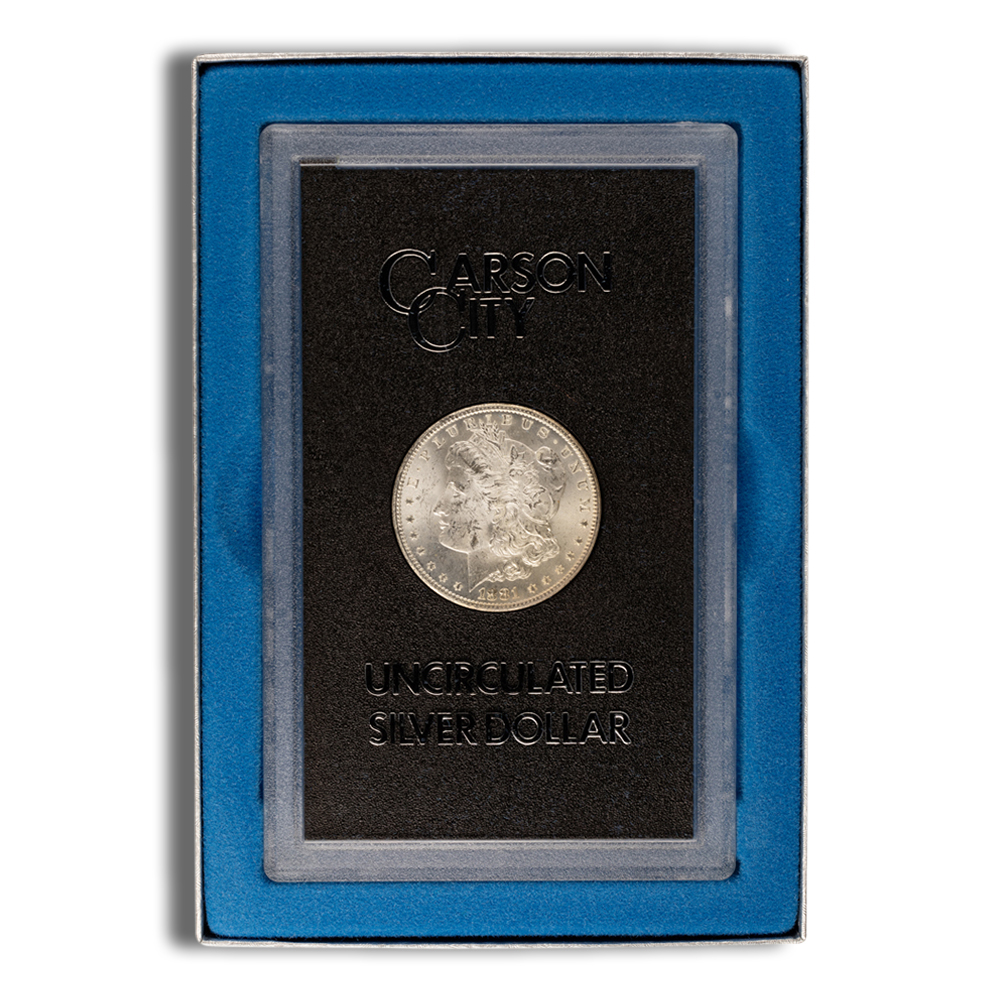
1881-CC GSA Morgan Dollar with Box & COA
A Carson City Morgan offered with GSA packaging and certificate of authenticity.
Prices, premiums, years, packaging, and availability can change. Open each product page for current specifications and checkout terms.
Frequently Asked Questions
What is a raw Morgan dollar?
A raw Morgan is not encapsulated with a numerical grade from a third-party grading service. It can still be authentic and accurately dealer described.
Is a graded Morgan always worth more?
No. Date, mint mark, condition, problems, eye appeal, demand, and holder all affect value. Certification adds services but does not guarantee a higher market outcome.
What do AU and MS mean?
AU means About Uncirculated. MS means Mint State and is paired with a numerical grade from 60 through 70 for uncirculated coins.
Should I clean a raw Morgan dollar?
No. Cleaning can alter the coin’s surfaces and collector value. Store and handle it carefully by the edge.
How do I verify a graded Morgan?
Check the certification number with the grading service and compare the coin, label, and holder. Counterfeit holders and altered coins make verification important.
Sources and Buyer References
This article provides general educational information and is not individualized investment, tax, legal, appraisal, or financial advice. Precious-metal prices, premiums, inventory, grades, years, packaging, product terms, and buyback conditions change. Confirm the exact item and all transaction terms before purchasing.