
How Much Is a 1 Gram Gold Bar Worth? Value Guide
Primary keyword: 1 gram gold bar value. Specifications and live listings were checked on the review date; verify the exact item before acting.
A 1 gram gold bar’s metal value equals the gold spot price per troy ounce divided by 31.1034768, adjusted if the bar is not pure gold. What a buyer pays is usually higher because fabrication, assay packaging, distribution, dealer costs, and demand create a retail premium. What a dealer pays back can be lower or higher than the bare metal calculation depending on authentication, brand, condition, packaging, quantity, and the market at that moment.
The Fast 1 Gram Gold Bar Value Formula
One troy ounce is 31.1034768 grams, so one gram is approximately 0.0321507466 troy ounce. For a bar marked .9999 fine, multiplying by .9999 changes the result only slightly, but using the stated purity is still the rigorous approach. If you are evaluating jewelry, an older bar, or an item with uncertain fineness, do not assume .9999 purity.
1 Gram Gold Value Calculator
Enter the gold spot price you are using. The result estimates contained-gold value only; it does not fetch a live market, predict a dealer bid, or include a retail premium.
A Worked Example Using a Hypothetical Spot Price
Assume gold spot is exactly $4,000 per troy ounce for demonstration. Divide $4,000 by 31.1034768 and the contained-gold reference is about $128.60 for one gram. If a carded bar is offered at $150, the difference is $21.40, or roughly 16.6% above melt. That difference is not automatically “too much.” It is the amount you need to evaluate against the specific brand, packaging, availability, seller terms, payment method, shipping, and expected resale market.
The example is arithmetic, not a current Agate price, forecast, appraisal, or promise of a future bid. A small bar normally costs more per ounce to manufacture and distribute than a larger bar. That is why fractional products often carry a higher percentage premium even when the dollar premium is modest.
Four Different Numbers Buyers Call “Worth”
| Number | What It Measures | How to Use It |
|---|---|---|
| Melt value | Spot-derived value of the contained fine gold | Common comparison baseline |
| Retail price | What the bar costs now, including the seller’s premium and stated charges | Compare the same product and payment terms |
| Dealer bid | What a dealer offers after identifying and testing the exact bar | Use a timestamped, item-specific quote |
| Private-market value | What another buyer may agree to pay | May involve more time, fraud risk, and transaction effort |
Why the Retail Price Is Above Melt
A refiner has to make a tiny bar, strike or cast it, verify weight and purity, place it in packaging, distribute it, and absorb quality-control costs. The dealer then carries inventory, processes payments, insures shipments, screens fraud, and provides a resale channel. Those costs are spread over only one gram of metal. A one-ounce bar spreads comparable handling over more than 31 times as much gold.
Brand recognition can matter because a familiar refiner and intact card may make identification easier for the next buyer. It does not mean every famous logo deserves any premium. Compare the total delivered price and understand whether a listing is a named brand or a brand-varies gold bar. For a wider format comparison, see Agate’s gold bar sizes and premiums guide.
How Packaging Affects Resale
Many one-gram bars are sold in assay-style cards. The card can identify the refiner, weight, purity, and sometimes a serial number, but it is not magic proof by itself. Counterfeit packaging exists, cards can be damaged, and a serial number is not a universal public registry search. Keep original packaging intact when possible and read what an assay card does and does not prove.
A dealer may test the bar through the package or may require additional steps. Bent cards, separated seals, scratches, or missing documentation can change how the item is categorized. The gold still has metal value if genuine, but some of the packaged-product premium may not survive.
What Determines a Real Resale Quote?
- Live spot reference: identify the source and timestamp.
- Actual purity and weight: stated markings must be verified when risk warrants it.
- Brand and format: recognizable carded bars may have a different market from loose or unfamiliar pieces.
- Condition and packaging: damage may affect the product premium even when the metal is sound.
- Quantity: one bar and a large group can involve different handling economics.
- Dealer inventory: a shop that already has many of the same bar may bid differently.
- Transaction costs: shipping, insurance, testing, and payment timing can change net proceeds.
Joe’s dealer note: I’m Joe Agate, a working coin dealer in Buffalo. When somebody asks what a gram bar is worth, I separate the metal calculation from the cash offer. Melt is math. A bid is a real transaction involving a specific bar, a specific buyer, and a specific time.
How to Compare Buying and Selling Without Hype
- Record the live spot price and time.
- Calculate one gram of metal value.
- Find the total checkout price, not only the advertised unit price.
- Calculate the dollars and percentage above melt.
- Ask what the dealer would typically need to quote a future buyback.
- Keep the invoice, card, and photographs.
- Do not assume that every dollar of premium will be recovered.
To decide whether the smaller bar or a sovereign coin better fits your goal, use the fractional gold comparison. It addresses product choice; this page stays focused on valuing the one-gram bar.
Bottom Line
Start with spot divided by 31.1034768. That gives a transparent contained-gold reference. Add the actual retail premium to understand acquisition cost, and obtain a live item-specific bid to understand resale. A one-gram gold bar can be compact and accessible, but its small format usually makes percentage premiums more visible. Keep the calculation, packaging, records, and resale terms separate, and you can judge the product without a sales pitch.
Compare Live 1 Gram Gold Bar Listings
These compact carded bars show how refiner, packaging, design, and inventory can differ even when each listing contains one gram of gold. Use the live pages for current terms.
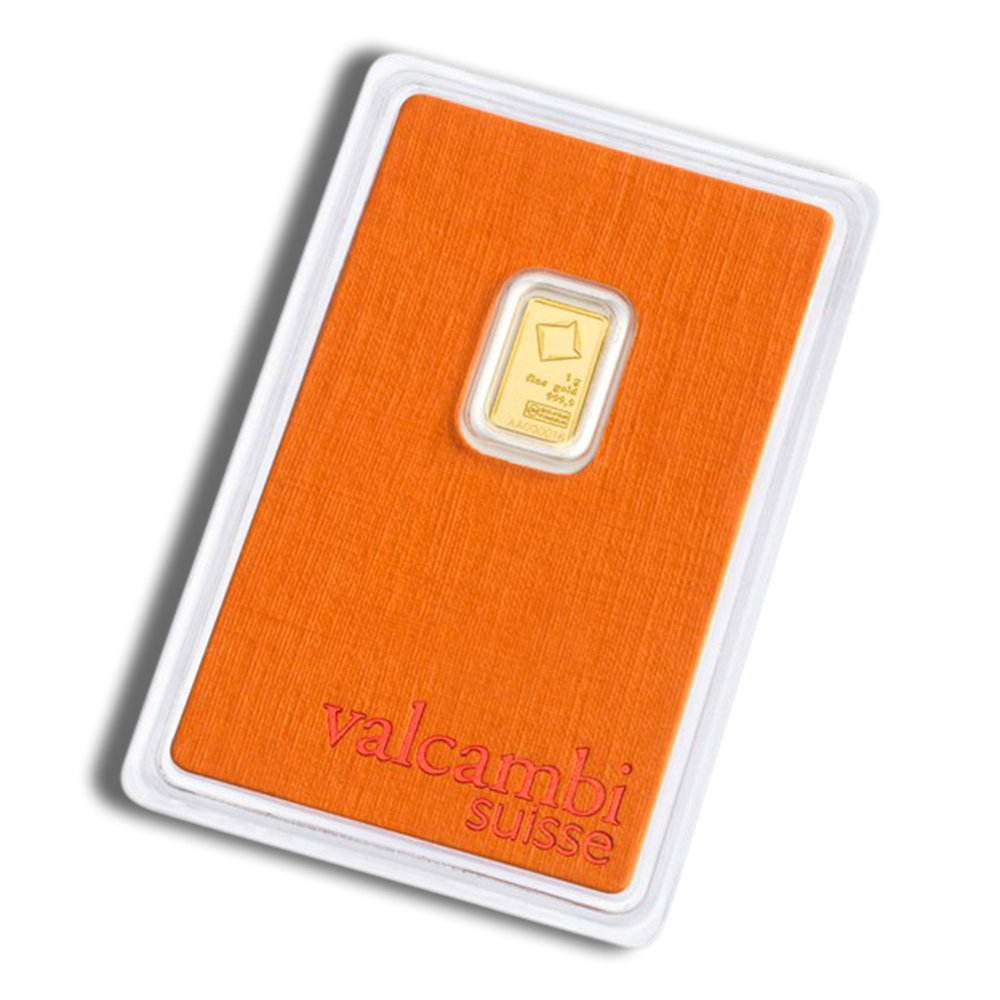
1 gram Gold Bar – Valcambi (Carded)
A named one-gram Valcambi bar in carded packaging.
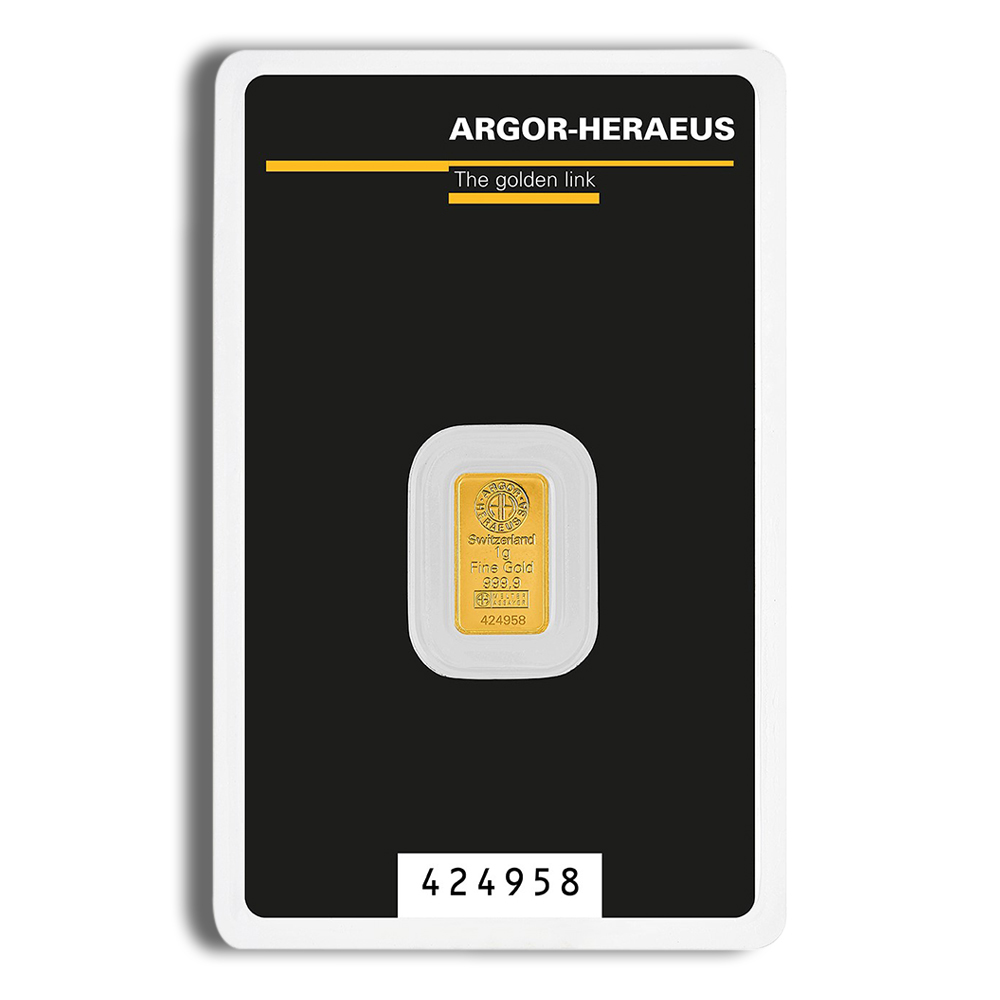
1 gram Gold Bar – Argor-Heraeus (Carded)
A one-gram Argor-Heraeus bar sold in carded format.
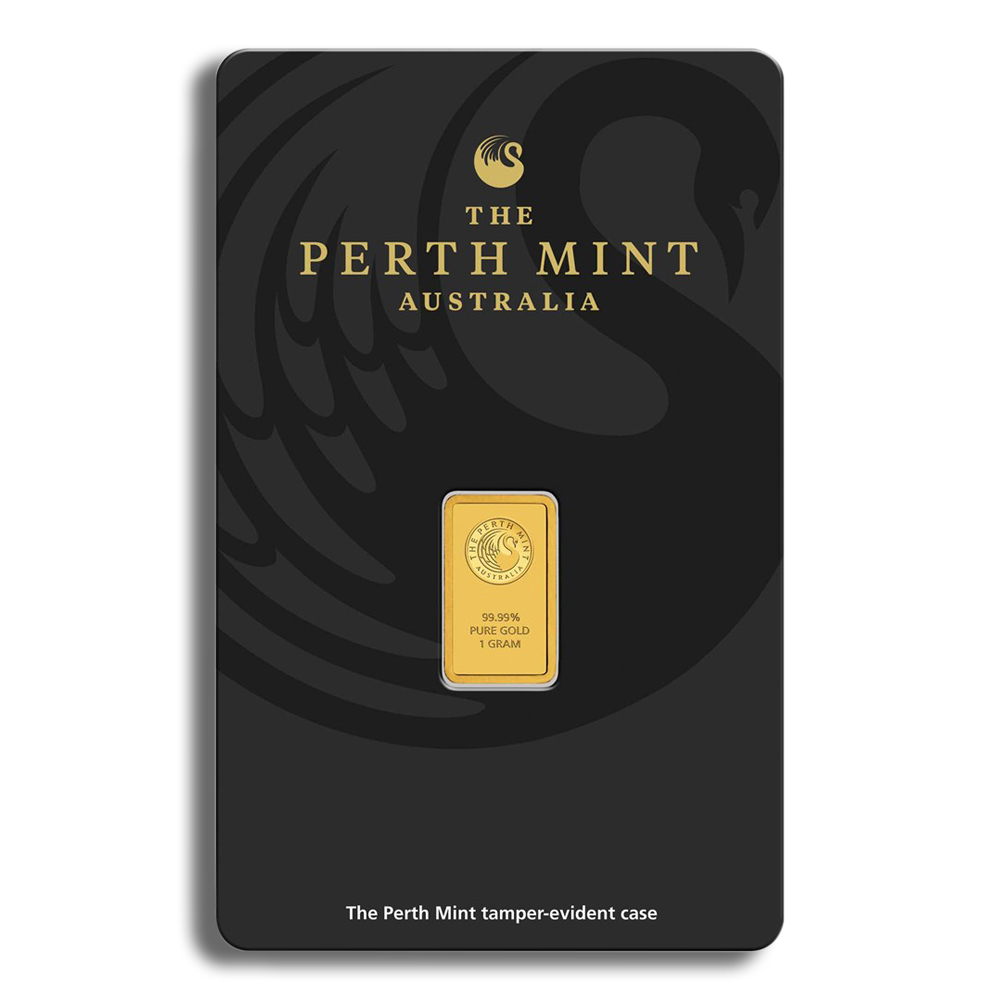
1 gram Gold Bar – Perth Mint (Carded)
A one-gram Perth Mint product in carded packaging.
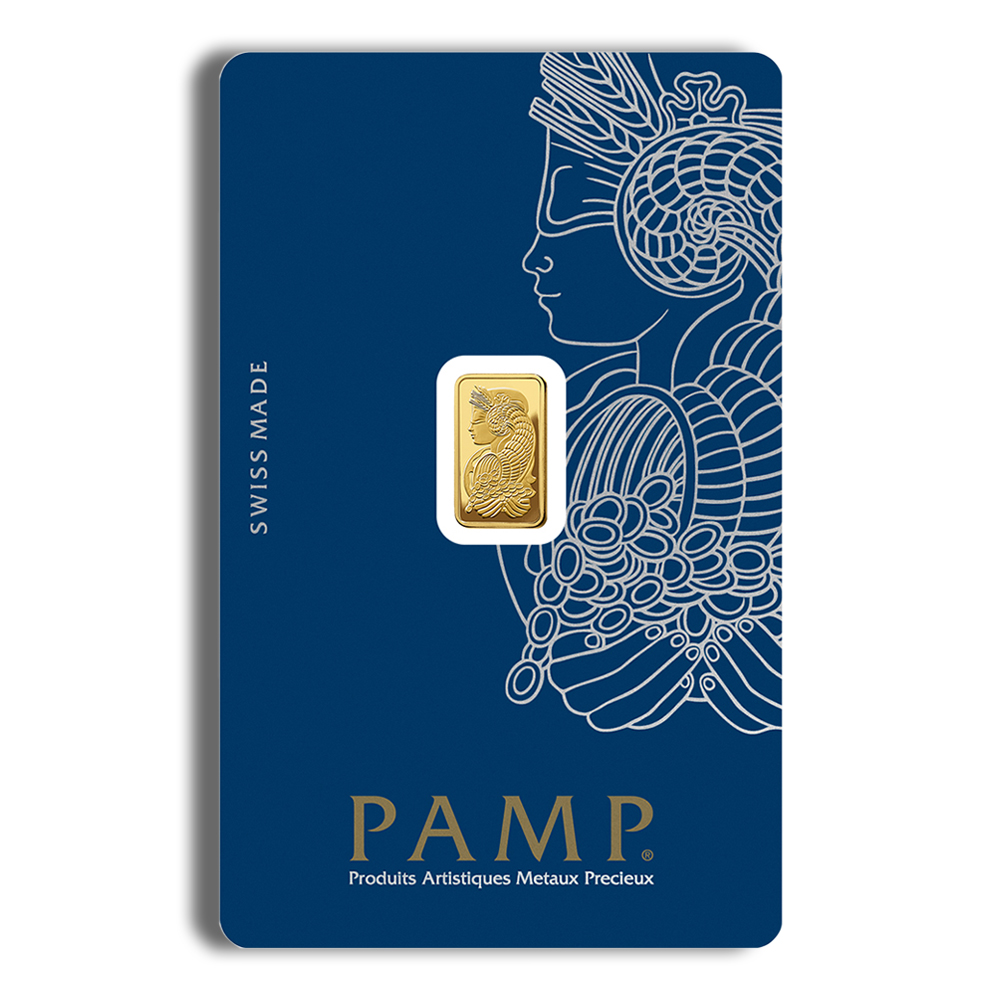
1 gram Gold Bar – PAMP Fortuna (Carded)
A one-gram PAMP Fortuna gold bar in compact carded presentation.
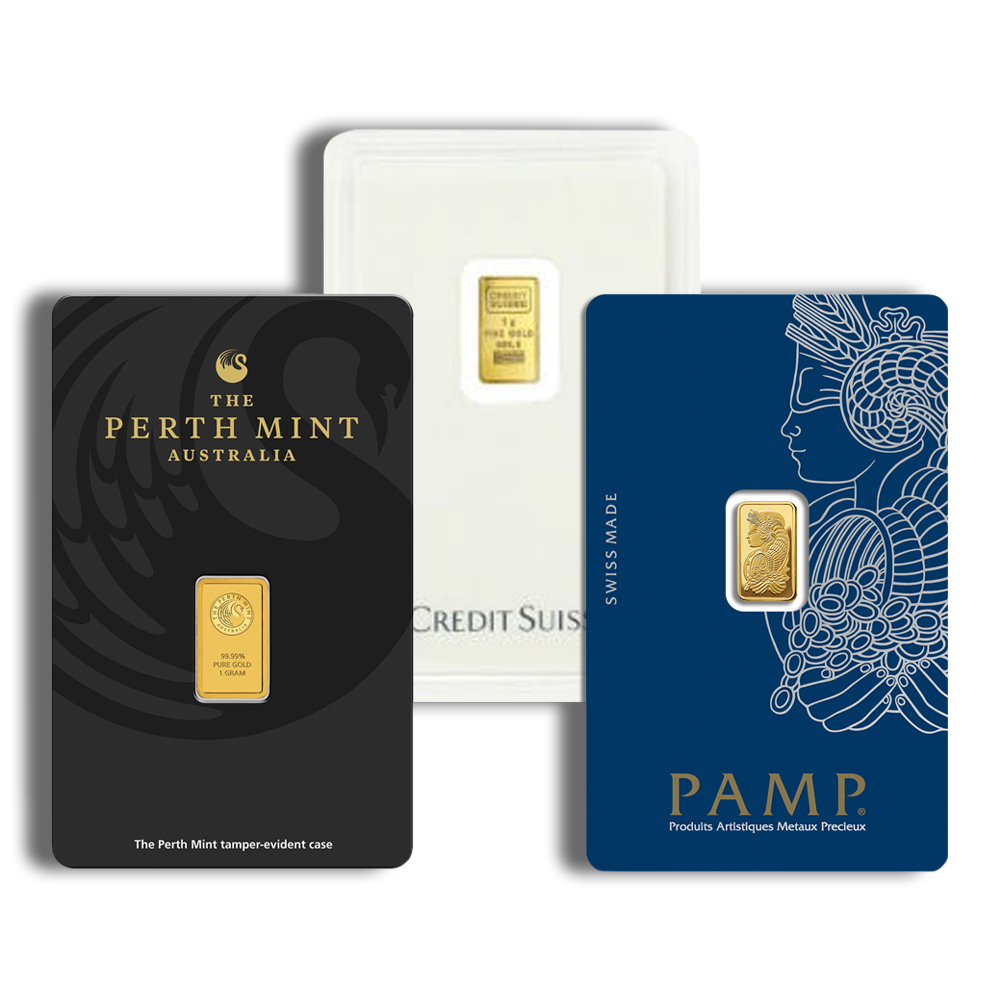
1 gram Gold Bar – Brand Varies (Carded)
A one-gram carded bar where the fulfilled refiner or design may vary.
Frequently Asked Questions
How much gold is in a 1 gram gold bar?
A bar marked one gram contains one gram of total metal; a .9999 fine bar states that 99.99% of that mass is gold.
How do I calculate a 1 gram gold bar’s melt value?
Divide the gold spot price per troy ounce by 31.1034768, then multiply by the stated fineness if needed.
Why does a 1 gram gold bar cost more than its gold value?
Fabrication, assay packaging, distribution, dealer operations, inventory demand, payment, and shipping can create a retail premium.
Will I recover the premium when I sell?
Not necessarily. A resale bid depends on the live market, product, condition, packaging, quantity, verification, and buyer demand.
Does an assay card guarantee a one gram bar is genuine?
No. A card is useful product information and tamper-evident presentation, but the bar, card, seller, and provenance must be evaluated together.
Educational information only—not individualized investment, tax, legal, insurance, appraisal, or financial advice. Prices, premiums, bids, inventory, packaging, product specifications, shipping, payment methods, and policies can change; verify the live listing and transaction terms.