
How Much Is a 1 Gram Gold Bar Worth? Value Guide
How Much Is a 1 Gram Gold Bar Worth?
The metal value of one gram of fine gold equals the gold spot price per troy ounce divided by 31.1034768. If one gram describes the bar’s total metal weight, adjust for fineness. Retail prices include premiums, while resale depends on an actual buyer’s offer and any transaction costs.
“Worth” can mean the contained-gold value, the checkout price, or the amount you receive when selling. Keeping those numbers separate makes a one-gram bar easier to evaluate.
This page does not display a live gold-price feed. Enter your own timestamped spot reference in the calculator below. Results are estimates, not purchase or buyback quotes.
The 1 Gram Gold Bar Value Formula
For One Gram of Fine Gold
Metal value = gold spot price per troy ounce ÷ 31.1034768
For One Gram of Total Metal Weight
Metal value = gold spot price per troy ounce ÷ 31.1034768 × fineness
One troy ounce equals 31.1034768 grams. One gram is therefore approximately 0.0321507466 troy ounce. Use troy ounces, not the ordinary ounces used for many household measurements.
A fineness of .9999 means 99.99% gold. If a product’s stated weight already represents fine-gold content, do not multiply that fine weight by purity again. Confirm how the manufacturer defines the weight before choosing your calculation.
1 Gram Gold Value Calculator
Enter a gold spot reference in U.S. dollars per troy ounce. Optionally add the total purchase price to calculate the amount above the metal reference.
A Worked Example With a Hypothetical Gold Price
Suppose gold is exactly $4,000 per troy ounce. One gram of fine gold would have a reference metal value of approximately $128.60.
If instead the bar weighs one gram in total and is .9999 fine, the result is approximately $128.59. The difference is small, but the distinction keeps the calculation consistent with the product specification.
For that one-gram, .9999-fine example, a $150 delivered purchase price would be approximately $21.41 above metal value, or a 16.6% all-in premium.
These figures are arithmetic examples. They are not current prices, appraisals, or promises of a future dealer bid.
Four Different Numbers Buyers Call “Worth”
| Number | What It Measures | How to Use It |
|---|---|---|
| Metal or melt value | The spot-derived value of the contained fine gold. | Use as a comparison baseline, not a guaranteed payment. |
| Retail price | The seller’s price for the finished bar. | Add any separate charges to compare complete checkout totals. |
| Dealer bid | An offer for the exact bar, potentially subject to inspection. | Confirm the timestamp, conditions, deductions, and net payment. |
| Private-sale price | The amount another buyer agrees to pay. | Account for selling fees, delivery, verification, and transaction risk. |
Why a One-Gram Bar Costs More Than Its Metal Value
A finished bar requires fabrication, quality control, packaging, distribution, and retail handling. On a one-gram product, those costs are spread across a small amount of gold.
This helps explain why a small bar can have a modest premium in dollars but a substantial premium as a percentage of metal value. Compare actual listings rather than applying a universal percentage to every bar or brand.
Named-refiner bars and brand-varies gold bars also have different purchase terms. One promises a particular producer; the other allows selection under the listing’s stated conditions. Neither description alone establishes which is the better-priced option.
For a broader comparison, read Agate’s gold-bar sizes and premiums guide.
How Assay Packaging Affects Resale
Many one-gram bars are sold in assay-style cards displaying the refiner, weight, fineness, and sometimes a serial number. The card helps keep product information with a very small piece of metal.
Packaging does not independently establish authenticity. A buyer may require verification even when a card appears intact. Damaged seals, bent cards, or missing documentation can also affect how the bar is evaluated and quoted.
Preserve original packaging when possible and avoid opening it merely to weigh the bar. The combined weight of the card, plastic, and metal cannot be compared directly with the bar’s one-gram specification.
Agate’s guide to what an assay card does and does not prove explains the distinction between presentation and verification.
What Determines a Dealer’s Resale Offer?
- Market reference: The gold price source and time used for the quote.
- Verified content: The actual product, weight, and fineness.
- Refiner and format: Whether the buyer trades that specific bar.
- Condition: The state of the metal, card, seals, and documentation.
- Quantity: The work involved in processing one bar versus a larger lot.
- Demand and inventory: The buyer’s current need for the product.
- Costs: Any shipping, insurance, testing, or handling deductions.
A small bar allows a small individual sale, but that does not guarantee a stronger bid or easier resale in every market. Fixed transaction expenses can make a meaningful difference when selling only one gram.
How to Compare Purchase Price With Potential Resale
- Record the spot reference and timestamp.
- Confirm whether the weight means total metal or fine gold.
- Calculate the contained-gold reference value.
- Find the complete delivered purchase price for your payment method.
- Calculate the amount and percentage above metal value.
- Request an indicative buyback quote for the exact product.
- Compare net proceeds after any deductions.
- Keep the invoice, packaging, and product photographs.
An indicative bid helps explain the purchase-to-sale gap, but it is not a future price guarantee. Do not assume that every dollar paid for packaging, design, or retail convenience will be recovered later.
To compare a small bar with a larger fractional coin, use Agate’s one-gram gold bar versus one-tenth-ounce gold coin guide.
Compare One-Gram Gold Bar Listings
Review the exact refiner, stated fineness, card condition, and delivered price on each listing. The links below provide product comparisons without embedding a price that can become outdated.
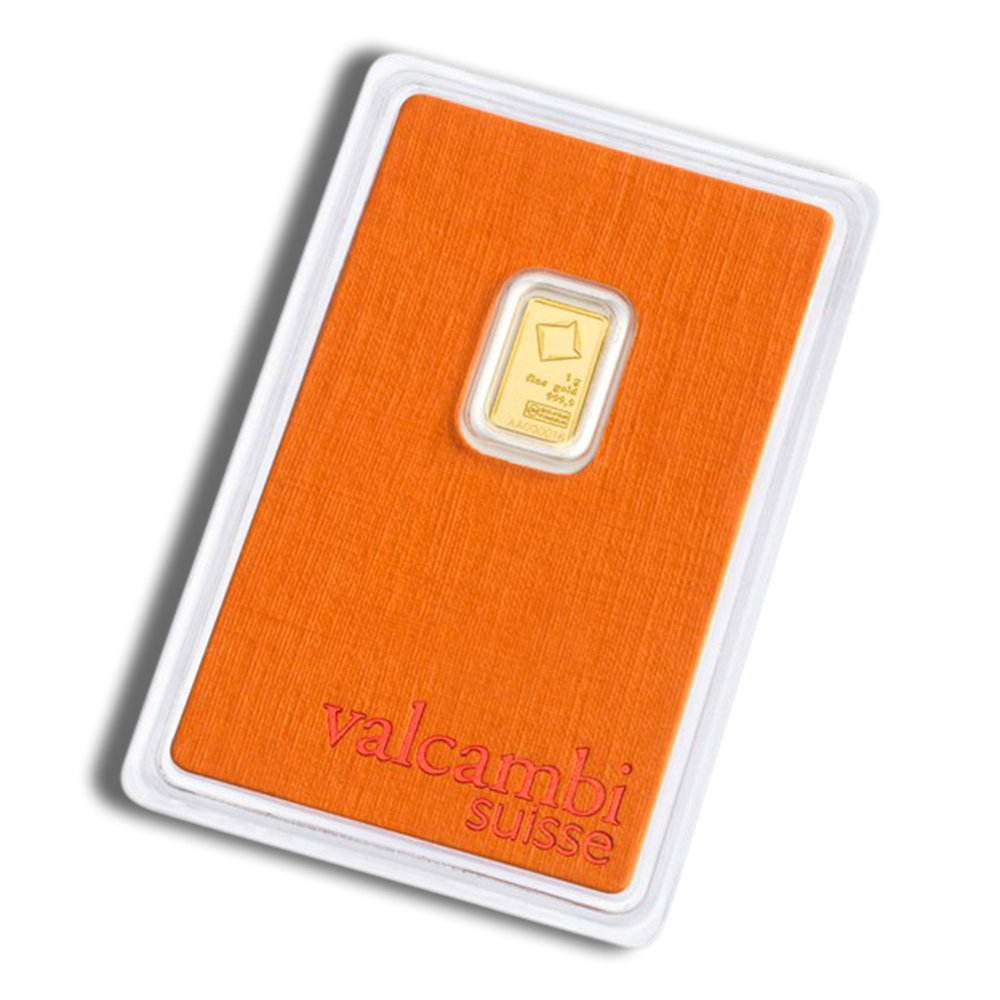
1 Gram Gold Bar – Valcambi (Carded)
A named Valcambi listing for comparing a one-gram bar’s packaging and total purchase cost.
View Product & Availability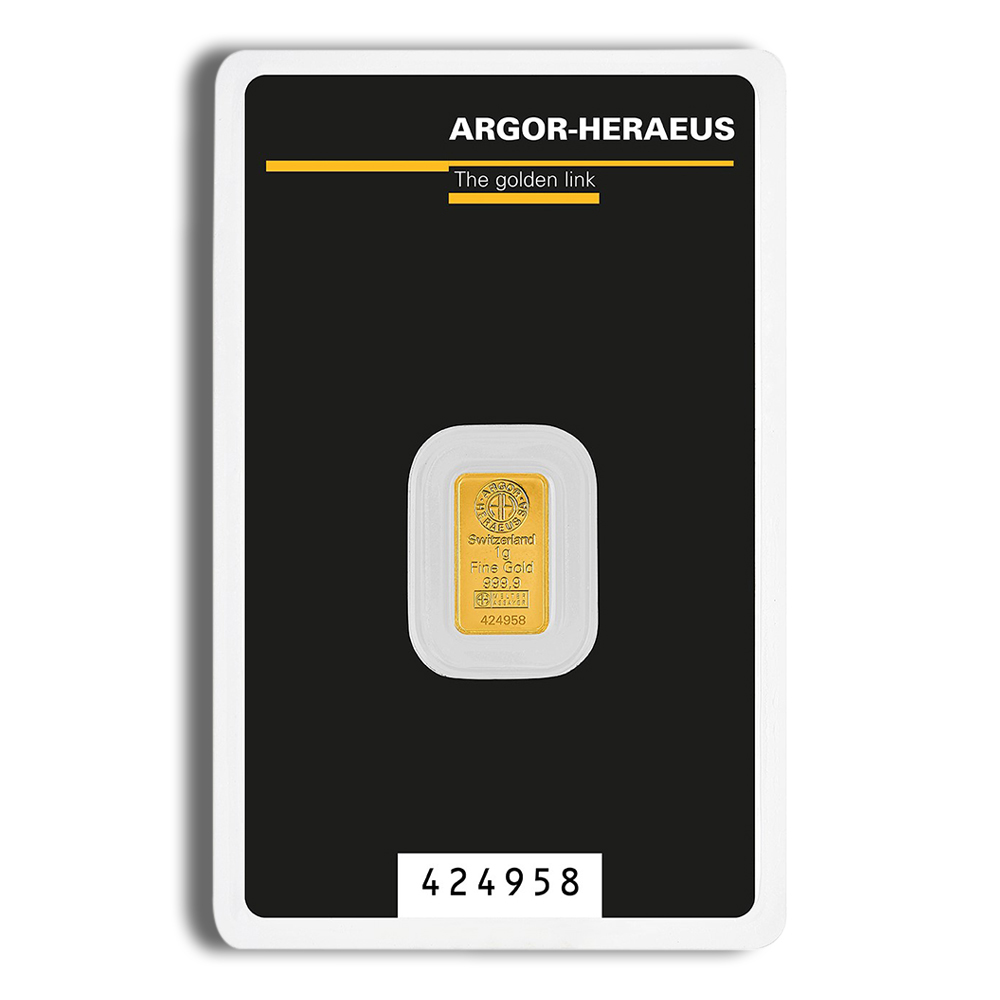
1 Gram Gold Bar – Argor-Heraeus (Carded)
Compare the Argor-Heraeus offering using the same spot reference and checkout assumptions as other gram bars.
View Product & Availability
1 Gram Gold Bar – Perth Mint (Carded)
A Perth Mint option for buyers comparing named producers and the premium attached to each listing.
View Product & Availability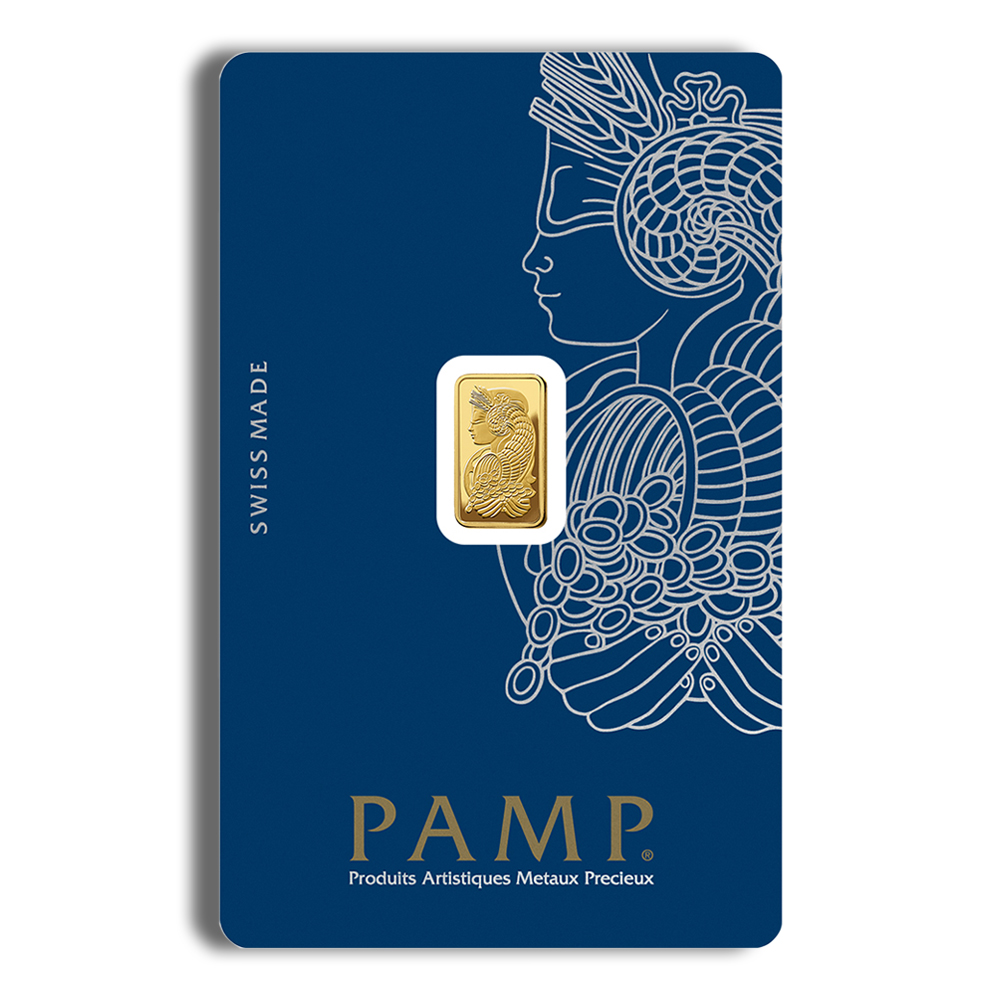
1 Gram Gold Bar – PAMP Fortuna (Carded)
Compare the Fortuna presentation with other one-gram formats, keeping design preference separate from metal value.
View Product & Availability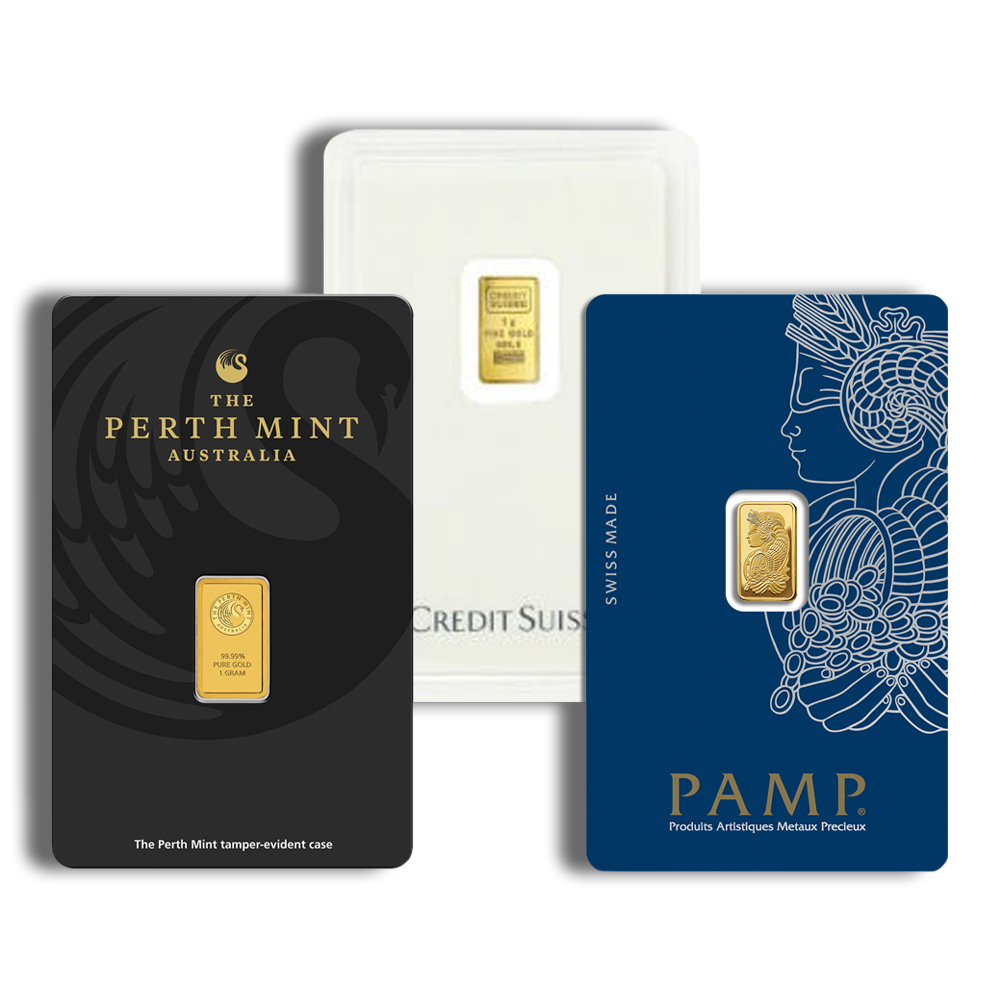
1 Gram Gold Bar – Brand Varies (Carded)
An alternative when receiving a specific refiner or design is not essential. Read the selection terms before ordering.
View Product & AvailabilityImages illustrate the linked listings. Product details, packaging, prices, and stock can change. Retail listings are not dealer buyback offers.
Frequently Asked Questions
How much gold is in a one-gram gold bar?
Check how the manufacturer states the weight. If one gram is total metal weight at .9999 fineness, it contains 0.9999 gram of gold. If the specification explicitly guarantees one gram of fine gold, use one gram directly in the metal-value calculation.
How do I calculate a one-gram bar’s metal value?
Divide the gold price per troy ounce by 31.1034768. Multiply by fineness only when the one-gram weight describes total metal rather than already-stated fine-gold content.
Why is the retail price higher than metal value?
The finished bar’s price reflects fabrication, packaging, distribution, inventory, demand, and dealer costs. Payment and delivery charges may increase the checkout total further.
Will I recover the premium when selling?
Not necessarily. The offer depends on the market and the exact bar, including its condition, packaging, verification, quantity, and buyer demand. Ask for a current item-specific bid and all deductions.
Does an assay card guarantee authenticity?
No. The card supports product identification and presentation, but it can be copied or altered. Evaluate the bar, packaging, seller records, and appropriate verification together.
Does this calculator show a live gold price?
No. It uses the spot price you enter. It estimates contained-gold value and, when a purchase price is entered, the amount above or below that reference. It does not predict resale proceeds.
Educational calculation only. Gold prices, premiums, dealer bids, fees, inventory, and product terms can change. Metal value is not a guaranteed resale amount, and a purchase premium may not be recovered.