
The 2027 American Gold Eagle has not been released yet — it is a pre-release coin expected in January 2027. The U.S. Mint has not announced an exact release date for the bullion strike.
Dealers opened presales for the 2027 Gold Eagle in early November 2026, weeks ahead of the expected launch, so listings are live long before any coins ship. Below is what is known so far: the expected timing, the design, the full specifications for all four sizes, how presales for a new-year Gold Eagle actually work, and how to decide whether to wait for the 2027 or buy a current-year coin that is already in stock. The silver sibling of this release is covered in our companion guide to the 2027 American Silver Eagle.
When Is the 2027 American Gold Eagle Expected to Come Out?
The 2027 American Gold Eagle is expected in January 2027, following the program’s long-standing annual pattern of a first release early in the new year. That January window is an expectation based on the pattern and on dealer presale schedules — it is not a date the U.S. Mint has confirmed.
The Mint does not publish a release schedule for bullion coins the way it does for collector products. Bullion Eagles are sold through the Mint’s network of Authorized Purchasers, and major dealers opened their 2027 Eagle presales on November 2, 2026, with availability windows pointing to January — at least one major dealer’s listings show a January 11, 2027 availability date for the 1 oz coin. Treat any specific day you see in a listing as that dealer’s shipping estimate, not a Mint announcement.
What Does the 2027 Gold Eagle Look Like?
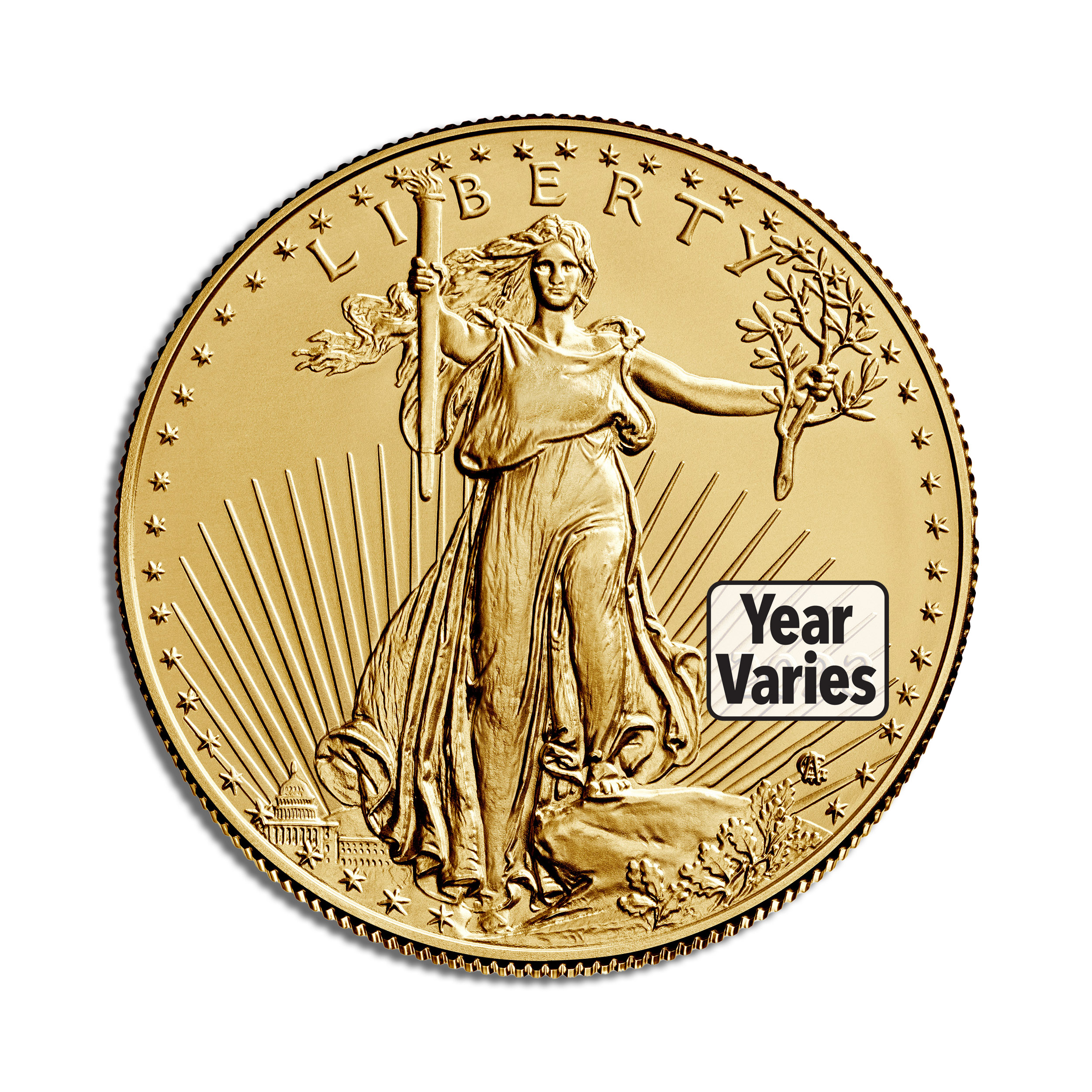
The 2027 Gold Eagle carries the same design pairing the series has used since mid-2021, so there is no new-design reveal to wait for. The obverse is Augustus Saint-Gaudens’ striding Liberty, adapted from the 1907 Double Eagle — which means 2027 marks 120 years since that artwork first appeared on a U.S. coin.
The reverse is the Type 2 design by Jennie Norris, a close-up portrait of an American bald eagle that replaced the original eagle’s-nest reverse in 2021. The coin also keeps the anti-counterfeit security detail added that year: a single interrupted reed — a small notch — in the reeded edge, visible under magnification.
2027 American Gold Eagle Specifications
Specifications carry over unchanged from recent years. Every size is struck in the program’s traditional 22-karat alloy, which contains the stated amount of pure gold plus silver and copper added for hardness and wear resistance.
| Size | Detail |
|---|---|
| 1 oz — face value $50 | 1 troy oz pure gold; gross weight 33.931 g; diameter 32.7 mm; thickness 2.87 mm |
| 1/2 oz — face value $25 | 1/2 troy oz pure gold; gross weight 16.966 g; diameter 27 mm |
| 1/4 oz — face value $10 | 1/4 troy oz pure gold; gross weight 8.483 g; diameter 22 mm |
| 1/10 oz — face value $5 | 1/10 troy oz pure gold; gross weight 3.393 g; diameter 16.5 mm |
| Purity | .9167 fine (22-karat) gold alloy |
| Obverse | Saint-Gaudens’ Liberty (1907 design) |
| Reverse | Type 2 eagle portrait by Jennie Norris (2021–present) |
| Mint | U.S. Mint at West Point; bullion strikes carry no mintmark |
For a deeper walkthrough of the series — its history, gold content, and how premiums on it behave — see our full American Gold Eagle guide.
How Do Presales Work for a New-Year Gold Eagle?
A presale means a dealer takes your order before the Mint has delivered any 2027 coins. The dealer, in turn, sources through the U.S. Mint’s Authorized Purchasers, who are the only channel for bullion Eagles. Your order sits in a queue and ships once the dealer’s allocation of new-year coins arrives, which is why presale listings carry expected shipping windows instead of firm dates.
Two things vary by dealer and are worth reading before you order anywhere: when your price is locked (at order, or against spot at shipment) and what happens if allocations run short. Premiums on new-year Eagles are also typically at their firmest in the first weeks of a release, when every dealer is filling presale queues at once, and tend to settle once regular supply flows. None of that makes presales a bad idea — for buyers who want the new date secured, it is the standard route — but the terms matter more than the headline.
Should You Wait for the 2027 or Buy a Current-Year Gold Eagle Now?
Metallurgically, there is nothing to wait for: the 2027 is the same coin, with the same gold content and design, as the current-year issue. Waiting makes sense if you collect by date, want a first-weeks strike, or simply prefer the newest year in the tube. Buying now makes sense if you want the metal in hand without a shipping window — the 1 oz Gold Eagle BU is in stock today, and if you are weighing the Eagle against other national flagships, our Gold Eagle vs. Maple Leaf vs. Gold Buffalo comparison breaks down the trade-offs.
Frequently Asked Questions
Has the 2027 American Gold Eagle been released yet?
No. The 2027 American Gold Eagle is a pre-release coin; it is expected in January 2027, and dealer presales opened in early November 2026.
What is the exact 2027 Gold Eagle release date?
There is no Mint-announced date — the U.S. Mint does not publish release dates for bullion strikes. Dealers are working to January 2027 availability windows, and any specific day shown in a listing is that dealer’s estimate.
How much will the 2027 American Gold Eagle cost?
No official price exists. Bullion Gold Eagles are priced off the live gold spot price plus a dealer premium at the time of sale, so the final figure depends on when and where you buy; presale pricing terms vary by dealer.
Is the 2027 Gold Eagle a new design?
No. It continues the pairing used since 2021: Saint-Gaudens’ Liberty on the obverse and Jennie Norris’ Type 2 eagle portrait on the reverse, with the notched security reed in the edge.
What sizes will the 2027 Gold Eagle come in?
Four sizes, as in recent years: 1 oz ($50 face value), 1/2 oz ($25), 1/4 oz ($10), and 1/10 oz ($5), all struck in 22-karat gold.
Is the 2027 American Gold Eagle IRA eligible?
Yes. American Gold Eagles are eligible for precious metals IRAs by statute, even though the 22-karat alloy is below the fineness normally required — the Eagle program carries a specific exception.
Educational content only — not financial advice.