
American Silver Eagle Prices: What Determines the Cost Beyond Spot Price?
American Silver Eagle prices are not set by silver spot price alone. For a standard bullion coin, spot establishes the value of its one troy ounce of fine silver; the price a buyer sees also reflects the bullion premium, the dealer’s market and operating costs, and current supply and demand. A proof, burnished, certified, scarce, or especially desirable issue may add a separate collector premium. The resale bid can be lower than the retail ask, so the difference matters as much as the listed price.
Key Takeaways
- Spot price is a live benchmark for silver, while melt value is the value of the one troy ounce of silver in a standard Silver Eagle at that benchmark.
- A retail ask normally includes a bullion premium above melt; it is not a pure measure of silver’s value.
- A collector premium is distinct from a bullion premium and can depend on issue, condition, certification, packaging, and buyer demand.
- Compare like with like, use one timestamped spot reference, and ask for a current resale quote before treating any purchase price as an investment outcome.
Silver Eagle Formats to Compare
Bullion, date-specific, sealed-quantity, proof, and burnished listings are not interchangeable. Compare only products with the same finish, condition, packaging, and quantity basis.
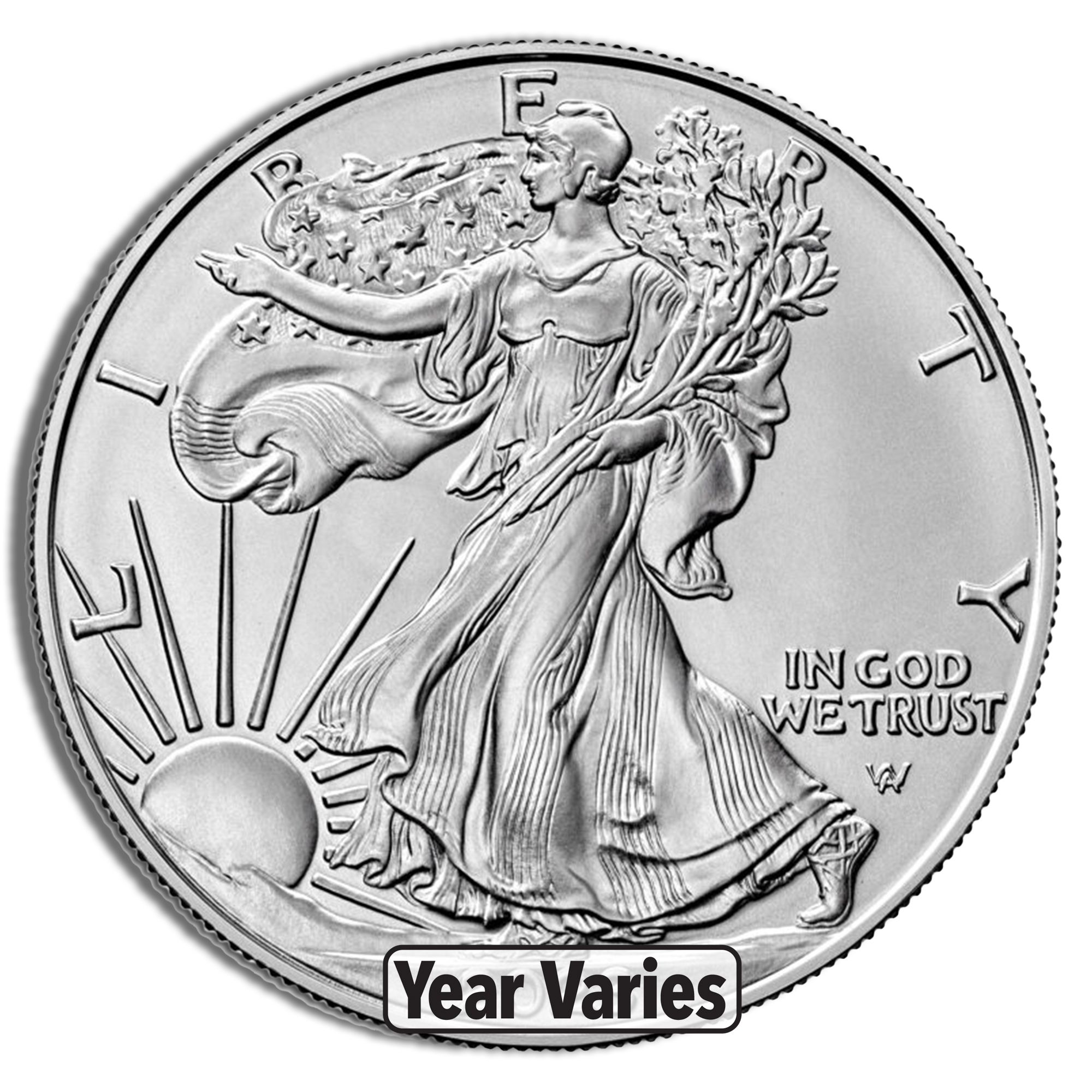
Silver American Eagle – BU (Year Varies)
A one-ounce .999 American Silver Eagle in BU condition with year varying.
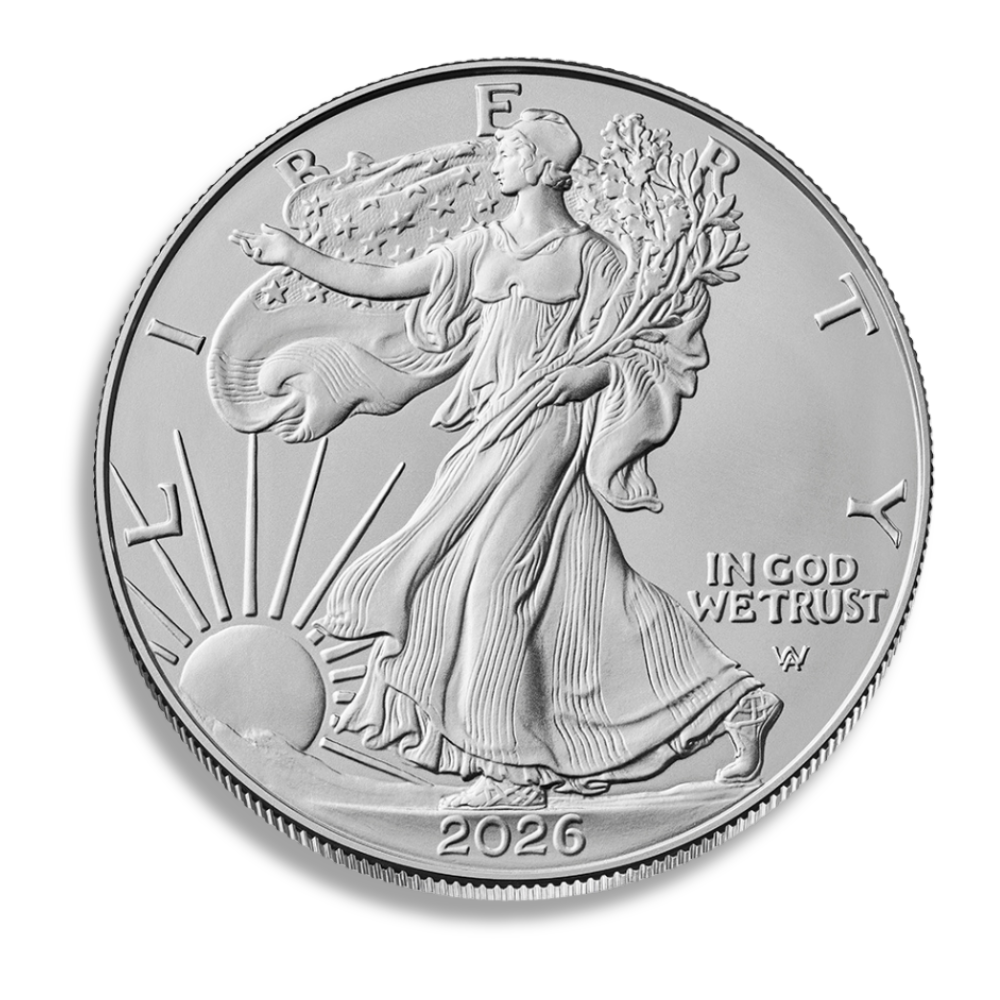
2026 Silver American Eagle – BU
A date-specific 2026 bullion American Silver Eagle.
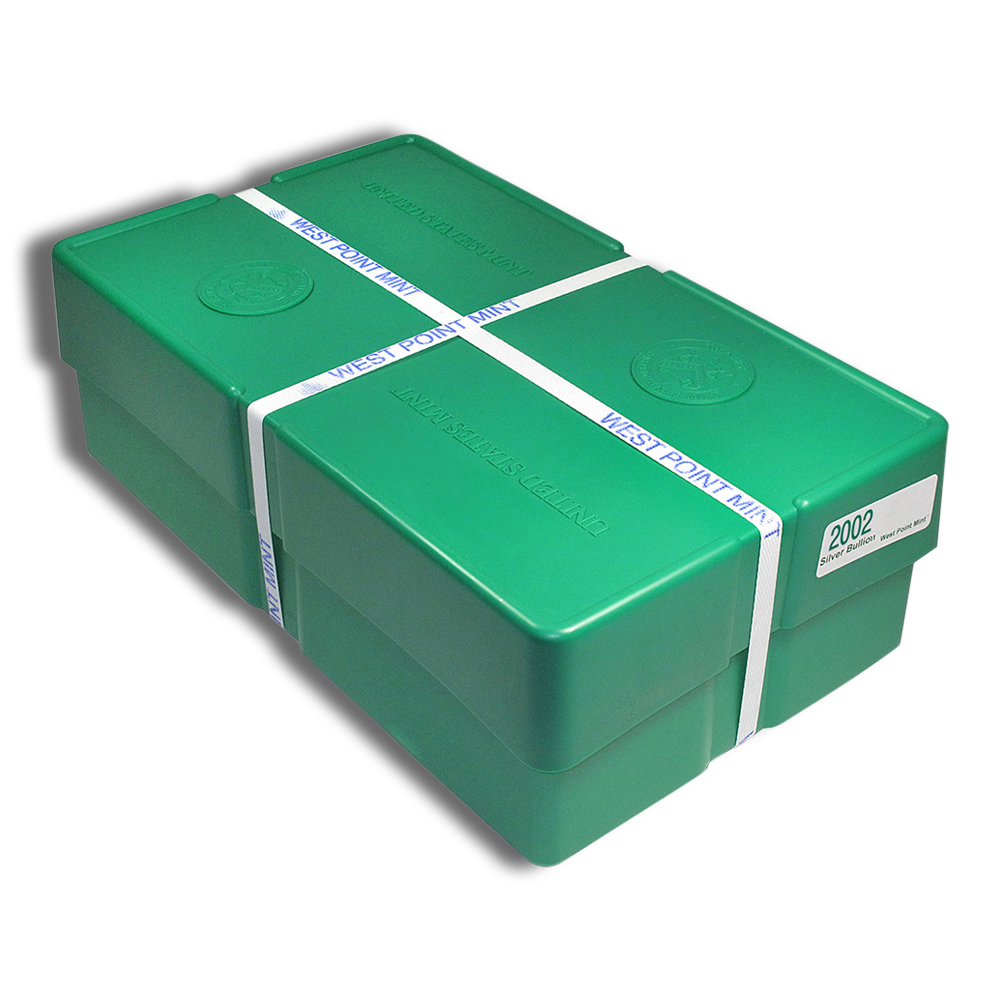
Silver American Eagle – BU – Sealed Box (Year Varies)
A sealed-box Silver Eagle listing; the live page controls quantity and fulfillment details.
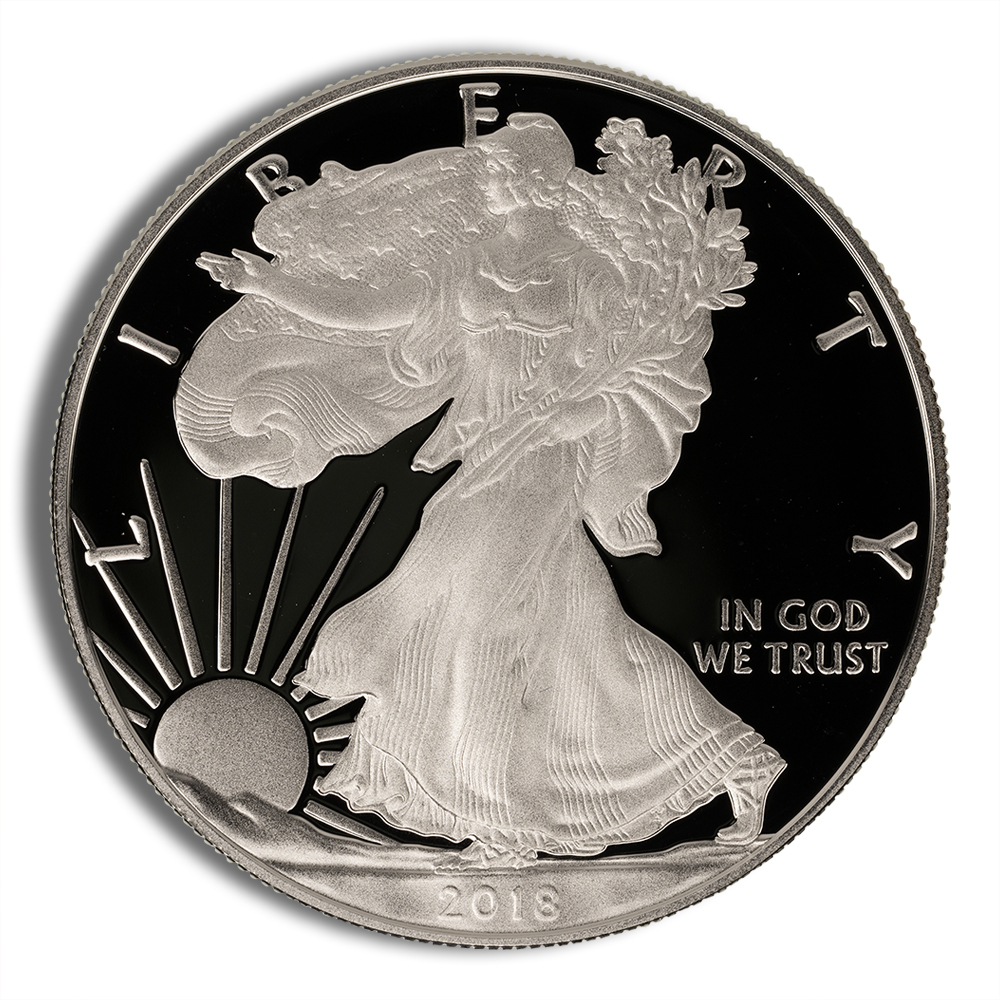
2018-W Proof Silver Eagle with Box & COA
A West Point proof sold with original-style packaging and certificate.
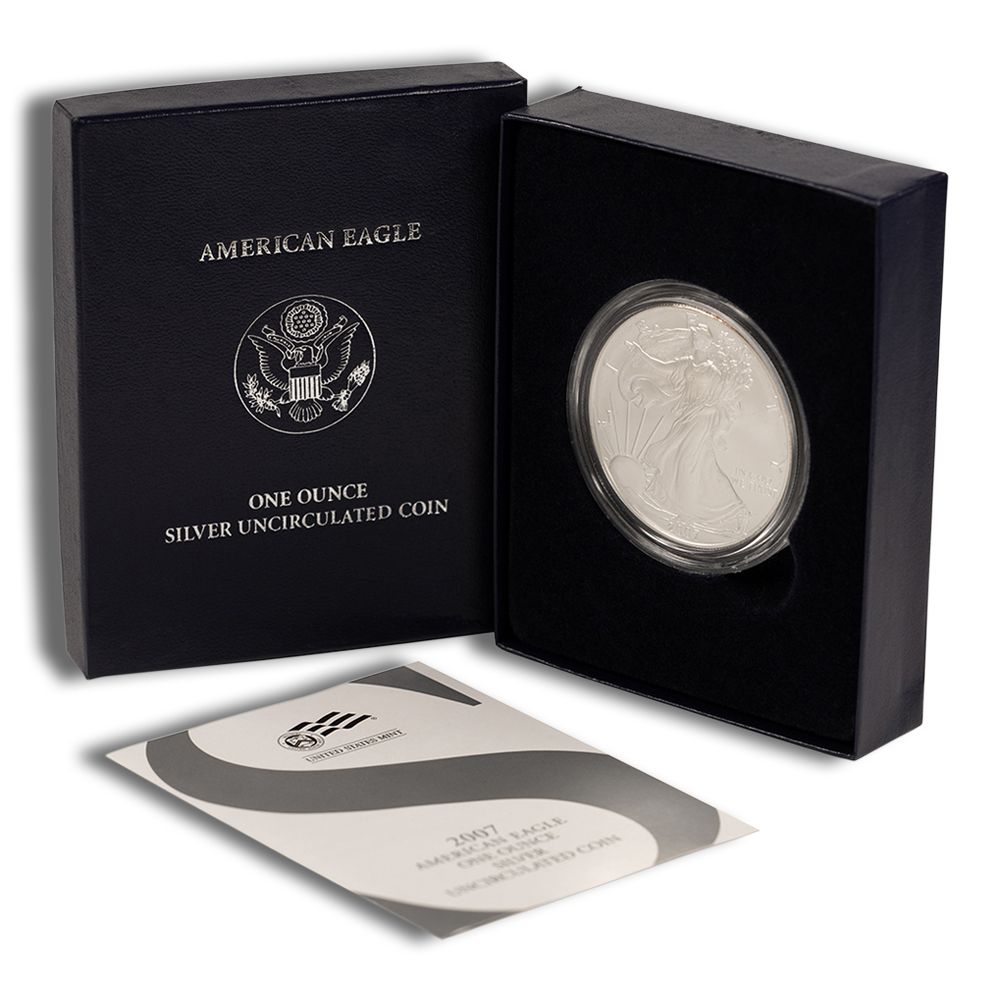
2007-W Burnished Silver Eagle with Box & COA
A burnished collector coin with W mint mark, box, and certificate.
Product pages, images, specifications, prices, premiums, packaging, and stock were reviewed September 5, 2026 and can change. The live listing controls the order.
What Agate Can Verify
Agate can verify the product name, stated metal, weight, purity, condition, packaging, and current transaction terms shown on its live listing. Availability, pricing, premiums, payment methods, shipping, returns, and buyback conditions can change. Confirm the exact listing and applicable policies before ordering.
Continue your research: spot-price and premium guide, silver coin melt-value guide, Silver American Eagle buying guide.
Start with the right price language
The easiest way to misread American Silver Eagle prices is to use several different values as though they mean the same thing. They do not. A standard modern bullion Silver Eagle contains one troy ounce of .999 fine silver; that metal content makes spot relevant, but it does not dictate the complete retail price.1
| Term | What it means | What it does not tell you by itself |
|---|---|---|
| Silver spot price | The actively changing benchmark price for a troy ounce of silver in the wholesale market. | The exact price of a physical Silver Eagle from a dealer. |
| Melt value | Fine-silver content multiplied by a chosen spot price. For a standard Silver Eagle, it is one troy ounce × spot. | A guaranteed retail price, dealer offer, or collector value. |
| Bullion premium | The amount above melt attached to the physical bullion product. | Whether an uncommon date or certified coin is a better collector purchase. |
| Retail ask | The seller’s stated price to sell the specific coin under the stated terms. | What another dealer will pay to buy that coin back. |
| Collector premium | Extra value the market may assign for issue, condition, grade, label, packaging, or demand. | A permanent or universally accepted price floor. |
| Buyback spread | The difference between a retail ask and a current dealer bid for the same—or a genuinely comparable—coin. | A guaranteed future resale result. |
For a deeper foundation on the benchmark itself, see Agate’s guide to spot prices, premiums, and market value. It is the price-and-premium hub for this topic. The practical point is simple: a buyer should compare the complete price of comparable coins at a common time, not compare one dealer’s retail ask with another source’s spot quote.
The formula behind a standard bullion Silver Eagle price
For a common-date, raw bullion Silver Eagle, begin with metal value and then identify the amount added for the physical coin.
For a coin-by-coin estimate, use Agate’s silver coin melt value calculator after confirming the Eagle’s format, fine-silver content, and the spot-price timestamp.
Melt value = 1.000 troy ounce × silver spot price per troy ounce
Retail ask = melt value + bullion premium + any separately stated transaction-specific amount
A price screen can change while you are comparing it because silver spot and physical inventory conditions can move separately. Record the source, time, currency, and unit for the spot figure. Use a troy ounce, not an avoirdupois (household) ounce.
A hypothetical quote comparison
The figures below illustrate the math only. They are not current prices, a quote, or an offer.
| Item in the example | Hypothetical amount | Calculation |
|---|---|---|
| Silver spot reference | $40.00 per troy oz | Chosen reference at one stated moment |
| Standard Silver Eagle fine-silver content | 1.000 troy oz | Official metal-content baseline |
| Melt value | $40.00 | 1.000 × $40.00 |
| Retail ask | $50.00 | Seller’s price for the specific coin |
| Dollar bullion premium | $10.00 | $50.00 − $40.00 |
| Premium percentage | 25% | $10.00 ÷ $40.00 × 100 |
| Illustrative dealer bid | $43.00 | A separate, hypothetical resale quote |
| Ask-to-bid spread | $7.00 | $50.00 − $43.00 |
This worksheet separates two questions that are often blurred: How much am I paying over silver value? and What would a buyer currently pay for this coin? The second answer can vary with quantity, product condition, the dealer, local demand, and the market timestamp. It may also change before a transaction is completed.
For the underlying calculation method and a broader U.S. silver-coin reference, read the silver coin melt-value guide. Melt is a useful baseline—not a promise of the price at which a particular Eagle will sell or be bought back.
Why the bullion premium can move when spot does not
A Silver Eagle is a fabricated, distributed, and resold physical product, so its premium can expand or contract independently of the silver benchmark. The U.S. Mint does not sell bullion American Eagles directly to the public; it distributes them through Authorized Purchasers, who create a two-way market with other market participants.2 That route helps explain why wholesale availability and dealer replenishment costs can affect retail premiums.
Common drivers of a bullion premium include:
- Minting and distribution economics. The coin must be produced, allocated through the wholesale channel, transported, handled, and offered for sale.
- Wholesale supply and retail demand. When ready-to-sell coins are less available relative to demand, a premium may rise. When supply improves or demand cools, it may fall.
- Order size and product form. A single raw coin, a sealed quantity, and a specific-year product may not carry the same premium structure.
- Condition and marketability. A clean bullion coin and an impaired coin can contain the same fine silver while attracting different buyer interest.
- Seller-specific pricing. Inventory position, services, and stated transaction terms can differ. Compare the all-in terms that actually apply to your purchase.
A higher premium is not automatically unreasonable, and a lower premium is not automatically the better deal. First establish that the coins are equivalent: same type, stated year policy, condition, quantity, and any packaging or certification. Then compare the dollars over melt and the percentage over melt using the same spot timestamp.
Collector premium: a separate layer above bullion value
Not every American Silver Eagle should be priced as a generic bullion coin. Proof and uncirculated collector issues, special finishes, certain dates, original government packaging, and third-party-certified coins may have a collector premium. That premium is not calculated by a fixed formula because it depends on the particular issue and on what buyers currently value.
| Coin category | Main pricing lens | Comparison caution |
|---|---|---|
| Common-date, raw bullion Eagle | Melt value plus bullion premium | Compare with other raw bullion Eagles of comparable condition. |
| Impaired bullion Eagle | Metal value plus a marketability-adjusted premium | Do not assume the lower price makes it interchangeable with a pristine coin. |
| Proof or uncirculated collector issue | Silver value plus issue, finish, packaging, and collector demand | Do not compare its retail price with a generic bullion Eagle. |
| Certified coin | Underlying coin plus grade, holder, attribution, population context, and demand | A label or high grade does not by itself establish a resale price. |
If a listing mentions MS, PF, PR, BU, or other grading shorthand, consult Agate’s coin grading terms explained before assigning a value to the letters. A grade describes an assessment category; it does not eliminate the need to compare the same coin, certification service, designation, and market conditions.
A useful pricing rule is to treat “premium” as two buckets, not one. The first bucket is the cost of acquiring a recognized physical bullion coin above its silver value. The second is the market’s willingness to pay extra for a particular collectible version. Combining those buckets hides the real comparison: a buyer may accept a larger bullion premium for convenience and recognition, but should require a specific, verifiable reason before paying a collector premium.
Use this five-step quote check before you buy
- Identify the exact coin. Is it a standard bullion coin, an impaired coin, a proof, an uncirculated issue, or a graded/certified example? Record the year, stated condition, packaging, and certification details where applicable.
- Capture a spot reference. Note the source, date, time, currency, and price per troy ounce. Do not combine a stale spot quote with a live product listing.
- Calculate melt and the dollar premium. For a standard Silver Eagle, multiply that spot figure by 1.000 troy ounce, then subtract the result from the retail ask.
- Compare truly comparable listings. Check whether the price is for one coin or a quantity tier, whether the year is specified or varies, and whether condition and packaging match.
- Ask about the current buyback indication. Request a separately stated bid for the same coin type and condition, together with the quote’s timestamp and any conditions. Treat it as a time-sensitive indication, not a future guarantee.
When comparing a local transaction with an online listing, confirm the complete terms directly with the seller rather than relying on a screenshot or old search result. Agate’s guide to where to buy silver coins near me can help frame the dealer questions that matter before a purchase or sale.
Verification supports a price decision, but it cannot prove a value conclusion
Before paying a premium, verify that the description matches the coin in front of you. Check year, type, stated condition, measurements, design features, and, where applicable, the certification number with the named grading service. Official Mint specifications are a useful starting point for the relevant issue; for example, the Mint lists one troy ounce of .999 fine silver and a 40.60 mm diameter for its 2025 one-ounce Silver Uncirculated coin.3
These checks have limits. A scale, calipers, visual comparison, or magnet can identify inconsistencies, but no single home test proves authenticity. Likewise, a genuine coin can still carry an unjustified retail price, and a grading holder or certification lookup does not independently establish collector value. If results are inconsistent or the premium is meaningful, pause the transaction and seek qualified in-person evaluation or professional testing appropriate to the item. Authentication, grading, and market valuation are related but different questions.
What the buyback spread tells you—and what it does not
The buyback spread is a decision tool, not a prediction. It compares today’s retail ask with a dealer’s current bid on a comparable item. For example, a buyer who pays a high retail premium may need a rise in silver, a premium increase, or both before a resale bid exceeds the original purchase price. Conversely, a low premium at purchase does not promise a particular resale outcome.
Ask a dealer to clarify whether the bid applies to raw common-date Eagles, proofs, certified coins, or impaired material. A generic “we buy Silver Eagles” statement is not comparable to a specific bid on a particular coin. Take care not to assume that melt value, a retail listing, and a dealer bid are interchangeable figures.
How to Compare Two Silver Eagle Prices
Two Silver Eagles can look similar while carrying different prices. Compare the same format before deciding whether one quote is lower: bullion versus proof, raw versus graded, year-varies versus date-specific, and loose versus sealed packaging are not interchangeable comparisons.
- Confirm the coin type, finish, year, mint mark, condition, and certification.
- Use the same silver spot source, currency, and timestamp for both comparisons.
- Separate melt value from the bullion premium and any collector premium.
- Compare the full delivered price, including payment, shipping, and other stated charges.
- If selling, request the current dealer bid for that exact format rather than comparing it with a retail listing.
Frequently asked questions about American Silver Eagle prices
Why are American Silver Eagle prices higher than silver spot?
A standard bullion Eagle contains one troy ounce of fine silver, so spot helps establish its metal value. Its retail ask also reflects the physical product’s bullion premium, which can be influenced by minting and distribution, wholesale availability, demand, product condition, and seller-specific costs. A collector version can add a separate collector premium.
How do I calculate the melt value of a Silver Eagle?
For a standard one-ounce Silver Eagle, multiply a timestamped silver spot price per troy ounce by 1.000. That result is the coin’s metal-value reference at that moment. It excludes the bullion premium, collector premium, and any dealer bid or retail-ask difference.
Are all American Silver Eagles priced the same?
No. Common-date raw bullion coins may trade in a similar range, but a proof, uncirculated issue, special finish, certified example, or impaired coin is not necessarily comparable. Year, condition, packaging, certification, and current demand can all alter the ask and bid.
Does a certified grade guarantee a higher Silver Eagle value?
No. Certification and a grade can be important to collectors, but the value still depends on the exact issue, grade, designation, population context, demand, and available comparable sales. Compare like with like rather than treating a label as a guaranteed premium.
What is a reasonable Silver Eagle buyback price?
There is no permanent single answer. A current bid depends on the exact product, condition, quantity, dealer, local or wholesale demand, and moment in the market. Ask for a timestamped bid and compare it with the current retail ask and melt reference; do not interpret any indication as a guaranteed future offer.
Can a magnet test verify a Silver Eagle is genuine?
No. A magnet can reveal some obvious problems, but it cannot prove authenticity because other materials may also be nonmagnetic. Use multiple checks and seek qualified testing when the result is uncertain or the potential loss is meaningful.
Are American Silver Eagle prices based only on silver spot?
No. Spot is the metal-value benchmark for the coin’s one troy ounce of fine silver. Retail pricing can also include fabrication, distribution, inventory, demand, and a bullion premium. Proof, burnished, graded, scarce, or specially packaged coins may carry a separate collector premium.
What is the difference between a Silver Eagle retail price and buyback price?
A retail price is the seller’s current ask for a specific coin. A buyback price is a dealer’s current bid under stated terms. The two can differ because the dealer must account for market movement, testing, inventory, resale demand, quantity, and transaction costs.
Is a year-varies Silver Eagle the same as a specific-year Silver Eagle?
They may contain the same one troy ounce of .999 fine silver, but they are different listings. A specific year, mint mark, finish, condition, packaging, or certification can change the marketability and premium. Compare the exact listing rather than assuming the products are interchangeable.
The practical takeaway
To understand American Silver Eagle prices, first separate silver value from the price of the physical coin. For common bullion Eagles, calculate melt from a timestamped spot reference, measure the dollar and percentage premium, and compare the retail ask only with comparable products. For collector issues, identify exactly what is being priced beyond the silver: issue, finish, condition, packaging, certification, or demand. Finally, obtain a current bid if resale flexibility matters to you.
Disclosure: This article is educational information, not individualized investment, appraisal, tax, legal, insurance, or financial advice. Prices, premiums, inventory, availability, and policies change—as can spot prices, dealer bids, and product conditions. Verify live listings, quote timestamps, product details, authentication methods, and transaction terms directly with the relevant seller before acting.