
Walking Liberty Half Dollar Silver Content and Melt Value
Walking Liberty Half Dollar Silver Content and Melt Value
A full-weight Walking Liberty half dollar contains 11.25 grams of silver, approximately 0.36169 troy ounce. The original coin weighs 12.5 grams and is 90% silver. Circulated bullion lots often use a lower allowance of 0.715 troy ounce per $1 face value to account for ordinary wear; that is a trading convention, not the original mint specification.
Know which Walking Liberty product you have
The original U.S. Walking Liberty half dollar series dates from 1916 through 1947. Its design is also familiar from later products, so the artwork alone is not sufficient identification. A modern private round or a gold tribute must be evaluated under its own weight and purity.
PCGS’s 1945 half-dollar entry provides a representative original-coin specification. Check the denomination, date, mintmark, dimensions, and overall appearance before applying the silver-half-dollar calculation. Do not use this formula merely because a product shows a walking figure of Liberty.
Calculate the original silver content
12.5 grams × 0.90 = 11.25 grams of silver. Divide by 31.1034768 to convert to troy ounces, then multiply by a current silver reference per troy ounce.
| Quantity | Face value | Original-specification silver |
|---|---|---|
| 1 half dollar | $0.50 | About 0.36169 troy ounce |
| 2 half dollars | $1.00 | About 0.72339 troy ounce |
| 20 half dollars | $10.00 | About 7.23391 troy ounces |
Keep the intermediate calculation unrounded when evaluating a larger group. These numbers describe original specification weight. They are not a guarantee of the remaining silver in a heavily circulated coin, and they do not include any collector premium.
Why dealers use 0.715 instead of 0.72339
Many circulated 90% silver dimes, quarters, and half dollars trade using approximately 0.715 troy ounce per dollar of face value. Agate’s linked $1 Walking Liberty listing uses that convention. Under it, $10 face value is treated as approximately 7.15 troy ounces for the quoted bullion calculation.
The difference accounts for ordinary circulation wear in a convenient way. It does not mean every group was individually melted or assayed. Slicks, holes, heavy damage, and unusual wear may be handled differently. Ask which convention the buyer uses and which coins qualify before comparing a quote with your calculator.
When condition matters more than the melt calculation
I separate bullion candidates from collector candidates before discussing a bulk price. A better date or mintmark, strong preservation, or a recognized variety can make a metal-only offer inappropriate. Conversely, an old date and an attractive design do not automatically create a large premium.
For a collectible example, compare sales for the same date, mintmark, grade, and problem status. A cleaned coin should not be priced from a problem-free example’s sale. If a valuable grade is central to the price, consider whether independent certification is appropriate for the coin’s likely value and the grading cost.
Choose a circulated lot or a higher-condition group
A standard circulated lot can suit a buyer primarily interested in divisible silver. An AU group is a different proposition: the premium also buys a stated level of preservation. Ask what AU means in the listing, whether photographs are representative, and whether particular dates are guaranteed.
Two half dollars have the same total face value as one dollar, but neither their silver content nor their collector market should be confused with a Morgan or Peace dollar. Keep denomination-specific calculations separate when a collection contains several types.
Before ordering, verify the coin count, total delivered price, condition terms, and likely resale basis. Store the coins in suitable holders or tubes, keep an inventory, and avoid cleaning. For a mixed inherited collection, photographs and an organized list make an initial dealer discussion more productive.
Explore the matching Agate products
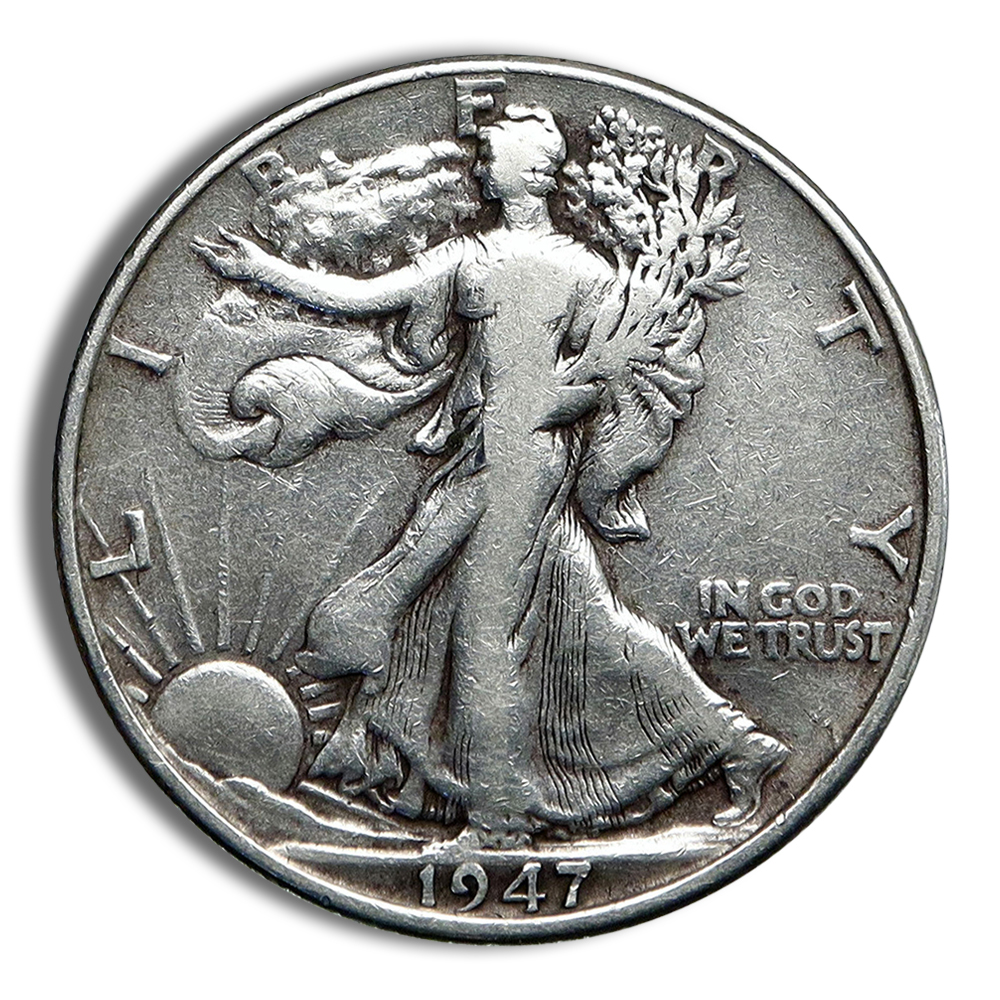
$1 Face Value — 90% Silver Walking Liberty Half Dollars
Two half dollars per $1 face value. The listing uses the circulated-bullion convention of 0.715 troy ounce.
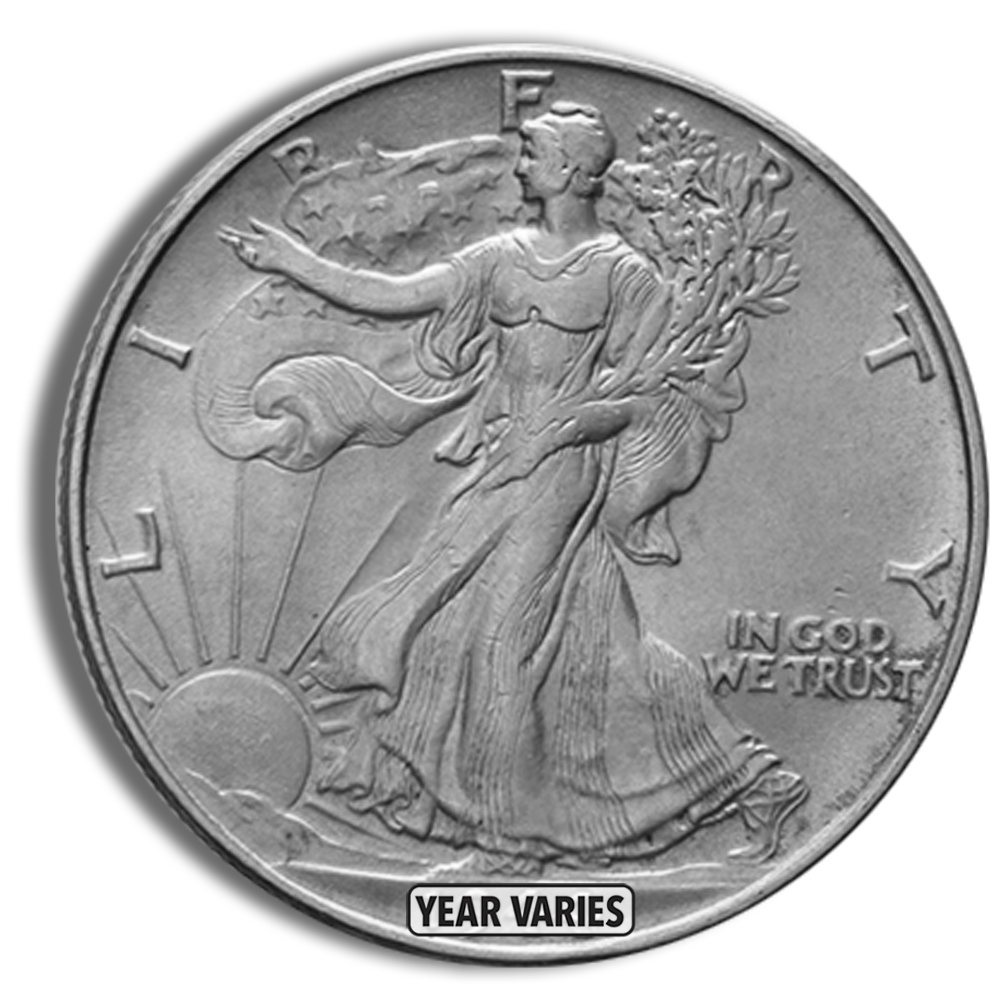
$1 Face Value — Walking Liberty Half Dollars, AU
An About Uncirculated condition option. Compare its premium with ordinary circulated examples.
Review the live listing for availability, shipping timing, packaging, and current pricing. Product photographs may be representative where the description allows variation.
Frequently asked questions
Is a Walking Liberty half dollar one ounce of silver?
No. An original full-weight coin contains approximately 0.36169 troy ounce of silver. It is a 90% silver alloy coin, not a one-ounce bullion round.
How many coins are in $1 face value?
Two half dollars. Face value is the denomination total, not the retail price or the silver weight.
Why does a dealer quote 0.715 ounce per dollar?
That is a common circulated-bullion allowance for wear. Original specifications yield about 0.72339 troy ounce per dollar of these half dollars.
Are all Walking Liberty halves worth only melt?
No. Date, mintmark, grade, varieties, and damage can change collector value. Evaluate promising examples before selling them in a bullion group.
Continue your comparison
Contact Agate Metals to confirm product details or discuss an item before ordering or shipping.