
What Years of U.S. Coins Are Silver? Complete Date Guide
What Years of U.S. Coins Are Silver? Complete Date Reference
For the U.S. coins most often found in collections, dimes and quarters dated 1964 or earlier are generally silver, 1964 half dollars are 90% silver, and 1965–1970 half dollars are 40% silver. Jefferson war nickels dated 1942–1945 contain 35% silver only when they have a large mintmark above Monticello.
- Dimes: 1964 and earlier are generally silver.
- Quarters: 1964 and earlier are generally silver.
- Half dollars: 1964 is 90% silver; 1965–1970 are 40% silver.
- Jefferson nickels: qualifying 1942 issues and all 1943–1945 war nickels with the large reverse mintmark are 35% silver.
- Morgan and Peace Dollars are 90% silver; Eisenhower Dollars require product-specific checking.
- Proof sets and commemoratives create important later-date exceptions.
U.S. silver coin dates by denomination
| Denomination or type | Dates to check | Typical silver standard | Identification note |
|---|---|---|---|
| Half dime | 1794–1873 | Early issues .8924 fine; later issues .900 fine | Obsolete denomination; identify the exact type and date. |
| Dime | 1796–1964 | Early issues .8924; most later issues .900 | Roosevelt dimes dated 1946–1964 are 90% silver. |
| Quarter | 1796–1964 | Early issues .8924; most later issues .900 | Standard 1965 and later circulation quarters are clad. |
| Half dollar | 1794–1964; 1965–1970 | Early issues .8924; most through 1964 .900; 1965–1970 .400 | Later silver proofs and collector sets are separate exceptions. |
| Jefferson war nickel | Part of 1942; 1943–1945 | 35% silver | Look for the large P, D or S mintmark above Monticello. |
| Morgan Dollar | 1878–1904 and 1921 | 90% silver | Contains about 0.77344 troy oz of silver when full weight. |
| Peace Dollar | 1921–1928 and 1934–1935 | 90% silver | Contains about 0.77344 troy oz of silver when full weight. |
| Silver Eisenhower Dollar | 1971–1974-S and 1976-S collector issues | 40% silver | Not every “S” Eisenhower Dollar is silver; verify the exact issue. |
| American Silver Eagle | 1986–present | At least .999 fine silver | Bullion/collector dollar with a $1 face value, not a circulation dollar. |
| Modern silver proof coins | Selected issues, especially 1992–present | 90% on many 1992–2018 issues; .999 on later silver proofs | The date alone is not enough; verify the set and Mint specifications. |
Scope note: This is a date-identification guide, not a price chart. Early U.S. coinage, commemoratives, proofs, special mint sets and error coins require product-specific references. Never assume that every coin with a certain denomination or mintmark has the same composition.
The 1964 dividing line for dimes and quarters
For ordinary twentieth-century pocket change, 1964 is the date most people need to remember. Roosevelt dimes and Washington quarters dated 1964 or earlier were generally struck in 90% silver. Standard 1965-dated dimes and quarters use copper-nickel clad construction.
There is a visible clue at the edge. Most worn clad coins show a copper-colored band, while a typical 90% silver coin shows a more uniform gray edge. Use that only as a sorting clue. Confirm the date, expected weight and complete coin type with Agate’s guide on identifying silver coins.
Half dollars need a two-step date check
The Kennedy half dollar crosses two silver standards. The 1964 issue is 90% silver. Regular 1965–1970 Kennedy halves are 40% silver. Standard circulation halves from 1971 forward are clad, although later silver proofs and special collector issues exist.
That difference affects calculation. A full-weight 1964 Kennedy half contains about 0.36169 troy ounce of silver. A 40% Kennedy half contains about 0.1479 troy ounce. Do not mix them in the same melt calculation without separating the groups.
How to identify silver war nickels
The date range alone is not sufficient for 1942. The wartime alloy was introduced during that year. Qualifying silver war nickels have a large mintmark—P, D or S—above Monticello on the reverse. This was also the first time the “P” mintmark appeared on a U.S. coin.
Each standard war nickel weighs 5 grams and contains 35% silver, equal to 1.75 grams or approximately 0.05626 troy ounce of fine silver. Keep them separate from ordinary Jefferson nickels and use Agate’s focused silver war nickel guide for the identification details.
Silver dollars: identify the series, not just the date
Morgan Dollars and Peace Dollars are the common classic silver-dollar series. Both use a 90% silver alloy and have about 0.77344 troy ounce of silver at full specification. Date, mintmark, grade and collector demand can make an individual coin worth more than melt value. Agate’s Morgan Dollar guide and Peace Dollar silver-content guide keep those collector questions separate from this date reference.
Eisenhower Dollars are where date-only shortcuts break down. Certain San Francisco collector issues from 1971–1974 and 1976 use a 40% silver-clad composition, while many other Eisenhower Dollars are copper-nickel clad. Original packaging, exact product type and weight matter.
Later silver proofs and collector issues
The 1964 rule applies to ordinary circulating dimes and quarters—not every product the Mint made later. Silver proof sets returned in 1992. Many 1992–2018 silver proof dimes, quarters and half dollars were 90% silver, while later silver proof issues moved to .999 fine silver. Bicentennial collector sets also included 40% silver 1976-S quarters, half dollars and dollars.
These exceptions are why an “S” mintmark is not proof of silver. San Francisco has made both clad and silver collector coins. Confirm the official set or coin specification before assigning metal value.
Examples from Agate’s current catalog
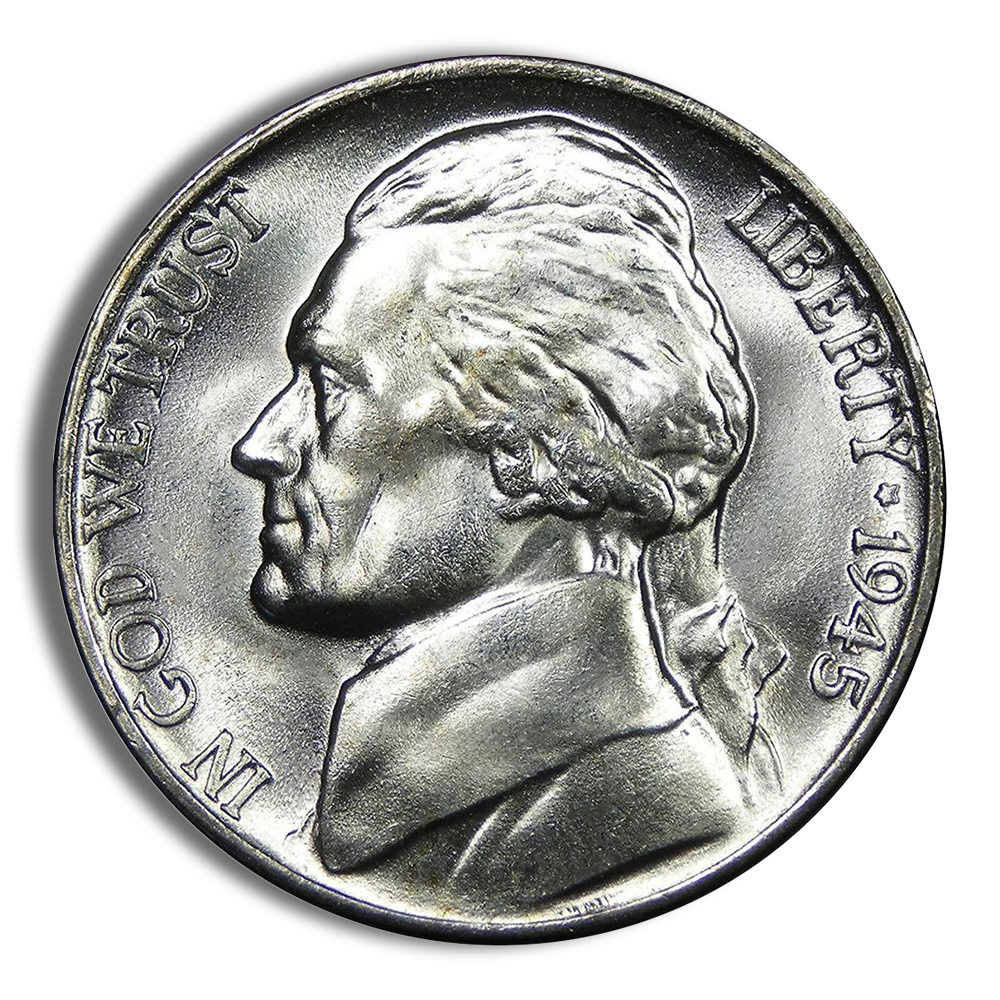
Silver War-Time Nickel, 1942–1945
Use the listing to confirm current availability and the supplied date.
View Current Price & Availability →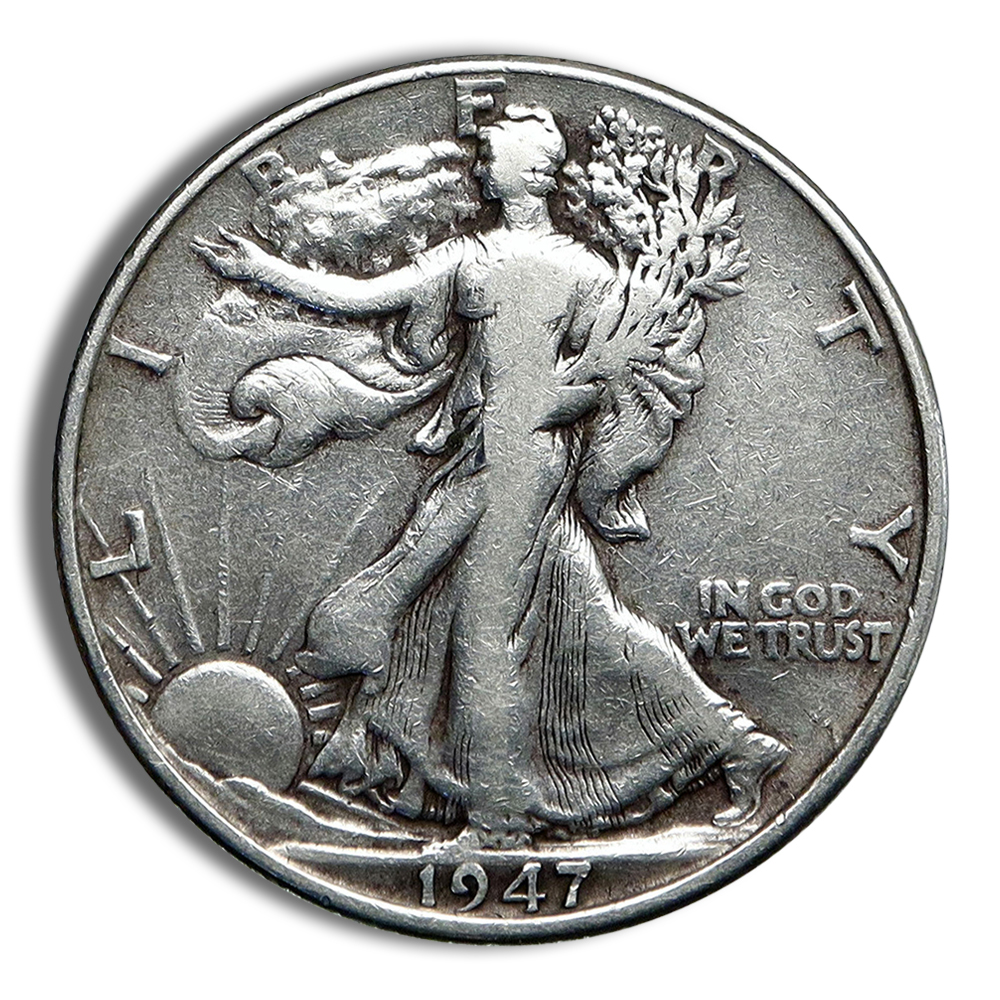
$1 FV Walking Liberty Half Dollars
Two 90% silver half dollars per $1 face value.
View Current Price & Availability →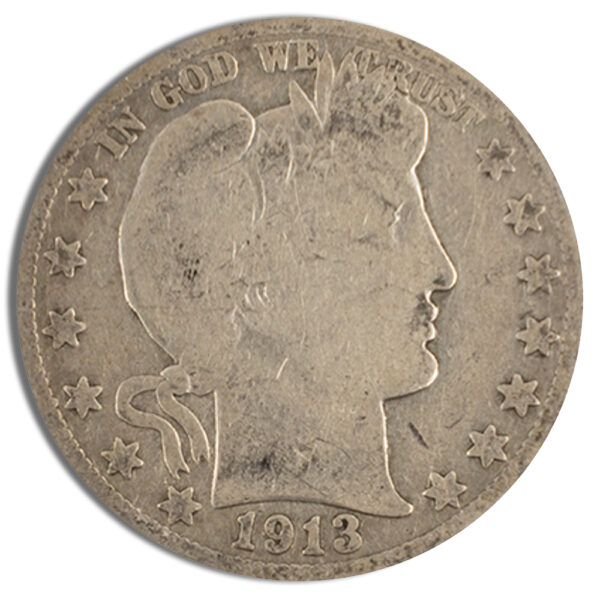
$1 FV Barber Half Dollars
Average-circulated historic U.S. silver; dates and designs may vary.
View Current Price & Availability →Product pricing and availability can change. Read each live listing for quantity, condition, date range and current order terms.
Frequently asked questions
Are all U.S. coins dated before 1965 silver?
No. Pennies and most nickels are not silver, and composition varied throughout U.S. history. The 1964 shortcut mainly applies to standard dimes and quarters.
Are all 1942 nickels silver?
No. Only 1942 nickels from the wartime silver-alloy production have the large mintmark above Monticello. Earlier 1942 nickels use the regular composition.
Are 1965–1970 half dollars silver?
Standard Kennedy half dollars dated 1965 through 1970 are 40% silver. The 1964 Kennedy half is 90% silver.
Are Bicentennial quarters silver?
Most 1776–1976 quarters from circulation are clad. Certain San Francisco collector versions were struck in 40% silver.
Does an S mintmark mean a coin is silver?
No. San Francisco produced both silver and clad collector coins. Verify the exact issue, set, composition and weight.
Sources and calculation note
- United States Mint: circulating coin specifications and programs
- Agate: 90% Silver Coins Explained
- Agate: Silver Coin Melt Value
- Agate: Walking Liberty Half Dollar Silver Content
Disclosure: This date reference does not provide a live price or appraisal. Verify the exact coin and use a current silver reference before calculating melt value. Collector value can differ from metal value.