
American Silver Eagle Value by Year, Type, and Condition
American Silver Eagle value starts with one troy ounce of silver, then changes with the coin’s year, issue type, condition, and collector demand. A bullion coin, a proof, and a certified example can share a date while selling for different amounts. Identify the exact coin before comparing prices.
The first question is simple: are you estimating a purchase price, an insurance value, or what a buyer will pay you today? Those are different numbers. This guide gives you a repeatable way to identify a Silver Eagle and find relevant comparisons without treating every older coin as a rarity.
Start with the silver, then identify the issue
The standard American Silver Eagle contains one troy ounce of silver and carries a one-dollar denomination. Its face value is not a useful guide to its bullion value. The U.S. Mint’s American Eagle program overview distinguishes bullion coins from collector versions and records the program’s 1986 introduction.
For a standard one-ounce coin, indicative metal value equals the silver spot price per troy ounce. That is a reference calculation, not a promised sale price. A retail buyer also pays for the finished coin and market premium. A dealer buying the coin considers resale demand, condition, authentication, and transaction costs.
How year and type affect a comparison
A date narrows your search; it does not complete it. Write down the year and any visible mint mark, then identify whether the coin is bullion, proof, reverse proof, or a collector uncirculated issue. A seller’s use of “uncirculated” as a condition description does not always identify a particular U.S. Mint collector product.
| Coin you have | Useful comparison | Comparison to avoid |
|---|---|---|
| Raw bullion Silver Eagle | Same date and similar ungraded condition | A top-grade certified proof |
| Proof with box and certificate | Same issue, finish, and packaging completeness | A generic bullion quote |
| Certified MS69 or MS70 | Same date, grading service, grade, and relevant designation | Assuming every holder earns the same premium |
| Spotted, scratched, or altered coin | Examples with comparable surface problems | Prices for undamaged examples |
Some years attract a stronger collector following than others, but “older” is not a pricing formula. Consult issue-specific references and completed sales. The PCGS Silver Eagle reference is a starting point for distinguishing issues; a guide value still needs to be checked against actual transactions.
Condition matters even when silver content is unchanged
A fingerprint, cleaning lines, spotting, or a noticeable rim hit may change collector demand without meaningfully changing the amount of silver. Examine both sides under ordinary diffuse lighting. Do not polish the coin to improve its appearance before getting a quote. You may remove surfaces a collector values.
For a certified coin, record the full label and certification number. Use the grading service’s verification tools, compare available images, and examine the holder for tampering. A matching database entry supports identification but does not, by itself, authenticate every physical holder bearing that number. Request professional review if the coin or holder seems inconsistent.
A practical Silver Eagle value worksheet
Suppose silver is hypothetically $30 per troy ounce, an ordinary bullion coin is offered for $38, and a buyer quotes $32 for the same coin. The retail premium is $8, or approximately 26.7% above the metal reference. The retail ask-to-bid gap is $6. Neither percentage is a statement about today’s market.
| Calculation | Hypothetical result | Meaning |
|---|---|---|
| Metal reference: 1 × $30 | $30 | Value of the stated fine-silver content |
| Retail premium: $38 − $30 | $8 | Amount above the metal reference |
| Premium: $8 ÷ $30 × 100 | 26.7% | Retail premium as a share of metal value |
| Ask minus bid: $38 − $32 | $6 | Same-time transaction gap before any fees |
For a collectible example, add a second worksheet: exact issue, grade, sale date, auction fees, shipping, and condition notes. Three relevant completed sales tell you more than a dozen unrelated asking prices. Do not add a retail premium to an auction result that already represents the full coin price.
How to compare a dealer offer
Send clear photographs and a precise inventory. Ask whether the quote recognizes the date and grade or is a generic bullion bid. Confirm quantity, price-lock terms, payment timing, possible inspection adjustments, and any shipping or processing costs. Compare net proceeds, not just the largest number in the first email.
Keep the coin in its holder and retain original packaging where supplied. If the coin has a plausible collector premium, compare a specialist’s assessment with the ordinary bullion offer before deciding. Certification costs can exceed the benefit for a common coin, so do not submit every raw Eagle automatically.
See a graded Silver Eagle example
This listing illustrates why the year and certification belong in the comparison. It is a graded collectible example, not a pricing benchmark for every one-ounce Silver Eagle.
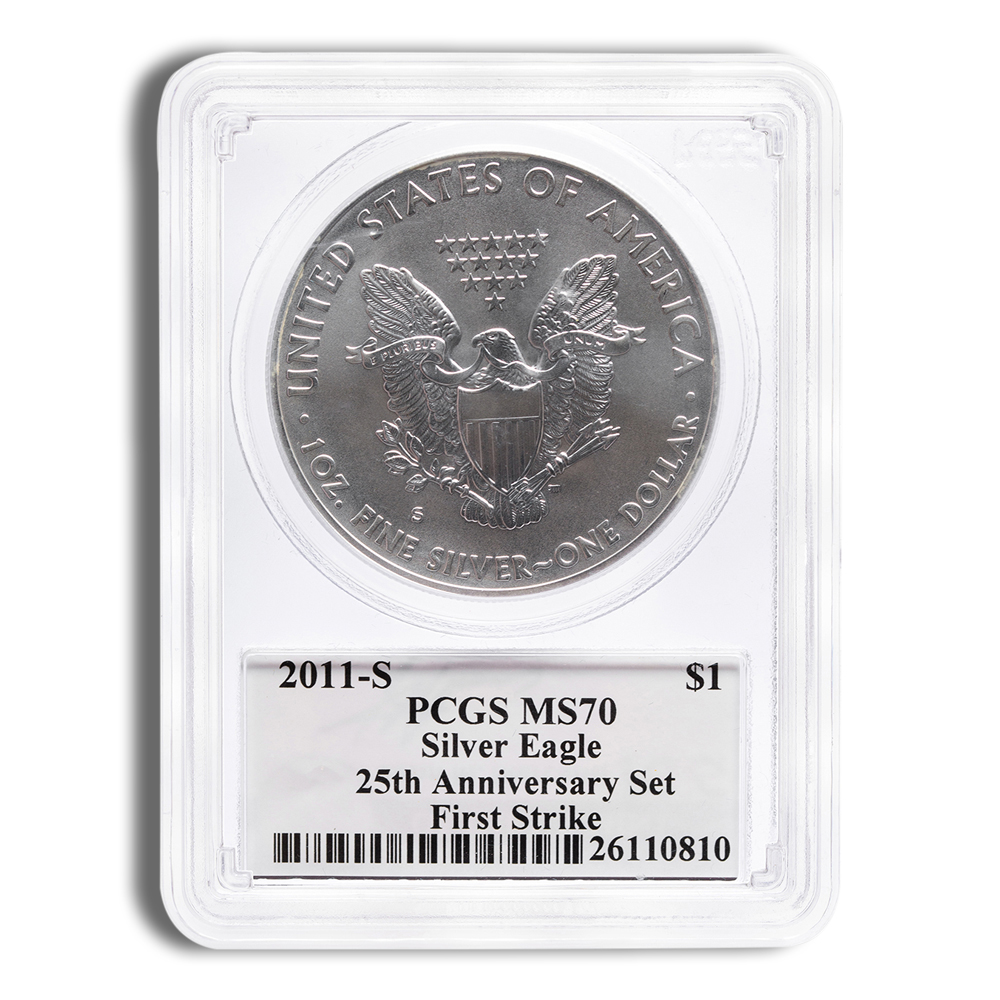
2011 Silver Eagle PCGS MS70
2011 issue identified as PCGS MS70; one-ounce .999 silver listing. Compare the complete grade and issue, not just silver weight.
View product details and availability →Product details reviewed September 18, 2026. Prices, stock, and dealer bids change; use the live listing and a fresh written offer.
Choose the right comparison before you buy
If silver weight is the priority, compare the delivered cost of similar bullion issues. If you collect dates or grades, set a separate collector-premium budget. For the wider format decision, read Agate’s silver coins, rounds, and bars comparison. Use the dealer fee and service checklist when evaluating the seller, and explore the Agate education hub for related buying guides.
Frequently asked questions
Is every older Silver Eagle worth more?
No. Date alone does not establish a premium. Identify the issue and condition, then look for comparable completed sales.
Is a proof worth the same as a bullion Eagle?
Not necessarily. Proofs are collector issues and need comparisons with the same finish, date, condition, and packaging.
Will a dealer pay the retail price I found online?
A retail ask is an offer to sell, not an offer to buy. Ask for a current net bid on your exact coin.
Does MS70 guarantee a profit?
No. A grade describes condition under the grading service’s standards. Market demand and your purchase and selling costs still matter.
Should I clean a spotted coin before selling?
Do not attempt polishing or abrasive cleaning. Show the surfaces honestly and obtain advice before making any alteration.