
100-Ounce Silver Bars: Weight, Value, Premiums, and Resale
100-Ounce Silver Bars: Weight, Value, Premiums, and Resale
A 100-ounce silver bar holds a large amount of silver in one piece: 100 troy ounces equals about 3.11 kilograms. Its purchase price depends on metal value plus a product premium. The key trade-off is divisibility: you generally sell the whole bar, rather than a few ounces at a time.
Before choosing this format, think about both ends of the transaction. A lower quoted premium per ounce can be useful, but it does not answer how you will store the bar, what a buyer will pay, or whether selling all 100 ounces at once fits your needs.
How heavy is a 100-ounce silver bar?
Using 31.1034768 grams per troy ounce, 100 troy ounces converts to 3,110.34768 grams, or approximately 3.11035 kilograms. That is about 6.86 ordinary pounds. Packaging and a shipping box add weight; do not use the packed shipment’s scale reading as a direct authenticity check.
A 100-ounce bar has no universal length, width, or thickness. Cast and minted products from different refiners can have different shapes. Compare a bar with specifications for its exact manufacturer and version, rather than a photograph of another brand’s bar.
| Format | Troy-ounce equivalent | Practical difference |
|---|---|---|
| 10 troy oz | 10 | Ten separate bars provide 100 ounces with smaller sale units |
| 1 kilogram | Approximately 32.1507 | Three kilos are about 96.45 ounces, not 100 |
| 100 troy oz | 100 | One larger unit, usually sold as a whole |
How much is a 100-ounce silver bar worth?
For a bar sold on the basis of 100 fine troy ounces, the metal reference is 100 multiplied by silver spot per troy ounce. Confirm what the manufacturer’s weight statement represents. If you are working from gross mass rather than stated fine content, adjust for fineness once. Do not apply purity twice to a number already expressed as fine ounces.
The metal reference, retail purchase price, and dealer bid answer different questions. A seller’s ask includes the market premium for that product. A buyer’s bid reflects the amount the buyer is prepared to pay under specified conditions. Neither must equal the spot-based calculation.
Compare premiums using equal amounts of silver
Consider this deliberately hypothetical comparison with silver at $30 per fine troy ounce. One 100-ounce bar is quoted at $3,200 delivered, while ten 10-ounce bars cost $3,300 delivered. Both choices represent 100 fine ounces in this example.
| Option | Total delivered cost | Cost per fine ounce | Amount above $3,000 metal reference |
|---|---|---|---|
| One 100-ounce bar | $3,200 | $32.00 | $200 / 6.67% |
| Ten 10-ounce bars | $3,300 | $33.00 | $300 / 10.00% |
The larger bar saves $100 at purchase in this example. The smaller bars let you sell 10 ounces without disposing of the other 90. That flexibility has a cost you can now see. These are teaching numbers, not Agate prices or claims about the premium available today.
Use the same payment method and delivery destination when comparing actual quotes. Include required shipping, payment charges, and applicable tax. A low displayed per-ounce figure can lose its advantage after order costs. Agate’s 10-ounce silver bar guide gives the smaller-format perspective.
Brand-varies versus a named refiner
A brand-varies listing can suit a buyer focused on metal content rather than a particular logo or bar design. Read the description carefully: a representative image is not a promise that you will receive the pictured manufacturer, serial number, or finish. Ask before ordering if those details are essential.
A named refiner may offer more predictable dimensions, markings, or packaging. That does not automatically make its premium recoverable at resale. For an older collectible bar, ask whether a buyer recognizes a separate collector market. Age and an attractive stamp are not enough to establish rarity.
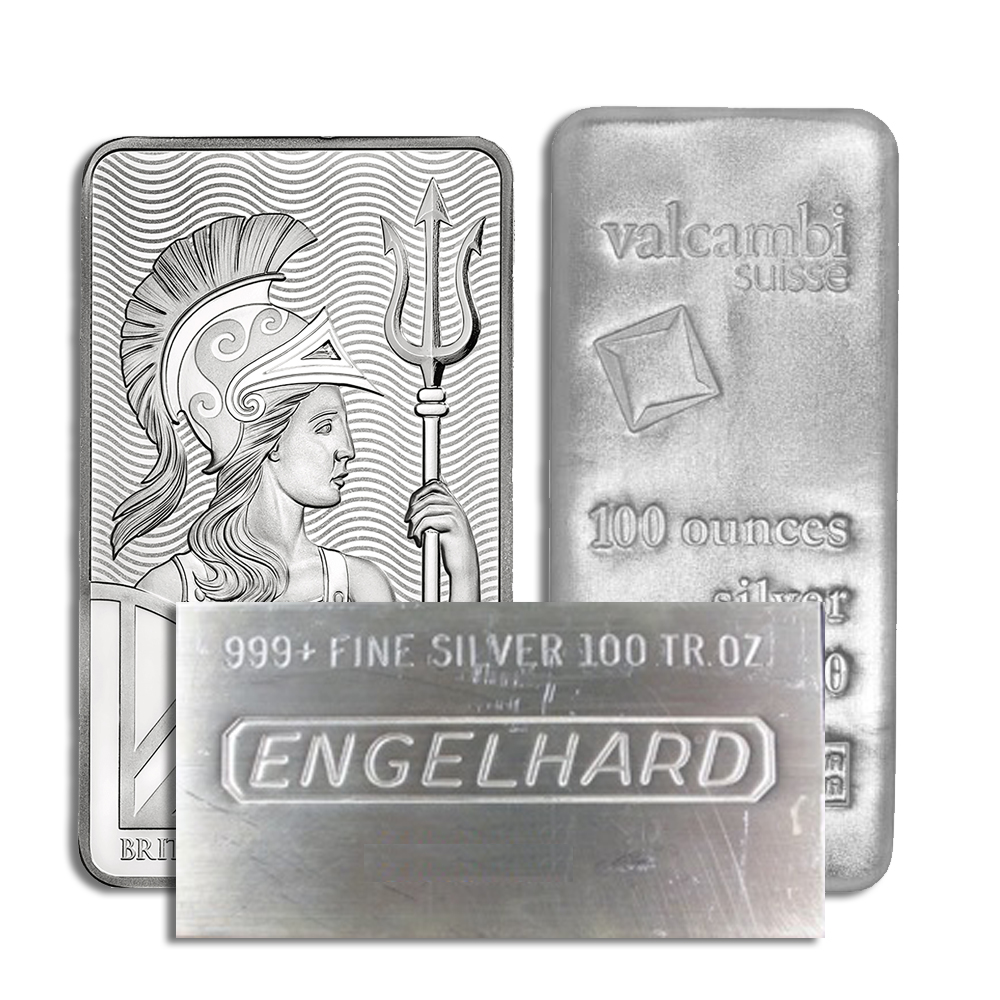
100 oz Silver Bar - Brand Varies
Agate’s listing specifies 100 oz, .999 silver, and a varying manufacturer. The image is representative; supplied brand and packaging may differ.
View product details and availability →Listing reviewed September 18, 2026. Availability, product selection, and prices can change. No price in this article is a live quote.
Storage and handling deserve a plan
Keep records of the manufacturer, markings, any serial number, purchase date, invoice, and photographs. Store the bar so it cannot fall onto another item or damage a shelf. A secure storage location should have suitable load capacity and access controls; do not publish its location with your collection photographs.
Ask your insurer or storage provider what the contract covers. Do not assume a household policy or a carrier’s standard declared-value option covers bullion at replacement value. Documentation and coverage are separate from the physical choice of bar.
Who buys 100-ounce silver bars?
Potential buyers include bullion dealers and other established market participants who handle larger silver units. Acceptance depends on the actual bar, authentication, demand, and transaction terms. A recognizable format does not guarantee immediate payment or a bid at spot.
Get authorization before shipping. Ask whether the quote is locked, when testing occurs, how adjustments are handled, and who bears insured transit costs. Cutting a bar into smaller pieces changes the product and can make resale harder; use smaller formats from the outset if partial sales are likely.
For a broader choice, compare silver coins, rounds, and bars. Review dealer services and transaction fees before choosing a counterparty.
Frequently asked questions
Is a 100-ounce bar the same as a 100-ounce household weight?
No. Bullion uses troy ounces. One hundred troy ounces is approximately 3.11 kilograms.
Are all 100-ounce bars the same size?
No. Shape and dimensions vary by refiner and production method. Use the exact product specifications.
Does a bigger silver bar always have a lower premium?
No. Compare live delivered quotes for equal fine-silver content. Inventory and brand demand can change the result.
Can I sell only part of the bar?
Normally you sell the bar as one unit. Smaller bars give you smaller sale increments without altering the product.
Will tarnish make the bar worthless?
Toning does not remove its underlying silver value, but condition can affect a particular buyer’s bid or collector premium. Avoid abrasive cleaning.