
1 Gram Gold Bar Size: Dimensions and Visual Guide
1 Gram Gold Bar Size: Dimensions and Visual Guide
Small Gold Bars · Compare Brands
Find Your 1 Gram Gold Bar
Compare Valcambi, Argor-Heraeus, Perth Mint, PAMP Fortuna, and brand-varies carded bars. Check the exact product, packaging, and current price before choosing your small-format gold.
Product photos are enlarged for detail. The gold piece is much smaller than the card surrounding it.
A 1 gram gold bar is a very small gold product, but it does not have one universal set of dimensions. A compact illustrative reference is approximately 14.7 × 8.9 × 0.4 millimeters—about 0.58 × 0.35 × 0.016 inch. Exact length, width, and thickness depend on the refiner and design.
Use those measurements to picture the scale, not to authenticate every one-gram bar or order a fitted holder. Confirm the manufacturer’s specifications for the exact product you are considering.
Illustrative dimensions only. These figures are not specifications for all products linked below.
What Does a 1 Gram Gold Bar Look Like in Your Hand?
A length of 14.7 millimeters is a little over half an inch. A width of 8.9 millimeters is a little over one-third of an inch. That makes the bare gold piece considerably smaller than most enlarged product photographs suggest.
A standard payment card is approximately 85.60 × 53.98 millimeters. The illustration below compares that familiar outline with the reference bar’s face dimensions. Actual assay-card dimensions vary by manufacturer.
Why One-Gram Gold Bar Dimensions Vary
Weight does not dictate one shape. Manufacturers can distribute the same mass across different lengths, widths, and thicknesses. Raised designs, borders, and rounded edges also affect external measurements.
| Factor | Effect on Appearance | Buyer Check |
|---|---|---|
| Production method | Cast products are formed in molds; minted products are made from prepared blanks and struck with a design. | Confirm the product’s manufacturing format. |
| Refiner tooling | Blank outlines and die dimensions differ between products. | Use specifications for the exact refiner and bar. |
| Relief and border | Raised lettering, designs, and rims affect maximum thickness. | Compare measurements taken at equivalent points. |
| Metal composition | Density influences the volume occupied by a given mass. | Confirm the stated fineness and weight basis. |
| Packaging | The card or capsule is much larger than the bare gold piece. | Keep packaged dimensions separate from bare-bar dimensions. |
How Volume and Shape Affect Thickness
Using an approximate gold density of 19.3 grams per cubic centimeter, one gram occupies about 0.0518 cubic centimeter, or 51.8 cubic millimeters. Spreading that volume over a 14.7 × 8.9 millimeter rectangular face gives an average thickness of approximately 0.40 millimeter.
Illustrative calculation:
Volume ≈ 1 g ÷ 19.3 g/cm³ = 0.0518 cm³
Face area = 14.7 mm × 8.9 mm = 130.83 mm²
Average thickness ≈ 51.8 mm³ ÷ 130.83 mm² = 0.396 mm
This simplified rectangular model explains the scale. It does not account for rounded corners, raised artwork, or manufacturing tolerances and should not be used as a factory specification.
At the same mass and density, a wider bar generally needs to be thinner, while a narrower bar can be thicker. Two genuine one-gram bars can therefore look different without either being incorrectly described.
The Gold Bar Is Smaller Than Its Assay Card
Many one-gram bars are supplied in branded cards that make the piece easier to handle, identify, and protect. Packaging may display the refiner, stated weight, fineness, and a serial number or security feature, where applicable.
The card’s external dimensions are not the bar’s dimensions, and the packaged weight is not the gold weight. Learn how to interpret the information in Agate’s assay-card guide .
Do not open sealed packaging solely to satisfy curiosity about size. If you need exact dimensions for a holder or testing fixture, obtain the manufacturer’s information or ask the seller before purchasing.
How to Measure a Loose Gold Bar
- Prepare a soft work surface. Keep the bar away from hard edges and places where it could fall.
- Check the calipers. Use non-marring measuring surfaces and confirm the zero reading.
- Measure length and width gently. Avoid scraping or squeezing the edges.
- Check thickness at several points. Note whether the measurement includes a raised rim or design.
- Weigh the loose bar. Use a calibrated scale with suitable accuracy. A 0.01-gram display resolution does not by itself guarantee 0.01-gram accuracy.
- Repeat and record. Keep the readings and instrument limitations with your product notes.
- Compare the exact product. Use the relevant manufacturer’s specification rather than another brand’s measurements.
Can Correct Dimensions Prove a Gold Bar Is Genuine?
No. Incorrect measurements can reveal a discrepancy, but correct external measurements do not establish the composition of the entire piece. Weight, size, packaging, and markings should be evaluated together.
Tiny bars are especially difficult to assess through home density calculations. A small error in measuring a fraction of a millimeter can cause a substantial percentage error in the estimated volume. Raised artwork further complicates the calculation.
If something does not match, preserve the bar and packaging and seek a qualified evaluation. Professional testing must be appropriate for the bar’s size, thickness, and packaging; a single instrument reading should not be treated as a universal certificate.
Practical buyer note: Expect a very small gold piece inside a much larger package. Judge the purchase by its stated metal content, exact product details, and delivered cost—not how large the photograph appears.
Choosing Storage for a Tiny Gold Bar
- Keep original carded packaging intact when its condition matters.
- Avoid bending, puncturing, or placing heavy objects on the card.
- Use an inert, appropriately sized holder for a loose bar.
- Keep adhesives and unsuitable plastic materials away from the metal.
- Record the refiner, weight, purity, and serial number when present.
- Retain invoices and photographs separately from the physical holding.
- Review access and insurance arrangements for your storage method.
For a broader comparison, see Agate’s gold and silver bar size guide . The one-gram bar versus one-tenth-ounce coin comparison explains the difference between physical size, gold content, and purchase premium.
How Does a One-Gram Bar Compare With Other Gold Products?
| Format | What to Compare | Main Decision Point |
|---|---|---|
| 1 gram gold bar | Dimensions, fineness, refiner, packaging, and delivered cost. | A small individual purchase with potentially higher cost per gram. |
| 1/10 troy-ounce gold coin | Approximately 3.11035 grams of fine gold, mint, condition, and premium. | More gold in one piece and a different coin format. |
| Larger gold bar | Total purchase amount, cost per fine gram, storage, and resale terms. | More gold in a single item, with less flexibility for partial sales. |
A smaller purchase price does not necessarily mean a lower premium. Compare complete checkout costs using the same payment method and shipping assumptions. Weight alone does not determine which product fits your needs.
What to Check Before Ordering
- Weight and purity: Confirm the exact listing’s stated metal content and fineness.
- Refiner selection: Determine whether you are choosing a named brand or accepting a brand-varies item.
- Dimensions: Obtain product-specific measurements if a holder or fixture requires an exact fit.
- Packaging: Check whether the bar is carded, sealed, loose, or supplied in another format.
- Total cost: Compare the delivered price rather than only the advertised unit price.
- Order terms: Review current availability, shipping, payment, and return or cancellation terms.
Compare Five Carded 1 Gram Gold Bars
These listings offer different refiner and design choices. Do not assume that every bar below shares the illustrative dimensions used earlier in this guide.
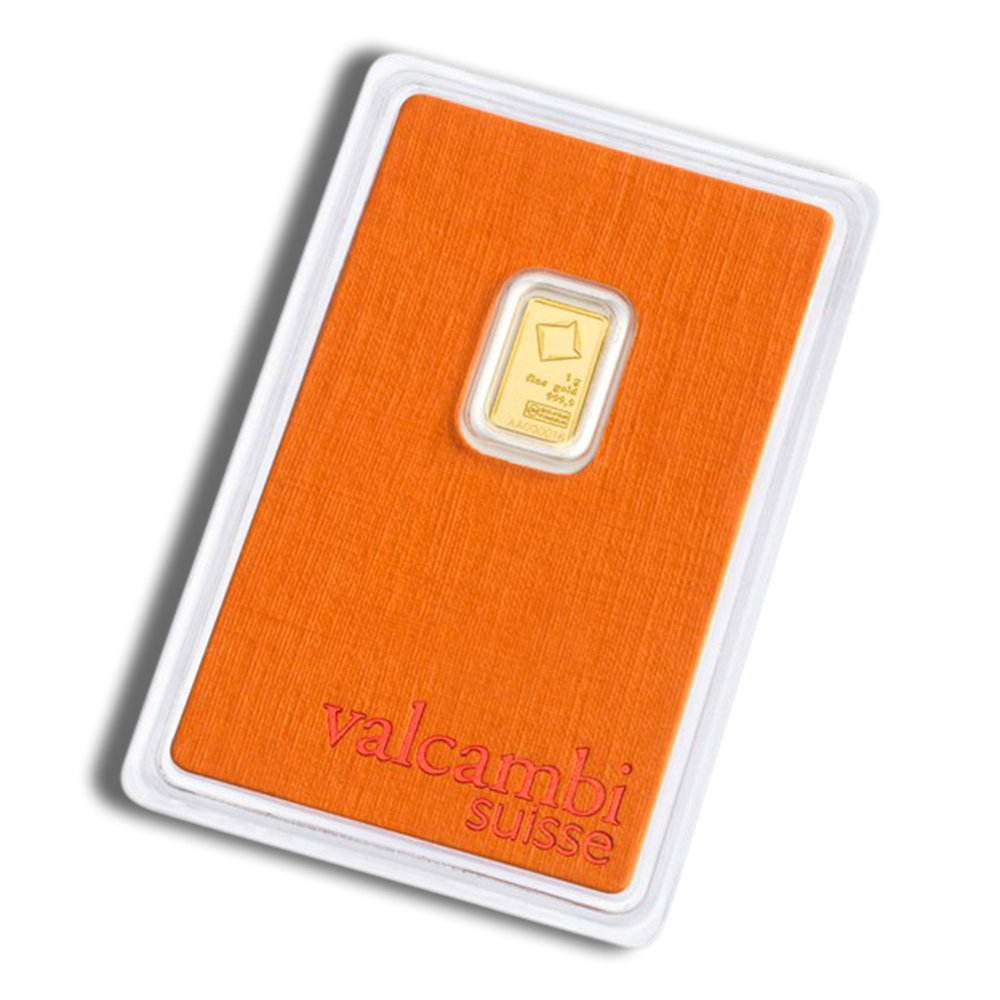
1 Gram Gold Bar – Valcambi (Carded)
A named-refiner option in a compact gram format. Review the exact bar and card specifications before selecting a holder.
View Price & Availability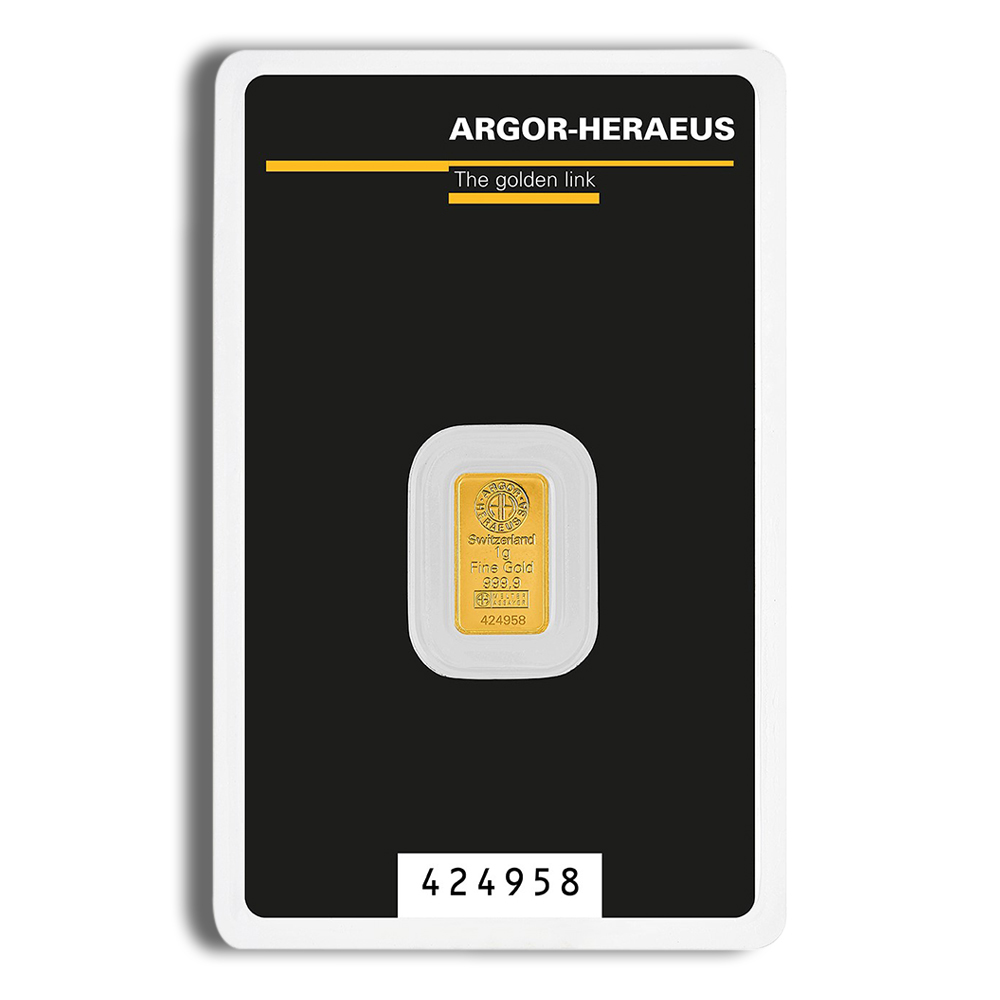
1 Gram Gold Bar – Argor-Heraeus (Carded)
Compare this carded Argor-Heraeus listing by product identity, presentation, and complete checkout cost.
View Price & Availability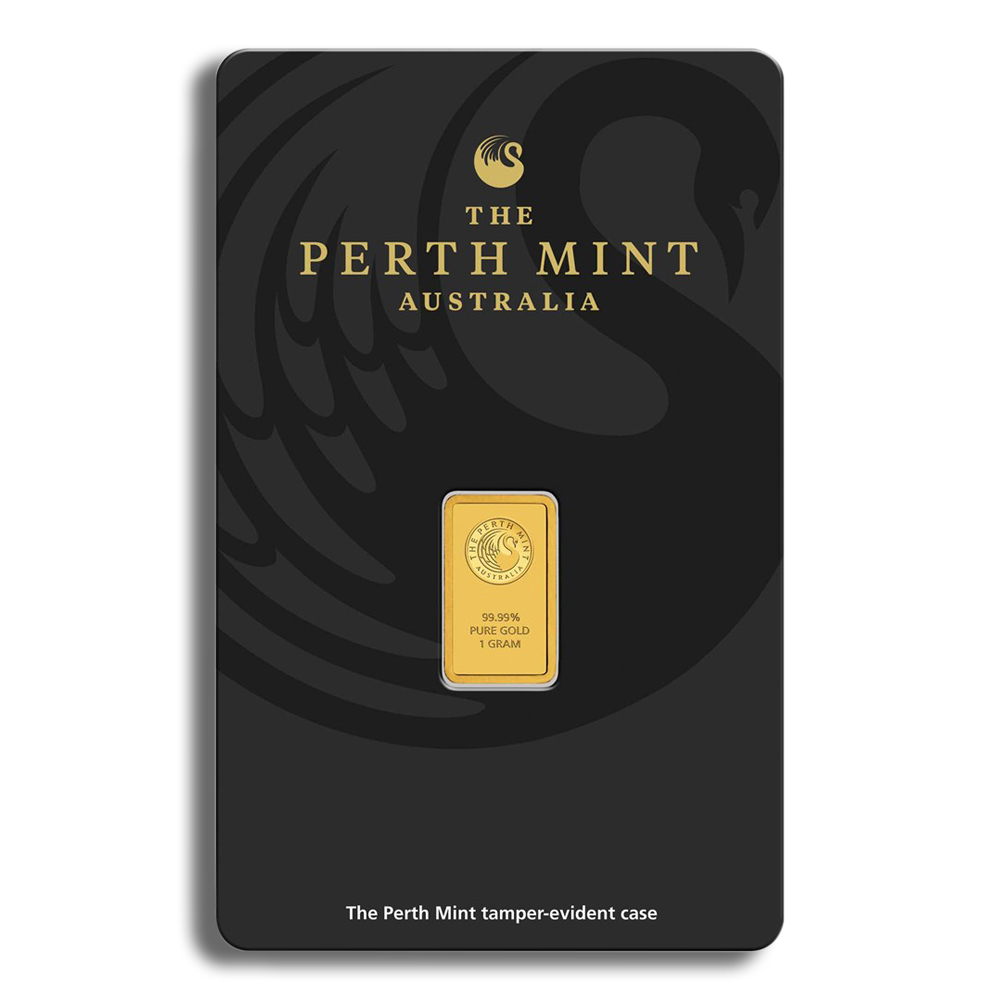
1 Gram Gold Bar – Perth Mint (Carded)
A Perth Mint option for buyers seeking a specific producer. Distinguish the bare gold piece from the surrounding package.
View Price & Availability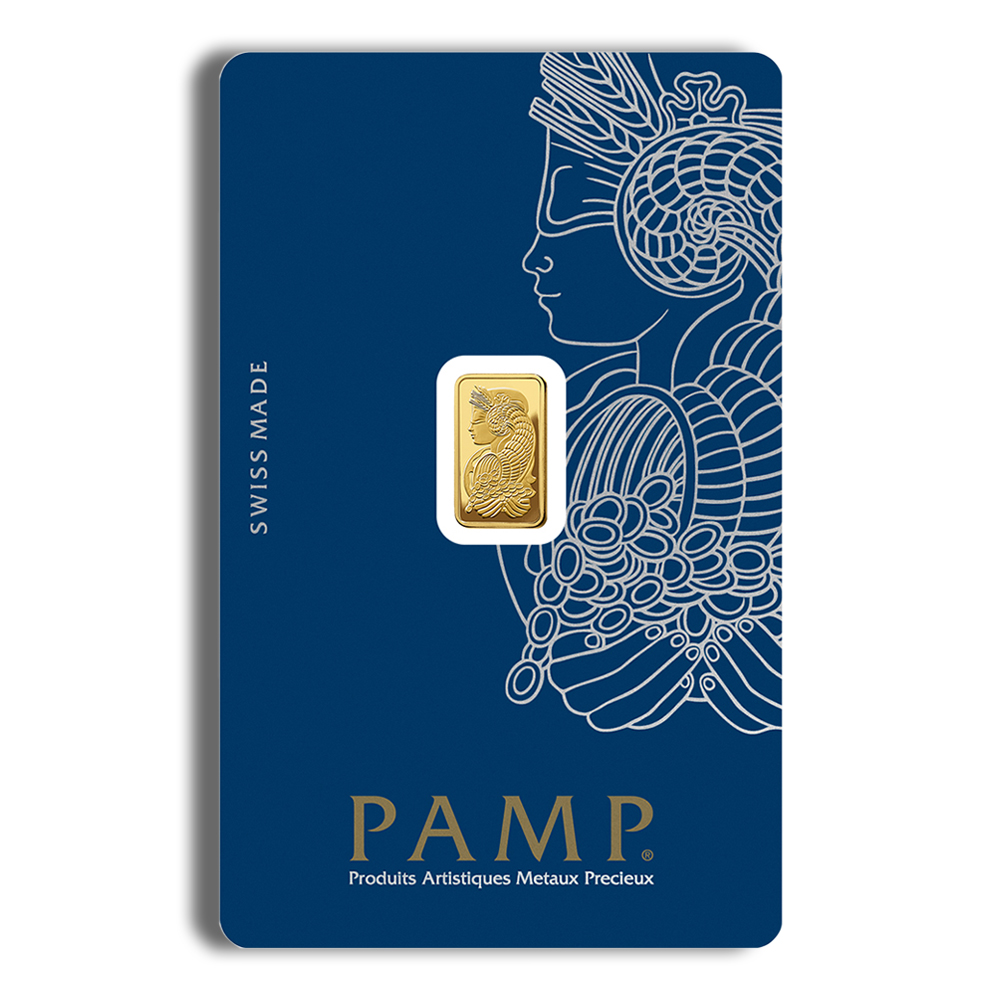
1 Gram Gold Bar – PAMP Fortuna (Carded)
A small-format Fortuna design. Check the listing for the precise presentation and product details.
View Price & Availability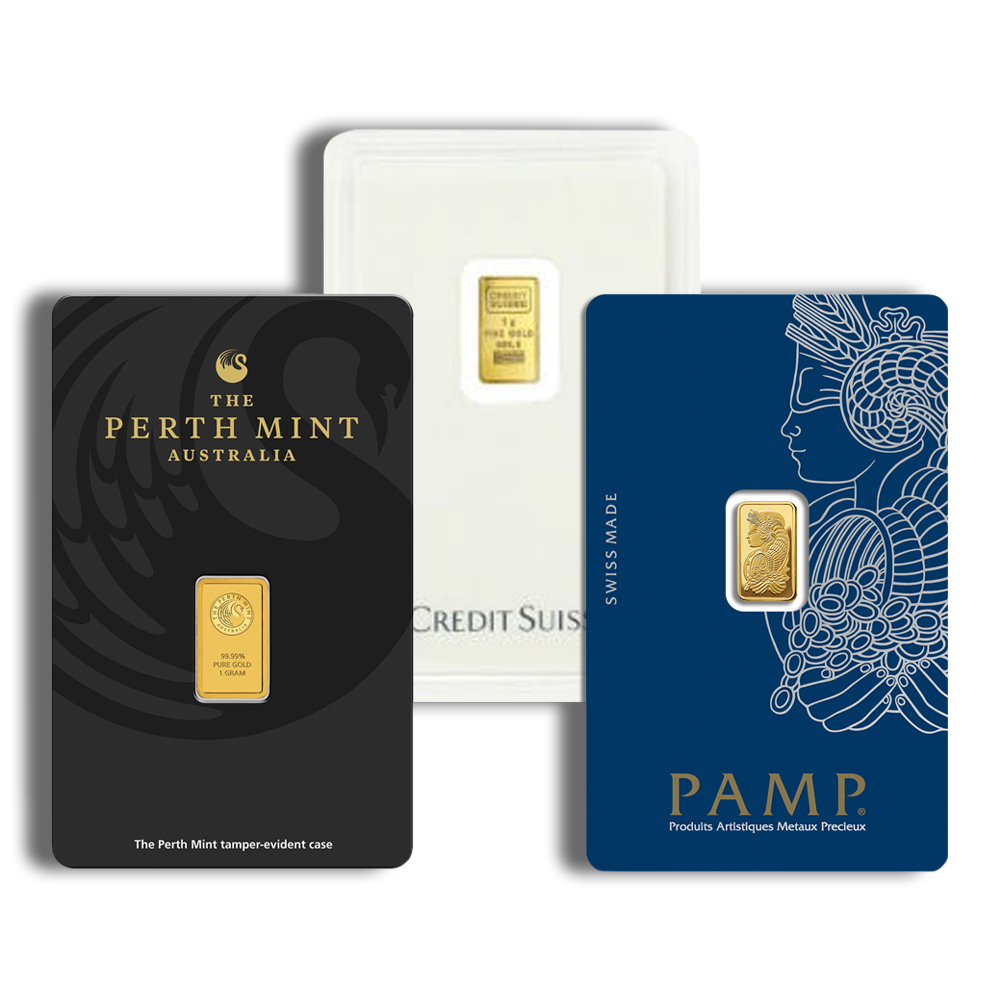
1 Gram Gold Bar – Brand Varies (Carded)
The fulfilled refiner or design may vary under the listing’s terms. Do not order a fitted holder based solely on the representative image.
View Price & AvailabilityImages illustrate the linked products. Packaging, specifications, prices, and stock can change. Confirm the exact listing before ordering.
Frequently Asked Questions
What are typical dimensions of a 1 gram gold bar?
A compact illustrative reference is approximately 14.7 × 8.9 × 0.4 millimeters. There is no universal standard for every one-gram bar, so obtain dimensions for the exact refiner and design.
How big is a 1 gram gold bar in inches?
The 14.7 × 8.9 × 0.4 millimeter reference converts to approximately 0.58 × 0.35 × 0.016 inch. Those figures describe the illustrative bare bar, not its surrounding assay card.
Are all 1 gram gold bars the same size?
No. Manufacturers can use different shapes, face dimensions, thicknesses, and relief while meeting the stated weight specification. Compare measurements with the same product, not another brand.
Is the assay card the same size as the gold bar?
No. The card is larger and helps protect and identify the small piece. Card dimensions vary by manufacturer and should be checked separately from bare-bar dimensions.
Can correct dimensions prove a one-gram bar is real?
No. Matching size and weight are supporting observations, not complete authentication. Evaluate the product identity, seller, packaging, records, and appropriate professional test results together.
Should I remove a one-gram bar from its card to measure it?
Usually, preserve the original sealed presentation and obtain the manufacturer’s dimensions instead. If testing is needed, ask a qualified professional about suitable methods before opening the package.
Choose the Bar Knowing Its Actual Scale
Compare the refiner, packaging, metal content, and delivered price. A one-gram bar is small by design—make sure the format fits your purchase.
Measurements in this guide illustrate scale and do not certify an individual product. Confirm exact specifications, availability, and transaction terms before purchasing.