
100 oz Silver Bars: Weight, Premiums, Storage, and When They Fit
A 100 oz silver bar can suit a buyer who wants to hold a substantial amount of silver in one compact unit and is comfortable selling or moving it as one piece. It contains 100 troy ounces as listed, but it is not automatically the right format for every budget, storage setup, or resale plan. The trade-off is simple: potentially efficient ounces per purchase versus less flexibility.
Key Takeaways
- A 100 oz silver bar is measured in troy ounces, not ordinary household ounces. One hundred troy ounces equals about 3.110 kilograms or 6.86 avoirdupois pounds.1
- The retail ask is not the same as spot or melt value. Compare the total premium, premium per ounce, bar condition, and prospective buyback spread before deciding.
- A 100-ounce bar is one unit. It can simplify storage, but it cannot be divided into smaller sellable pieces without changing the product.
- Basic checks can flag concerns, but no single home test, serial number, or visual inspection alone proves authenticity. Match the verification method to the stakes.
Silver Bar Sizes to Compare
A large bar may offer efficient ounces, while smaller bars offer more flexibility. Compare the live premium per ounce and the unit size you may eventually want to sell.
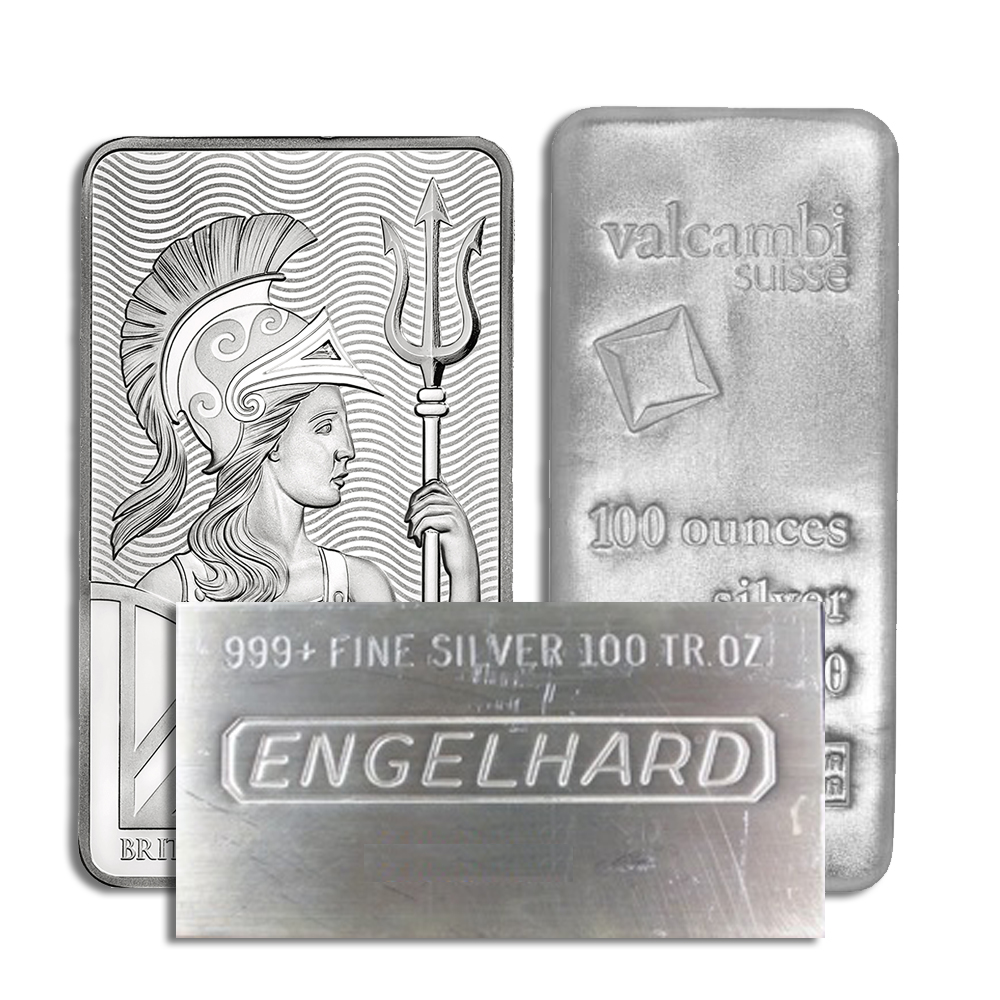
100 oz Silver Bar – Brand Varies
A large-format silver bar with the qualifying brand selected from current inventory.
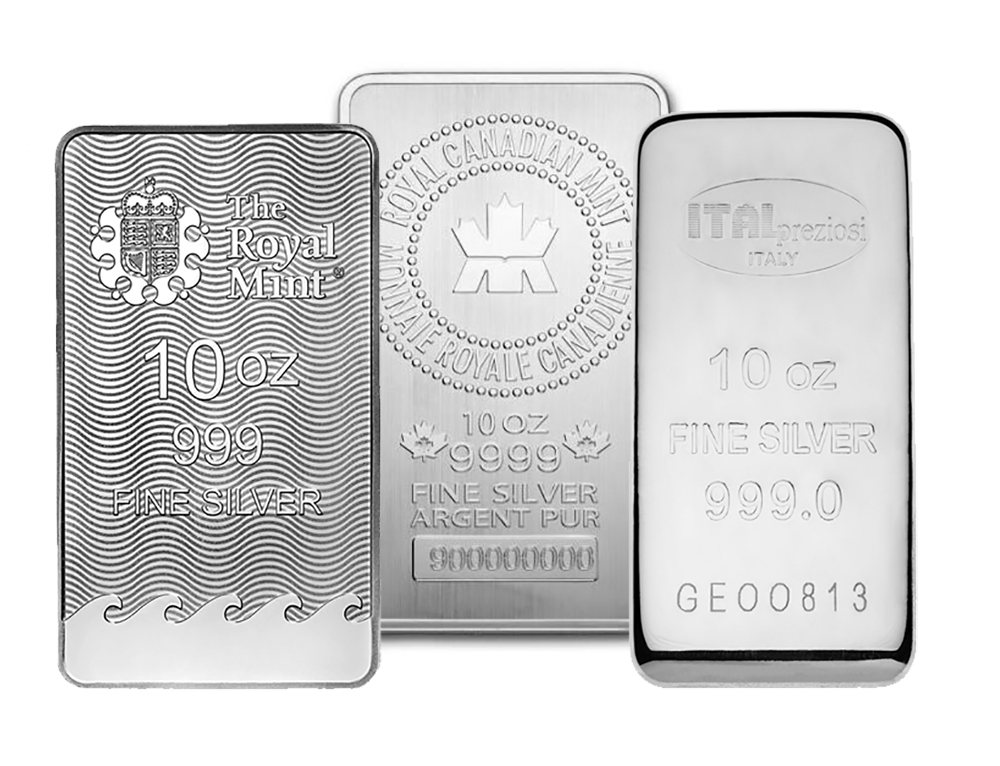
10 oz Silver Bar – Brand Varies
A ten-ounce bar where the qualifying brand is selected from inventory.
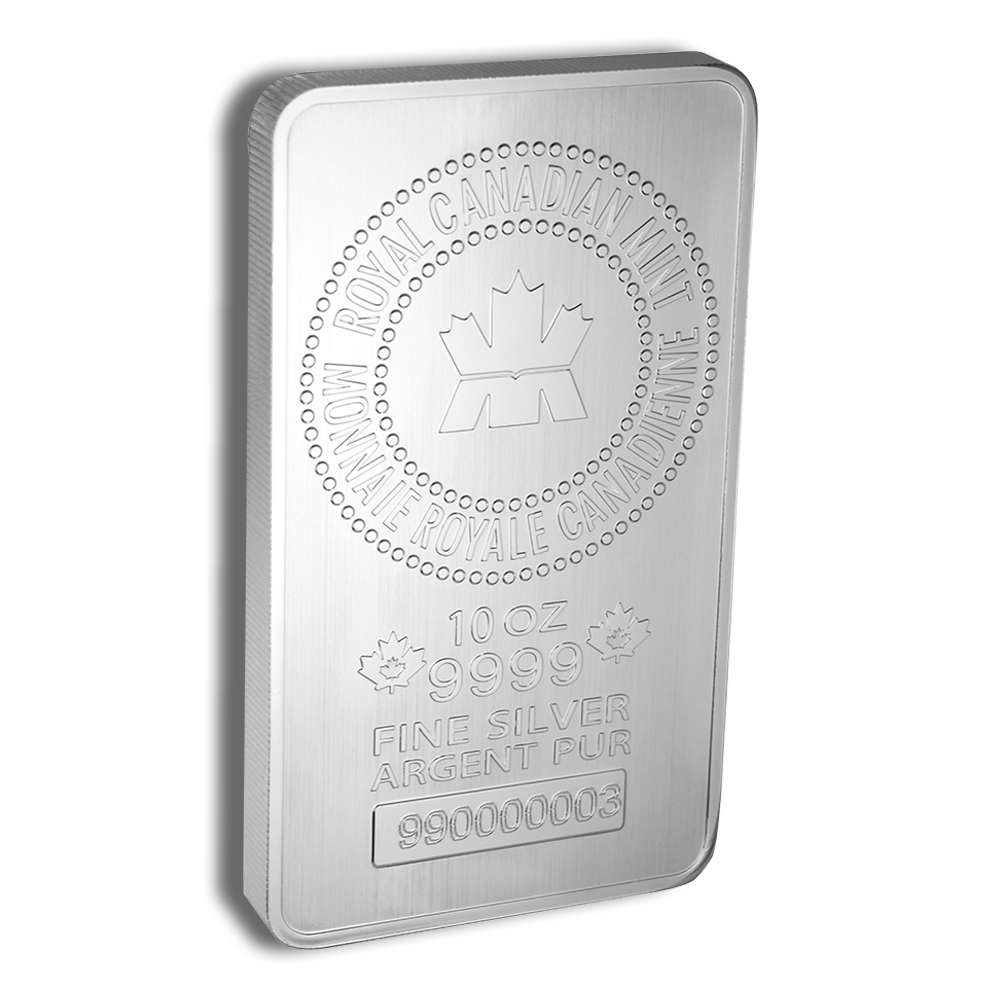
10 oz Silver Bar – Royal Canadian Mint – RCM (Sealed)
A named Royal Canadian Mint ten-ounce silver bar in sealed presentation.
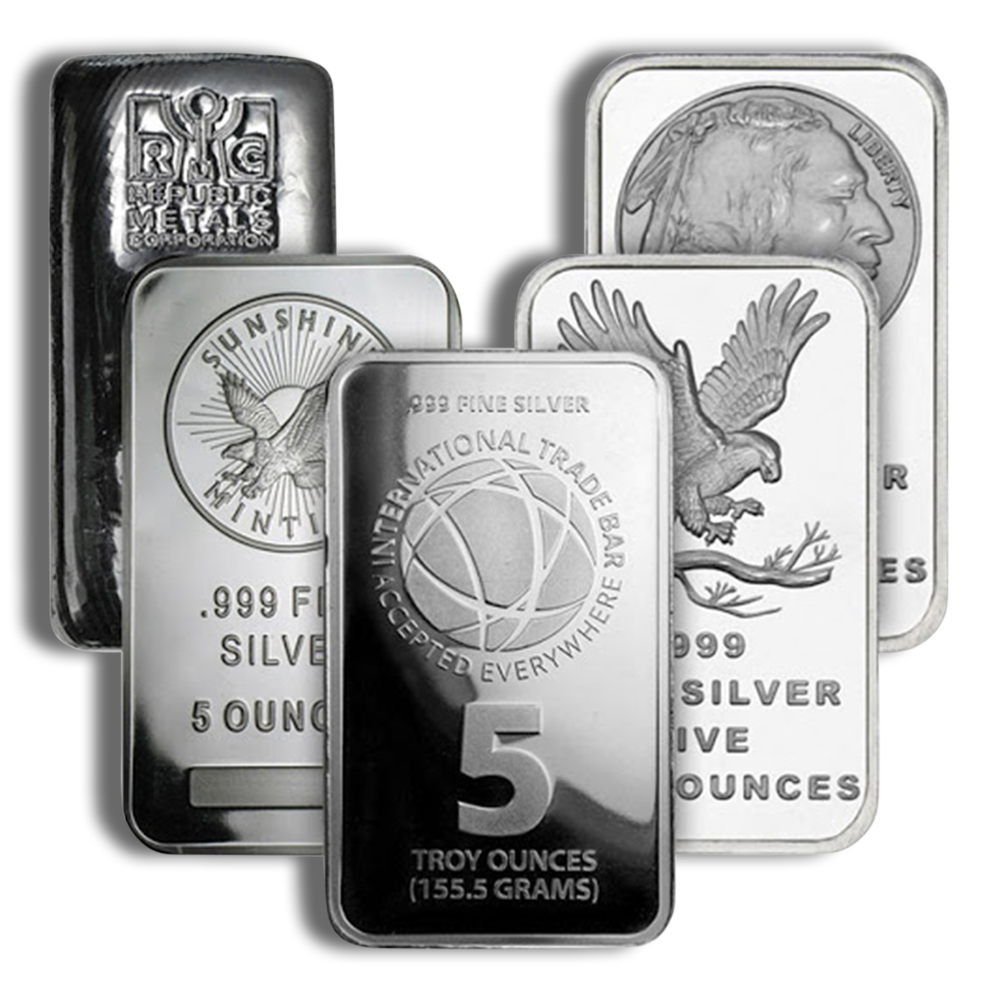
5 oz Silver Bar – Brand Varies
A five-ounce middle size for comparing divisibility and storage.
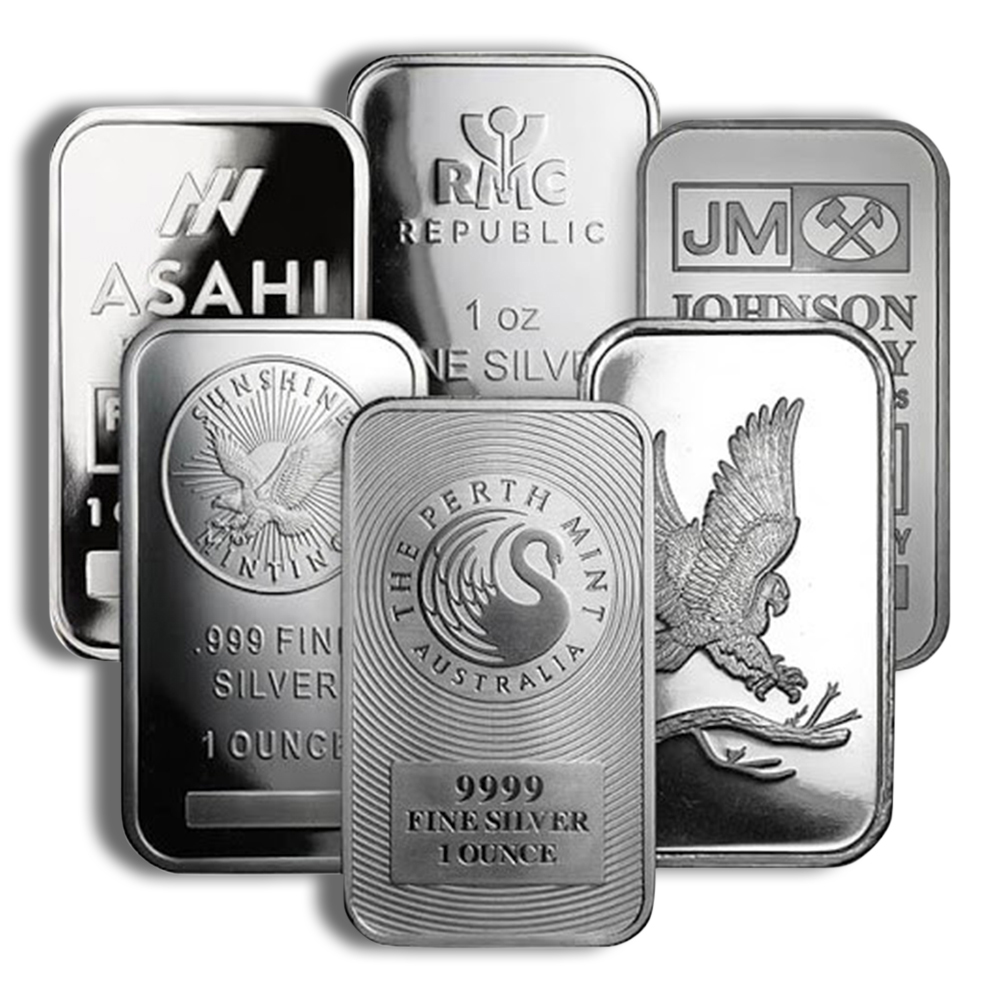
1 oz Silver Bar – Brand Varies (IRA Eligible)
A metal-first one-ounce bar listing where the qualifying brand may vary.
Product pages, images, specifications, prices, premiums, packaging, and stock were reviewed September 5, 2026 and can change. The live listing controls the order.
What Agate Can Verify
Agate can verify the product name, stated metal, weight, purity, condition, packaging, and current transaction terms shown on its live listing. Availability, pricing, premiums, payment methods, shipping, returns, and buyback conditions can change. Confirm the exact listing and applicable policies before ordering.
Continue your research: spot-price and premium guide, guide to banks that still sell silver bars, non-destructive silver screening guide.
What is a 100 oz silver bar?
A 100 oz silver bar is a large-format piece of silver bullion that is normally bought for its metal content rather than a face value or collectible design. Listings commonly state a weight and fineness, such as 100 troy ounces and .999 silver. The producing refinery, surface style, serial-number practice, and packaging can differ by product.
The word bullion refers broadly to precious-metal products valued primarily for metal content. If you are comparing bars with coins or rounds, start with this overview of how bullion products differ. The product format still matters: a bar’s recognition, condition, and market demand can affect the price a buyer is willing to pay above or below the underlying metal calculation.
A 100-ounce format does not make a bar collectible by itself. A vintage or limited-production bar may attract a collector premium, while a common current-production bar may be quoted mainly from its metal value plus the market premium. Treat those as separate questions.
How much does a 100 oz silver bar weigh?
A 100 oz silver bar refers to 100 troy ounces, which is approximately 3,110.35 grams, 3.110 kilograms, or 6.86 pounds in the common avoirdupois system. It does not weigh 100 ordinary ounces. The distinction matters when choosing a scale, a storage location, or a container for several bars.
The National Institute of Standards and Technology lists one troy ounce as exactly 31.1034768 grams for precious-metal conversions.2 The calculation is:
100 troy oz × 31.1034768 grams per troy oz = 3,110.34768 grams
3,110.34768 grams ÷ 1,000 = 3.11034768 kilograms
3,110.34768 grams ÷ 453.59237 = 6.856 pounds| Measurement | Approximate mass of a 100 troy oz bar | Why it matters |
|---|---|---|
| Troy ounces | 100 oz t | The customary bullion quantity |
| Grams | 3,110.35 g | Useful for scale comparisons |
| Kilograms | 3.110 kg | Useful for storage and handling planning |
| Avoirdupois pounds | 6.86 lb | Useful for judging the load of multiple bars |
Fineness is a separate specification from the displayed size. If a product’s stated 100-ounce figure is a gross weight and the fineness is .999, the theoretical fine-silver calculation is 100 × 0.999 = 99.9 troy ounces. However, bullion listings and bars may describe weight and fine content differently. Read the actual bar marking and product specifications rather than applying that calculation blindly. When precision matters, ask the seller how the stated weight and fine-metal content are represented.
For a broader view of sizes ranging from small fractional bars to larger formats, see Agate’s gold and silver bar size guide.
What a 100 oz silver bar costs: six terms to keep separate
A useful comparison begins by separating the market price of silver from the price of a finished bar. These terms are related, but they are not interchangeable.
| Term | Meaning | What it does—and does not—tell you |
|---|---|---|
| Spot price | A market reference price per troy ounce of silver | A benchmark for metal, not necessarily the price of a physical bar |
| Melt value | The calculated value of a bar’s fine silver content at a chosen spot price | A calculation, not a standing purchase offer |
| Premium | The amount above the relevant metal value in a retail ask | Can reflect fabrication, sourcing, logistics, dealer costs, product demand, and other factors |
| Retail ask | The price a buyer is asked to pay for the actual listed bar | The number to compare for a purchase, after confirming the exact product and terms |
| Collector premium | Value beyond ordinary bullion pricing because of brand, scarcity, style, condition, or collector demand | May change independently of silver spot and may not be present at all |
| Possible buyback spread | The gap between a retail purchase price and a dealer’s current bid or offer to buy | A resale consideration that must be checked at the time of sale, not assumed from the retail premium |
For a current conceptual refresher, Agate’s guide to spot prices, premiums, and market value explains why a physical product is normally priced differently from a spot quote.
A repeatable premium formula
Use a spot figure and retail ask observed at the same time and in the same currency. For a bar marketed as 100 troy ounces, the basic comparison is:
Metal-value reference = 100 × silver spot price per troy ounce
Total dollar premium = retail ask − metal-value reference
Premium per ounce = total dollar premium ÷ 100
Premium percentage = (retail ask ÷ metal-value reference − 1) × 100
If the stated product is not exactly 100 troy ounces of fine silver, replace 100 in the formula with the seller’s stated fine-silver content. Record the timestamp, product condition, and whether the price is an ask or a bid. Silver prices and dealer quotes can change during the day.
Worked example only—no live price implied
Assume, purely for arithmetic, a silver spot reference of 30.00pertroyounce * * andaretailaskof * *3,180 for one plainly described 100 oz bar.
| Calculation | Example result |
|---|---|
| Metal-value reference | 100 × $30.00 = $3,000 |
| Total dollar premium | $3,180 − $3,000 = $180 |
| Premium per ounce | $180 ÷ 100 = $1.80 per oz |
| Premium percentage | ($3,180 ÷ $3,000 − 1) × 100 = 6% |
This example is not a quote, prediction, or valuation. A particular bar can carry a different premium because of its brand, condition, availability, order size, or collector interest. A future dealer bid may also be above or below spot and need not mirror the retail premium that was paid.
Why 100 oz silver bar premiums can differ
A large bar can sometimes have a lower premium per ounce than many small products because certain fabrication and handling costs are spread across more ounces. That is only a tendency, not a rule. A recognizable refinery bar, a vintage poured bar, or a product in unusually strong demand may price differently from a generic large bar.
When comparing two bars, make the comparison like-for-like:
- Confirm the listed troy-ounce weight and fineness.
- Note whether the bar is generic, branded, vintage, poured, cast, or minted.
- Divide each total premium by the stated number of ounces.
- Check whether one product has a collector component that the other lacks.
- Ask how the seller currently handles buybacks for that format, without assuming any future bid.
- Consider the practical cost of choosing a single 100-ounce unit instead of multiple smaller units.
A low premium is useful only if the format also fits how you expect to store and eventually sell the silver. A buyer who may need to liquidate 10 or 20 ounces at a time may value smaller denominations even if their per-ounce retail premium is higher.
When a 100 oz silver bar fits—and when smaller bars may fit better
The best size is a planning decision, not a universal ranking. A 100-ounce bar tends to fit buyers who have already decided they want a larger silver allocation, have a secure storage plan, and accept a single-unit resale decision. Smaller bars or coins can better fit buyers who value lower entry cost, flexible gifting, incremental sales, or easier product-by-product comparison.
| Buyer priority | How a 100 oz bar may fit | A question to ask before buying |
|---|---|---|
| Holding a larger amount of silver in fewer pieces | Fewer individual units to count, label, and store | Is the whole-bar purchase size comfortable for your plan? |
| Seeking lower potential premium per ounce | Large-format bars may compare favorably on a per-ounce basis | Have you calculated the total and per-ounce premium for the exact bars available today? |
| Flexible partial liquidation | Usually less flexible because the bar is one unit | Would 10 oz bars, 1 oz bars, or coins better match possible sale sizes? |
| Brand or vintage interest | Some 100 oz bars have a distinct collector market | Are you paying for metal, collector characteristics, or both? |
| Home or third-party storage | Compact for the amount of silver, but substantial in aggregate | Can the selected location safely support the total load and meet your access needs? |
| Simple future resale | Commonly recognized bars may be easier to explain to potential buyers | Which formats does your likely buyer currently bid on, and under what conditions? |
Practical decision rule: Do not judge a 100 oz silver bar only by the purchase premium. Decide whether you would still be comfortable owning and selling the entire bar as one unit if conditions change.
For buyers researching selling locations or bank availability, Agate’s review of whether banks still sell silver bars explains why a bank’s institutional metals activity does not mean a local branch will stock physical silver bars for retail customers.
Storage considerations for a 100 oz silver bar
A 100-ounce bar is dense rather than bulky, but the mass adds up quickly. Ten such bars have a mass of roughly 68.6 pounds before containers, shelving, or other holdings. Plan the location and the support beneath it—not just the size of the safe or box.
A practical storage checklist
- Keep a consistent inventory. Record the bar’s brand, stated weight, fineness, identifying marks, purchase record, and photos where appropriate. Store records separately from the bar.
- Protect the surface. Use clean, inert storage materials and avoid unnecessary handling, abrasion, harsh cleaning, or improvised packaging that may trap moisture or transfer residue.
- Manage the environment. A dry, stable environment is generally preferable to a place with obvious moisture, frequent temperature swings, or household chemicals.
- Plan the physical load. Put multiple large bars in a location that can reasonably support their combined weight; avoid overfilling a container simply because the bars are compact.
- Think through access and privacy. Compare home storage, a bank safe-deposit arrangement, and professional storage according to your own access, cost, security, and recordkeeping needs. Review the terms and limitations of any third-party arrangement before using it.
- Separate storage from verification. A safe place to store a bar is not a substitute for confirming its specifications before a purchase or sale.
The same preservation principles used for smaller pieces apply, though the physical load is different. For related handling ideas, read Agate’s guide on storing one-ounce and ten-ounce silver bars.
How to verify a 100 oz silver bar without overclaiming
Verification should be proportionate to the transaction and should combine independent checks. A bar can look plausible, carry a familiar logo, or be nonmagnetic and still require more scrutiny. Conversely, a minor surface mark does not alone establish that a bar is problematic.
Start with the seller and documentation: compare the bar’s brand, stated weight, fineness, dimensions, and any serial number with the listing and known product information. Then use measurements that make sense for the product. An accurately calibrated scale can help check mass; dimensions can be compared with manufacturer specifications when available. Magnet behavior may be a screening clue because silver is not ferromagnetic, but a nonmagnetic result does not prove that a bar is silver.
Density calculations, ultrasonic equipment, conductivity tools, and professional testing may add evidence, but each has setup, calibration, product-shape, plating, and operator limitations. Packaging can also prevent a complete inspection. A serial number is useful only when its format and provenance can be corroborated; it is not a standalone authenticity guarantee, and not every bar is serialized.
For a high-value or uncertain transaction, consider a reputable professional who can use appropriate equipment and explain the method used. Preserve the purchase records and do not alter a bar merely to perform a test. The goal is to reduce uncertainty with converging evidence, not to claim that one quick check settles every question.
A buying checklist before choosing a 100 oz silver bar
Before placing an order, write down the answers to these questions:
- What is the listed fine-metal content? Confirm the troy-ounce weight and fineness on the exact product page or product documentation.
- What is the retail ask now? Capture the current price and the time reviewed; do not use an old screenshot as a quote.
- What is the premium in dollars and per ounce? Calculate it from a same-time spot reference.
- Is there a collector premium? Do not pay one unintentionally when the goal is ordinary bullion exposure.
- How will the bar be stored? Account for approximately 6.86 pounds per bar and the aggregate load.
- How could it be resold? Ask prospective buyers about their current acceptance and bid process for the exact format; never assume a later offer.
- How will you verify it? Decide in advance which documentation and testing steps are reasonable for the transaction size.
If you are ready to compare a current product listing after completing those checks, Agate’s 100 oz Silver Bar – Brand Varies page identifies the listed weight and purity. Review its current specifications, price, inventory, and terms directly on the product page before acting.
FAQs about 100 oz silver bars
How much does a 100 oz silver bar weigh in pounds?
A 100 troy oz silver bar has a mass of about 6.86 avoirdupois pounds (approximately 3.110 kilograms). The difference exists because a troy ounce used in precious-metals trade is heavier than the ordinary ounce used for everyday goods.3
What is a 100 oz silver bar worth?
Its metal-value reference begins with the current silver spot price multiplied by the bar’s stated fine-silver content. The retail ask may be higher because of the premium, while a resale bid may differ again. For an accurate current comparison, use a timestamped spot reference and the exact product’s live price; do not rely on a stale price, a generalized online estimate, or a past purchase receipt.
Do 100 oz silver bars always have lower premiums?
No. Large bars may sometimes have lower premiums per ounce than smaller products, but the exact premium can change with supply, brand, condition, availability, collector demand, and dealer pricing. Compare the current total premium and premium per ounce for the actual products you are considering.
Can I sell part of a 100 oz silver bar?
Not in the ordinary sense. The bar is a single product, so a dealer or buyer will generally evaluate it as one unit. Cutting or altering it can change its marketability and verification process. If selling smaller increments is important, consider building the holding from smaller bars or coins instead of relying entirely on 100-ounce bars.
Are 100 oz silver bars a good investment?
They can be an appropriate bullion format for a buyer whose goals, budget, storage plan, and resale preferences fit a 100-ounce unit. They are not a guarantee of gains, liquidity, or a particular buyback outcome. Consider price volatility, premiums, storage, diversification, and your own financial circumstances; seek qualified financial or tax advice for decisions requiring personal guidance.
The bottom line
A 100 oz silver bar is best understood as a substantial, single-unit bullion holding. Its stated size equals about 3.110 kilograms, and its purchase cost should be analyzed as spot or metal value plus a retail premium, not as one undifferentiated number. Before buying, compare the exact product specifications, the current premium per ounce, storage capacity, verification plan, and the practical implications of reselling 100 ounces at once.
Prices, spot references, premiums, inventory, availability, and seller policies can change without notice. This article is educational and is not a live quote, an offer to buy or sell, investment advice, tax advice, legal advice, an appraisal, or an authenticity guarantee. Verify the current listing, terms, and applicable requirements directly before making a transaction.