
How to Test If a Silver Round Is Real
How to Test If a Silver Round Is Real
Shop Silver Rounds at Agate
Compare Silver Rounds Before You Buy
Explore Buffalo designs, named-mint rounds, and design-varies options. Review the exact weight, fineness, condition, and current price on each listing.
Product specifications and availability vary by listing. Use the guide below to understand the limits of home authenticity checks.
To test whether a silver round is real, identify the exact product, compare its weight and dimensions with the maker’s specifications, inspect its surfaces, and use a magnet only as a screening tool. These checks can expose discrepancies, but no single home test proves authenticity.
If measurements conflict, the seller’s explanation is unclear, or you are making a significant purchase, have a qualified precious-metals professional evaluate the round. Agate’s guide to precious-metal verifier testing and its limitations explains the next step beyond basic home checks.
Safe Testing Order
- Identify the exact round and record its markings.
- Find a reliable specification for that maker and product.
- Compare weight, diameter, and thickness.
- Use magnetic response as a screening observation, not proof.
- Inspect lettering, edges, relief, and surface details.
- Refer unexplained discrepancies for professional testing.
Know Which Silver Round You Are Testing
A silver round is privately manufactured bullion rather than government-issued legal-tender coinage. That distinction matters when choosing reference specifications: two rounds with similar designs may come from different manufacturers and have different diameters or edge details.
Record the maker, design, stated weight, fineness, diameter, thickness, edge style, and any serial or batch information. Agate’s guide to bullion bars, coins, and rounds explains how these formats differ.
In bullion, one ounce generally means one troy ounce, approximately 31.1035 grams—not an ordinary avoirdupois ounce of approximately 28.35 grams. Check whether the manufacturer’s stated weight describes the round’s gross mass or its fine-silver content.
Four Home Checks—and What They Cannot Prove
| Check | What to Compare | Important Limitation |
|---|---|---|
| Weight | Measured mass against the exact manufacturer’s specification. | A counterfeit can be made to match the expected weight. |
| Dimensions | Diameter and thickness against the same product’s reference measurements. | Matching dimensions alone do not establish composition. |
| Magnetic response | Unexpected attraction or behavior requiring further investigation. | Many metals other than silver are not strongly attracted to a magnet. |
| Visual inspection | Lettering, design, edge, finish, and manufacturing details. | Convincing appearance does not confirm the metal beneath the surface. |
1. Check the Weight
Use a calibrated scale with sufficient accuracy for the comparison. A display that reads to 0.01 gram is useful, but display resolution is not the same as measurement accuracy. Check the scale with an appropriate reference weight.
Weigh a loose round without its capsule or other packaging. Do not break a sealed collectible package simply to perform a home check; ask a professional how to evaluate that item while preserving its presentation.
Compare the result with the producer’s specification and any documented tolerance. Do not invent a universal acceptable weight range for every one-ounce round. An unexplained mismatch warrants further evaluation; a matching weight is only one piece of evidence.
2. Measure Diameter and Thickness
Use non-marring calipers with gentle pressure. Measure the diameter and take thickness readings at consistent points, accounting for raised rims and relief. Compare those readings with measurements for the exact product.
A substitute metal may require a different thickness or diameter to match the expected weight. Checking mass and dimensions together can reveal discrepancies that either measurement alone would miss.
3. Understand the Magnet Test
Silver is not ferromagnetic. Strong attraction between a loose round and a magnet is a warning that its composition does not match a claim of solid fine silver. However, a lack of attraction does not prove the round is silver.
A moving magnet can experience resistance over conductive metal. That behavior is sometimes used in a magnet-slide screen, but other conductive metals can produce similar effects. The result also depends on the magnet and test setup.
Prevent the magnet from striking or scratching the round. Follow the magnet manufacturer’s handling instructions and keep powerful magnets away from children, sensitive equipment, and medical devices that may be affected.
4. Inspect the Design, Surface, and Edge
Use a loupe and good lighting. Compare the round with reliable images or a known genuine example from the same manufacturer. Inspect spelling, fonts, relief, edge style, and the overall quality of the strike.
Unexpected seams, surface bubbles, exposed underlying metal, or incorrect design details deserve investigation. Toning and handling marks can occur on genuine silver, so interpret appearance in the context of the product’s age and condition.
Dealer perspective: A scale and calipers can show that something does not match its description. Passing those checks does not establish that it must be genuine. The goal is agreement among the product identity, measurements, metal response, and purchase records.
Tests That Need Extra Caution
Ping tests: Sound comparisons depend on the product and testing conditions. Handling, support surfaces, recording equipment, and the reference sample can affect the result. Avoid striking or dropping a round to produce a sound.
Ice tests: Rapid melting reflects heat transfer, not a direct measurement of silver purity. Other materials and different starting temperatures can change the observation.
Specific-gravity tests: Density measurements require careful technique. Trapped air, suspension materials, scale error, and the item’s construction can distort the result. Treat the result as supporting evidence rather than a standalone certificate.
Acid, scratch, drilling, and filing tests: These can permanently alter a round. Surface testing may also fail to describe the entire piece. Preserve the item and use qualified testing services when basic checks leave uncertainty.
When to Use Professional Testing
Seek professional evaluation when the round’s origin is unclear, measurements disagree, surfaces look suspicious, or the purchase or sale justifies additional verification.
Depending on the product, a professional may combine weight and dimensions with electrical-response testing, X-ray fluorescence, ultrasound, or other suitable methods. Each method has limits related to depth, geometry, calibration, and interpretation. XRF provides information from the tested surface region and should not automatically be treated as proof of the entire core.
Ask what the equipment measures, whether it is appropriate for that round, and what uncertainty remains. Agate’s guide to choosing a reputable precious-metals dealer provides questions to ask about business identity and transaction procedures.
Why Authenticity Matters When Comparing Value
A silver-content calculation is useful only when the claimed metal content is reliable. A genuine round’s purchase or resale price can also reflect maker, design, condition, quantity, and current demand.
Use Agate’s silver price per ounce guide to understand the spot reference. Authentication does not guarantee a particular premium or dealer bid.
Handling, Storage, and Resale
Handle loose rounds by their edges over a soft surface. Avoid polishing, abrasive wiping, adhesives, and unsuitable storage materials. Keep packaging and purchase records with the correct items.
After testing, follow Agate’s guide to storing silver without unnecessary surface damage . If you plan to sell, review how to sell silver rounds to a dealer before requesting a quote. A buyer may still perform its own verification.
Compare Silver Rounds at Agate
Compare the stated weight, fineness, maker, design-selection terms, and condition. Product images illustrate the listings; the exact delivered design may vary where the listing says so.
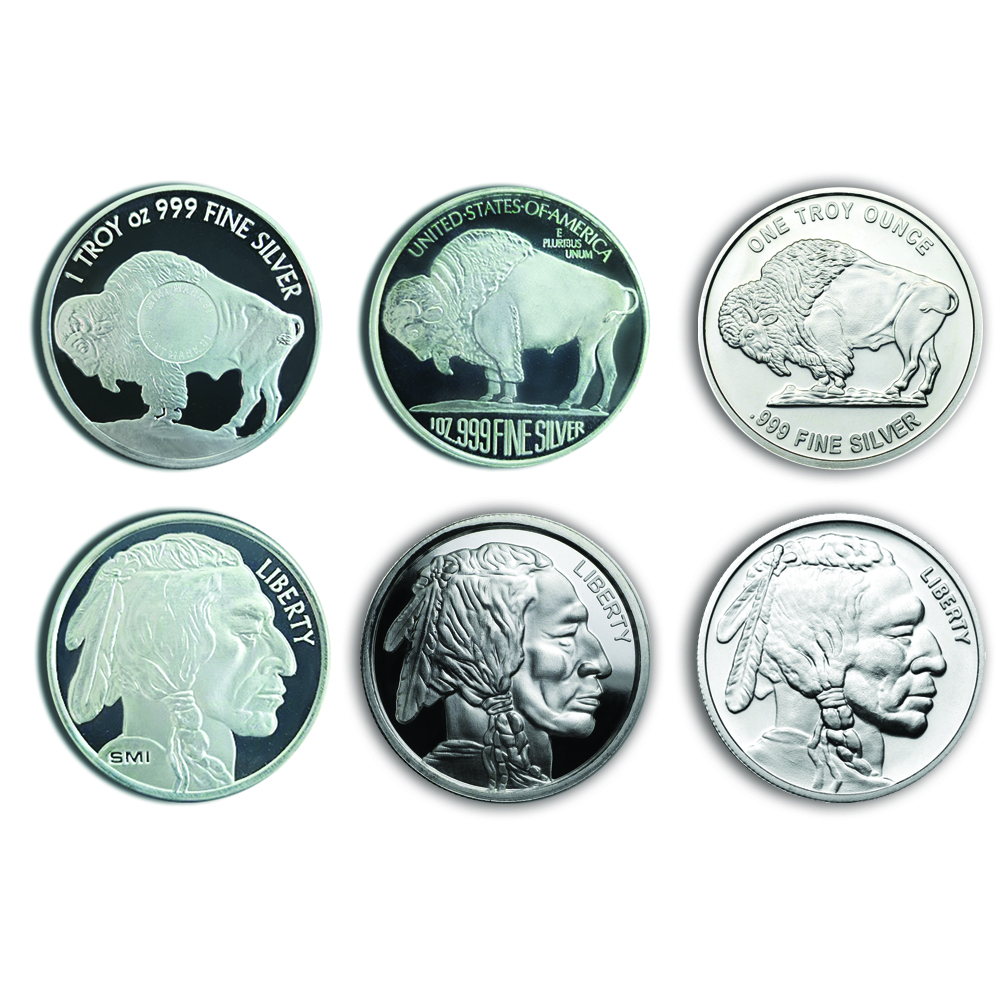
Buffalo Design
1 oz Silver Round – Buffalo Design
A private-mint bullion round rather than a government coin. Review the listing’s maker and specifications before choosing reference measurements for testing.
View Price & Availability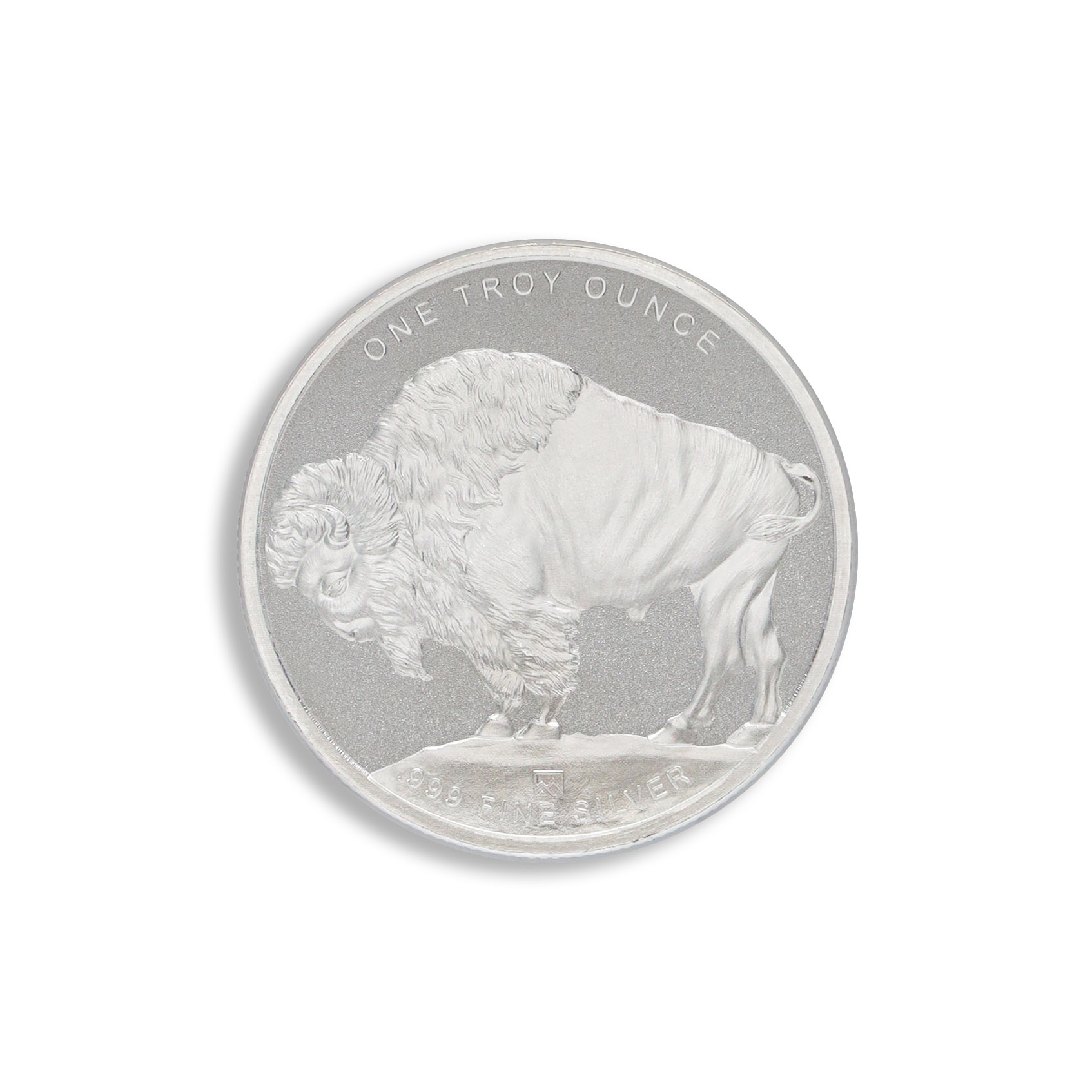
Named-Mint Round
1 oz Silver Round – Buffalo Design .999 – Frontier Mint (New)
A listing specifying Frontier Mint, .999 silver, and new condition. Compare it with references for this exact product rather than another manufacturer’s Buffalo round.
View Price & Availability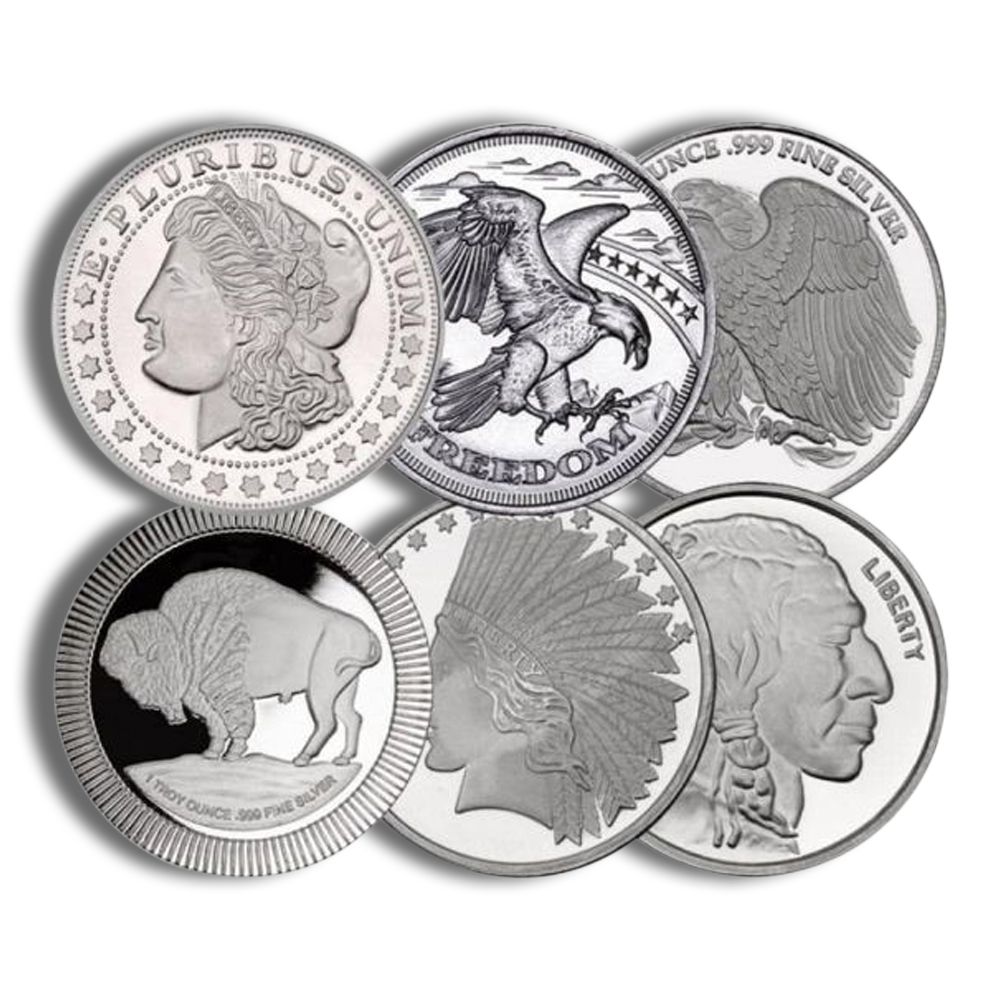
Design Varies
1 oz Silver Round – Design Varies (IRA Eligible)
The delivered design may differ from the representative image. Identify the actual round received before comparing its dimensions or design details.
View Price & Availability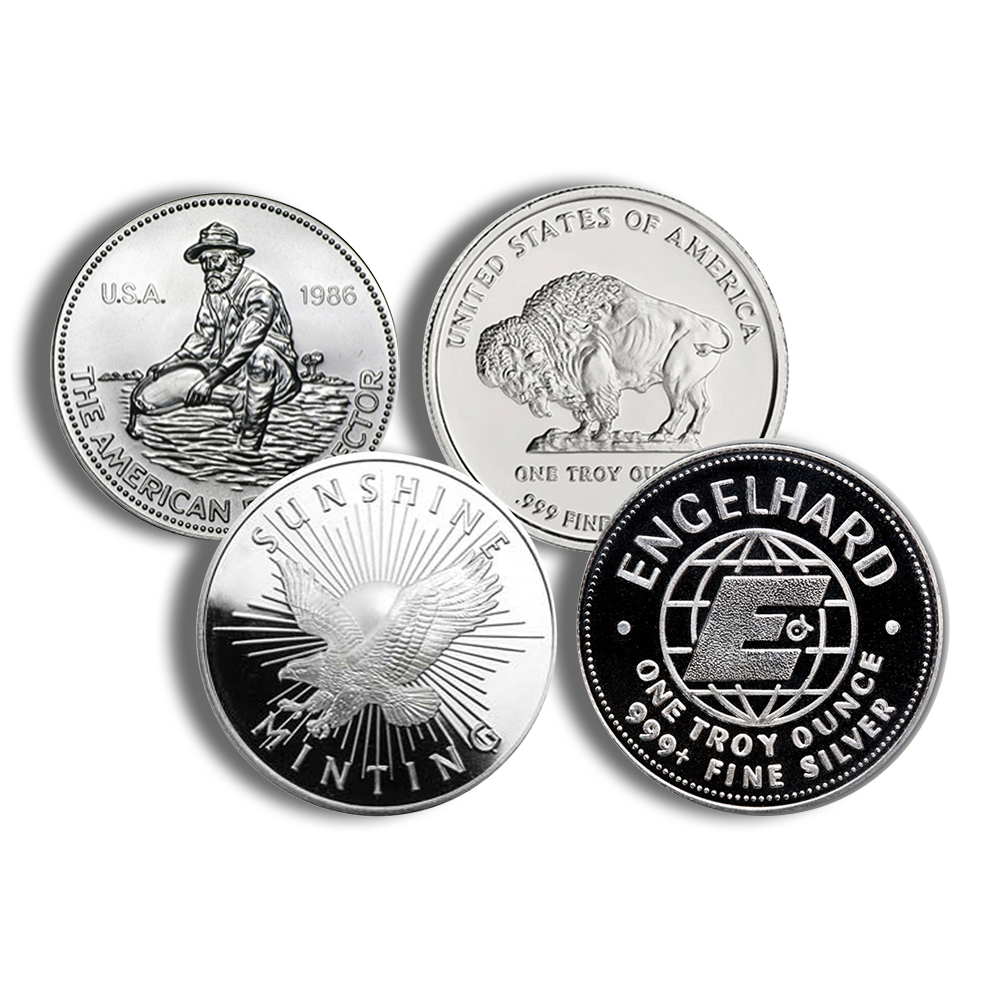
Secondary-Market Round
1 oz Silver Round – Design Varies – Secondary Market
Review the stated condition terms for previously owned bullion. Surface wear or toning should be assessed separately from weight, composition, and authenticity.
View Price & AvailabilityPrices, inventory, packaging, and fulfillment terms can change. Confirm the live product listing and current shipping, payment, and cancellation policies before ordering.
Frequently Asked Questions
Will a magnet stick to real silver?
Silver is not ferromagnetic, so strong attraction is a warning sign. However, a round that is not attracted to a magnet is not necessarily silver. Use the observation alongside weight, dimensions, product identification, and appropriate professional testing.
How much should a one-ounce silver round weigh?
One troy ounce equals approximately 31.1035 grams. Compare the measured round with its manufacturer’s gross-weight and fine-silver specifications, allowing for documented production tolerance and the scale’s accuracy. Exclude a removable capsule from the measurement.
Can the ice test prove silver is real?
No. Ice melting measures a heat-transfer effect, not silver purity. Other metals and different test conditions can produce misleading results.
Should I acid-test a silver round?
Avoid destructive tests as a first step. Acid can damage the surface, requires appropriate chemical handling, and may not establish the composition of the entire round. Seek professional evaluation when non-destructive checks leave uncertainty.
What should I do if one test fails?
Pause the transaction or further handling. Recheck your equipment and reference specifications, preserve the round and purchase records, and ask a qualified dealer or testing service to investigate the discrepancy. Do not assume a single unexpected reading provides a complete diagnosis.
Can a genuine silver round have toning or scratches?
Yes. Appearance can change through handling and storage, particularly with secondary-market bullion. Toning or scratches alone do not determine authenticity, although condition can affect collector appeal and resale terms.
Sources and Further Reading
- CFTC — Ten Things to Consider Before Buying Precious Metals
- NIST — SI Units: Mass
- U.S. Mint — Bullion Consumer Awareness
This guide explains screening methods; it does not certify any individual round. Product-specific measurements and professional interpretation remain important.