
How Many Grams Are in a Troy Ounce? Gold and Silver Conversion Calculator
How Many Grams Are in a Troy Ounce? Gold and Silver Conversion Calculator
A troy ounce is exactly 31.1034768 grams, usually rounded to 31.103 g or 31.1 g. It is the weight convention used for bullion and many precious-metal transactions. This guide converts units only; it does not estimate melt value, quote spot prices, or make a purchase or sale offer.
Key Takeaways – 1 troy ounce = 31.1034768 grams. Multiply troy ounces by 31.1034768 to find grams. – To convert grams to troy ounces, divide grams by 31.1034768. – A troy ounce is heavier than a standard (avoirdupois) ounce, which is about 28.35 grams. – Weight, fineness, price, premiums, and collector value are separate questions. A correct unit conversion answers only the weight question. – Any price calculation needs a dated source, the relevant currency, and the time the price was observed.
The direct answer: 31.1034768 grams in one troy ounce
A troy ounce is exactly 31.1034768 grams, often rounded to 31.1 grams. Keep the longer figure for detailed or multi-unit calculations.
The National Institute of Standards and Technology (NIST) publishes precious-metals conversion information intended to help consumers and businesses compare sales expressed in troy or SI units. Its conversion material uses the factor 31.1034768 when converting between a gram basis and a troy-ounce basis.1
A troy ounce may appear as oz t, ozt, t oz, or simply oz on a bullion listing. Because an unqualified “oz” can be ambiguous, it is sensible to confirm the unit in the product specifications, assay card, invoice, or quote before comparing weights.
| Unit | Exact or common conversion | Practical note |
|---|---|---|
| 1 troy ounce | 31.1034768 grams | Standard precious-metals weight unit |
| 1 troy ounce | 480 grains | Useful only when a source uses grains |
| 1 standard ounce | about 28.35 grams | The ordinary avoirdupois ounce, not the usual bullion unit |
| 1 kilogram | about 32.1507 troy ounces | A mass conversion, not a price estimate |
The difference between troy and standard ounces is not small. One troy ounce is about 2.75 grams heavier than one standard ounce. Treating them as interchangeable can distort a weight comparison before purity or price has even entered the discussion.
Troy ounce conversion calculator: formulas for gold and silver
Gold and silver use the same mass conversion factor. Whether the metal is gold, silver, platinum, or palladium does not change the mathematics: troy ounces measure mass, while the metal type and purity describe what that mass contains.
Convert troy ounces to grams
Use this formula:
grams = troy ounces × 31.1034768For example, a piece described as 2 troy ounces converts as follows:
2 × 31.1034768 = 62.2069536 gramsRounded to three decimal places, that is 62.207 grams.
Convert grams to troy ounces
Use the reverse formula:
troy ounces = grams ÷ 31.1034768For example, a 100-gram bar converts as follows:
100 ÷ 31.1034768 = 3.2150747 troy ouncesRounded to four decimal places, 100 grams is 3.2151 troy ounces. This is a weight conversion only; it says nothing about what a 100-gram bar is worth.
Common troy-ounce-to-gram conversions
| Troy ounces | Grams (rounded) | Typical reason to use it |
|---|---|---|
| 0.10 oz t | 3.110 g | Small fractional weight comparison |
| 0.25 oz t | 7.776 g | Quarter-ounce bullion format |
| 0.50 oz t | 15.552 g | Half-ounce bullion format |
| 1.00 oz t | 31.103 g | Standard one-ounce bullion reference |
| 2.00 oz t | 62.207 g | Combining two one-ounce pieces |
| 5.00 oz t | 155.517 g | Medium bar or round comparison |
| 10.00 oz t | 311.035 g | Common larger silver format |
| 32.1507 oz t | 1,000 g | One kilogram, approximately |
Common gram-to-troy-ounce conversions
| Grams | Troy ounces (rounded) | Conversion context |
|---|---|---|
| 1 g | 0.03215 oz t | Fine-weight comparison |
| 5 g | 0.16075 oz t | Small bar weight |
| 10 g | 0.32151 oz t | Metric bar weight |
| 20 g | 0.64301 oz t | Metric bar weight |
| 31.103 g | about 1.0000 oz t | Rounded one-troy-ounce reference |
| 50 g | 1.60754 oz t | Metric bar weight |
| 100 g | 3.21507 oz t | Larger metric bar weight |
| 1,000 g | 32.15075 oz t | One-kilogram weight |
Use the full factor in a calculator or spreadsheet if the result will be used for a detailed comparison. Rounding the final result is usually clearer than rounding the conversion factor early, especially for multi-ounce bars or lots of smaller pieces.
Why a troy ounce is different from a regular ounce
A troy ounce and a standard ounce belong to different weight systems. The troy ounce is the conventional unit for precious metals. The avoirdupois ounce is the standard ounce familiar from many everyday goods in the United States.
The essential comparison is straightforward:
1 troy ounce = 31.1034768 grams
1 standard ounce ≈ 28.3495 grams
That distinction matters when a scale, product listing, or informal conversation uses the word “ounce” without an accompanying unit. A kitchen or postal scale may show ounces, but the reading may be in standard ounces rather than troy ounces. Some precision scales let the user select a mode such as grams, ounces, troy ounces, pennyweights, or grains. Confirm the active mode before recording a result.
A scale reading is also not a substitute for identifying the item. A round that has a plausible mass could still require other checks for authenticity, metal content, and dimensions. For related checks, read how to tell whether a gold coin is real.
Using the conversion for gold, silver, coins, and bars
The conversion is identical for gold and silver, but the label on the item still needs careful reading. A one-troy-ounce silver bar generally refers to a 31.1034768-gram troy-ounce weight. A gold product may state either a fine-metal content, a total product weight, or both. Those are not always identical measurements.
Fine metal weight versus gross item weight
Fine metal weight is the amount of pure metal credited to the item. Gross weight is the mass of the entire item, including any other alloy metals or non-metal components. For pure bullion bars and rounds, the distinction may be minimal because their stated purity is high. For some bullion coins and many jewelry items, the gross mass can be higher than the fine-metal content.
For example, a coin can be marketed as containing one troy ounce of fine gold while its total physical mass is greater than one troy ounce because its alloy includes metals in addition to gold. The product’s official specifications should state which figure is being presented. Do not assume that a number stamped “1 oz” answers both questions.
Purity is commonly expressed as a decimal fineness, such as .999 or .9999, or as a percentage. Convert the units first. Apply purity to gross metal weight only; do not apply it again when the stated figure already represents fine-metal content. When condition, numismatic value, or authenticity is uncertain, the calculation is only a starting point—not an appraisal.
For a format comparison, read how silver rounds differ from silver coins. Weight and product type answer different questions.
Three weight-only examples
These examples demonstrate the formulas without assigning a market price:
- Quarter troy ounce of gold:
0.25 × 31.1034768 = 7.7758692 g, or 7.776 g when rounded. - Ten troy ounces of silver:
10 × 31.1034768 = 311.034768 g, or 311.035 g when rounded. - Twenty grams of metal:
20 ÷ 31.1034768 = 0.6430149 oz t, or 0.6430 oz t when rounded.
The same workflow works for multiple items. Add their weights in one unit first, then convert once if that makes the comparison easier. When combining assorted pieces, keep a separate record of each item’s stated purity and whether the stated weight is gross or fine-metal weight.
Converting a gold or silver price between grams and troy ounces
A price conversion uses the same 31.1034768 factor, but it should not be confused with a live price quote. The arithmetic can translate an already identified price from one unit to another; it cannot establish a current spot price, dealer retail price, buyback bid, or final transaction total.
Price-per-troy-ounce to price-per-gram formula
price per gram = price per troy ounce ÷ 31.1034768Price-per-gram to price-per-troy-ounce formula
price per troy ounce = price per gram × 31.1034768Before using either formula, label the input. A number described as “gold price” may refer to a benchmark or spot indication, a retail product price, a dealer bid, or another figure. These are different measures and may not match. A reliable comparison records the metal, purity where applicable, unit, currency, source, date, and observation time. Changing prices require a dated source and an observation time; a formula alone cannot make the output current.
For broader terminology, read gold and silver prices explained.
A practical checklist before you buy, sell, or compare bullion
Use this checklist to prevent a simple unit mismatch from becoming a bad comparison:
- Confirm the weight unit. Look for grams, oz t, ozt, troy ounces, or another clearly named unit. Do not assume “oz” means troy ounce without confirming the context.
- Identify the stated mass. Determine whether the figure is gross item weight or fine-metal content.
- Read the purity statement. A conversion from grams to troy ounces does not establish .999, .9999, or any other fineness.
- Use the appropriate precision. Keep 31.1034768 in the calculation and round the displayed result at the end.
- Compare like with like. Compare fine-metal weights to fine-metal weights, and retail product totals to retail product totals. Do not compare an unlabeled per-gram figure with a bid or retail figure as if they mean the same thing.
- Preserve the source details for price work. If a price is involved, record the source, date, time observed, currency, and whether it is a benchmark, retail, or bid figure.
- Read the actual transaction terms. Shipping, payment method, minimums, fees, return conditions, inventory status, and product condition can affect a real transaction even when the metal weight is the same.
For a buying workflow, read how to buy gold bars safely. For selling, see how to sell silver coins online safely.
When a conversion is not enough
Weight is an important fact, but it is not a complete valuation method. A conversion cannot tell you whether a coin has collectible value, whether a bar’s assay information is reliable, whether an item is genuine, or what a dealer will pay. It also cannot make two products equivalent when their condition, maker, liquidity, or transaction terms differ.
That boundary is useful. First, establish a common weight unit. Next, identify purity and product type. Only then, if a price comparison is needed, use a clearly dated and sourced price basis that matches the purpose of the comparison. Separating those steps keeps a simple calculator from implying more certainty than it can provide.
Price, offer, and transaction disclosure
This article is an educational mass-conversion guide. It does not quote current precious-metals prices, determine an item’s value or authenticity, or make an offer to buy or sell any product. Any price, offer, availability, bid, premium, or transaction term must be checked against the relevant dated source and the applicable product or dealer terms at the time of review.
Compare Agate product formats

1 gram Gold Bar – Brand Varies (Carded)
1 gram of .9999 gold in carded packaging; brand varies. The listing notes a 2–4 day delay. Confirm current timing.
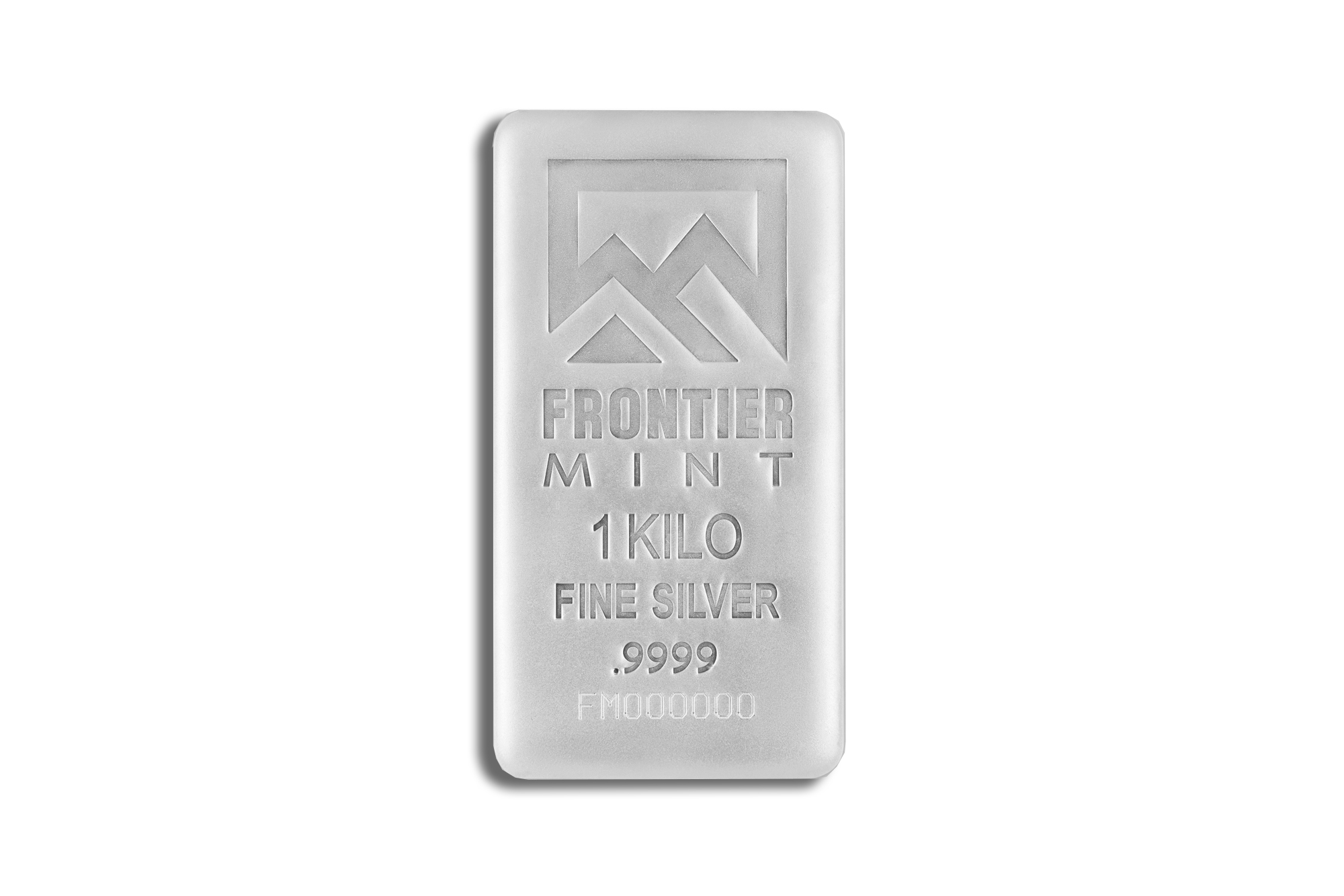
1 Kilo Silver Bar – Frontier Mint (Frosted)
A kilogram silver bar from Frontier Mint, listed at .9999 fineness. Confirm current specifications and shipping timing.
Check the live listing for pricing, availability, condition, and delivery terms. Product images may be representative where brand or design varies.
Frequently Asked Questions
Is a troy ounce 31.1 grams or 31.103 grams?
Both are common rounded presentations of the same unit. The exact conversion used here is 31.1034768 grams per troy ounce. Use 31.1 grams for a quick estimate and more digits when the comparison needs greater precision.
How do I convert one gram to a troy ounce?
Divide the number of grams by 31.1034768. One gram is about 0.03215 troy ounces. For larger metric weights, use the same formula and round only after calculating.
Is a troy ounce the same as a regular ounce?
No. A troy ounce is approximately 31.1035 grams, while a standard avoirdupois ounce is approximately 28.3495 grams. Precious metals are conventionally measured in troy ounces, but the item documentation should identify the unit.
Does a one-ounce gold coin always weigh 31.103 grams in total?
Not necessarily. A product may state one troy ounce of fine gold content while the whole coin weighs more because of other metals in the alloy. Check the official product specifications to distinguish fine-metal content from total mass.
Can I use this calculator to determine the value of my gold or silver?
It can convert the weight into a common unit, but it does not determine value. A value comparison also needs confirmed purity, product type and condition, and a relevant price basis with a source, date, and observation time.
Conclusion
The answer to “how many grams in a troy ounce” is 31.1034768 grams. Multiply troy ounces by that factor to obtain grams, or divide grams by it to obtain troy ounces. Use the result as one part of a careful precious-metals comparison: verify the unit, distinguish fine-metal content from gross weight, and keep any current pricing or transaction decision tied to a dated source and actual terms.