
How to Buy a Gold Bar Safely: A First-Time Buyer Checklist
How to Buy a Gold Bar Safely: A First-Time Buyer Checklist
To buy a gold bar safely, verify the seller, identify the exact product, compare the complete delivered cost, and understand authentication, payment, shipping, and buyback terms before paying. Keep the purchase documented. A recognizable refiner, sealed package, or matching serial number can support your checks, but none proves authenticity by itself.
Your first purchase should be straightforward: a bar you understand, a price you can calculate, and a seller who explains the transaction clearly. An unusually low price is not a substitute for those basics.
First-Time Gold Bar Buyer Checklist
- Verify the seller’s business name, contact information, and written policies.
- Confirm the refiner, weight, fineness, condition, and packaging.
- Calculate the premium using the complete delivered price.
- Ask how the seller sources and verifies its bars.
- Compare serial numbers when the product displays them on both bar and card.
- Understand payment finality, price locks, and cancellation terms.
- Confirm delivery, insurance, signature, and claim procedures.
- Keep the invoice, packaging photographs, and product records.
1. Choose the Product Before Chasing a Deal
Start by deciding how much gold you want to purchase and which format fits your budget. Common gram-denominated and one-troy-ounce bars are easier to compare when the listing clearly identifies the refiner, fine-gold content, fineness, and condition.
Read the complete product name. “Brand varies,” “secondary market,” “carded,” and “not in assay” describe different purchase terms. A representative image may show one possible bar rather than the exact design you will receive.
The LBMA Gold Good Delivery List helps identify refiners accredited for qualifying wholesale bars. It does not authenticate an individual retail bar or its packaging.
If you are comparing refiners, review Agate’s PAMP versus Valcambi gold-bar guide. Focus on the exact product rather than choosing by logo alone.
2. Verify the Seller Behind the Website
A polished website is only a starting point. Confirm that the business is identifiable, its contact details work, and its written terms explain what you are buying. Ask a specific question about the bar and evaluate whether the answer is clear and consistent with the listing.
- Business identity: Check the seller’s name, contact details, and payment recipient.
- Independent feedback: Look for recurring patterns involving delivery, product accuracy, and dispute handling.
- Written policies: Read cancellation, return, market-loss, shipping, and payment terms.
- Product documentation: Confirm that the invoice identifies the item, quantity, and amount paid.
- Website checks: Review the domain spelling and checkout address. An encrypted connection alone does not establish seller legitimacy.
Business history can provide context, but age alone is not proof of reliability. Avoid pressure to purchase before you have checked the terms. Agate’s guide to choosing a gold dealer provides additional comparison points.
3. Understand Spot Price, Premium, and Buyback Spread
Gold’s spot price is a market reference, not the final price of a packaged retail bar. Retail pricing also reflects fabrication, distribution, inventory costs, demand, and dealer margin. Payment and delivery charges can increase your final total.
| Number | What It Means | Question to Ask |
|---|---|---|
| Spot reference | The market price used to estimate the bar’s fine-gold value. | Which price source and timestamp are you using? |
| Product premium | The product price above its reference fine-gold value. | What is the premium in dollars and percentage? |
| Delivered cost | The product price plus applicable payment charges, shipping, insurance charges, and tax. | What is the complete checkout total? |
| Buyback spread | The difference between a selling price and a comparable current dealer bid. | What would you offer for this exact bar and packaging condition? |
Calculate the All-In Premium
All-in premium (%) = (delivered cost − reference metal value) ÷ reference metal value × 100
Reference metal value equals fine troy ounces multiplied by the chosen gold-price reference. If the stated weight already represents fine-gold content, do not apply purity a second time.
For illustration, a bar containing one fine troy ounce would have a $4,000 reference metal value at a hypothetical $4,000 spot price. A $4,120 delivered cost would represent a $120, or 3%, all-in premium.
This example demonstrates the calculation. It is not a current gold price or Agate offer.
A same-day buyback quote adds useful context, but it does not promise a future resale price. Ask whether the quoted bid remains subject to inspection, fees, or market movement.
4. Check Assay Packaging and Serial Numbers
Many minted gold bars come in assay packaging that displays the manufacturer’s stated weight and fineness. Some also show a serial number. When the exact product displays a number on both the bar and card, those numbers should match.
Look for cuts, lifted film, damaged seams, inconsistent printing, or signs of resealing. Compare the presentation with information for the same product generation; packaging can legitimately change over time.
PAMP provides VERISCAN information for supported products, while Valcambi describes its markings and identification features on its minted-bar information page. Follow the refiner’s instructions for the exact bar.
5. Understand How Authentication Works
Ask how the dealer checks its products and what happens if a customer raises an authenticity concern. A useful answer explains the verification process rather than simply pointing to the packaging.
Depending on the bar and circumstances, a professional may combine:
- Weight and dimension checks against appropriate specifications.
- Visual inspection of markings, surfaces, and packaging.
- Magnetic-response screening.
- Electrical conductivity or resistivity testing.
- Ultrasonic examination where suitable.
- X-ray fluorescence testing of surface composition.
- Other appropriate tests to resolve remaining uncertainty.
These methods have different capabilities and limitations. A magnet cannot prove a bar is gold, and a surface-composition reading does not by itself establish the composition throughout a bar. Testing must suit the item, its dimensions, and any packaging.
Do not scratch, drill, file, or acid-test a valuable bar yourself. If a seller will not permit reasonable independent verification for an uncertain item, leave the transaction unresolved rather than relying on the price.
6. Use a Documented Payment Channel
Dealers may quote different totals for bank wire, ACH, card, or check payments. Compare the amount due for your chosen method and read when the price becomes locked, when payment must arrive, and what cancellation or market-loss charges may apply.
Do not assume every documented payment is reversible or that every payment service covers bullion transactions. Check the provider’s applicable protections before paying.
If bank instructions change, independently contact the dealer through a previously verified phone number. Do not rely only on contact details inside the message announcing the change. Resolve unexpected recipient names or account details before transferring funds.
7. Confirm Shipping and Insurance Terms
Ask the seller to explain tracking, signature requirements, coverage, delivery restrictions, and claim procedures in writing. Confirm who must file a claim and what records you need to preserve.
- Does the coverage expressly include precious metals?
- What shipment value is covered, and what exclusions apply?
- When does responsibility for the shipment transfer?
- Can delivery instructions, redirects, or signature waivers affect coverage?
- What deadlines apply to missing or damaged shipment reports?
Declared value and insurance are not interchangeable in every carrier program. Do not assume an ordinary parcel policy covers bullion. Review Agate’s insured bullion shipping guide alongside the seller’s current terms.
8. Inspect and Document the Delivery
Follow the seller’s delivery instructions and document any concerns promptly. Photographs and an unboxing recording can support your records, although they do not guarantee a claim outcome.
- Check the shipping label and outer package for visible damage or tampering.
- Photograph the package before opening it.
- Open it carefully while preserving the packing materials.
- Compare the item and quantity with the invoice.
- Inspect visible markings, serial numbers, and packaging.
- Report discrepancies through the seller’s documented process.
Keep sealed assay packaging intact unless a qualified professional or the seller’s agreed inspection process requires otherwise. The weight of a packaged bar includes the card and plastic, so it cannot be compared directly with the bar’s stated gold weight.
9. Plan Storage and Resale
Decide where the bar will be stored before it arrives. Compare security, access, cost, and coverage for the storage option you choose. Do not assume a household policy, safe-deposit box, or storage agreement automatically insures precious metals.
Keep invoices, serial-number records, and photographs securely stored separately from the metal. These records support inventory management and future transactions without requiring repeated handling of the bar.
Also consider how much you might want to sell at one time. Smaller bars allow smaller individual sales, but compare their premium per fine ounce with larger formats. Ask prospective buyers how opened packaging, unfamiliar brands, or separated pieces affect their offers.
10. Recognize Reasons to Stop a Purchase
- Guaranteed profits or claims that the purchase carries no risk.
- A price far below metal value without a credible, verifiable explanation.
- Pressure based on fear or an immediate payment deadline.
- Missing specifications or refusal to provide an itemized invoice.
- Unexplained payment recipients or last-minute wire changes.
- Refusal to address reasonable authenticity questions.
- Claims that a serial number or sealed card alone proves the bar is genuine.
An isolated concern may have an explanation. Several unresolved concerns are a reason to pause, verify independently, and avoid committing funds until you understand the transaction.
Gold-Bar Formats to Compare
These Agate listings provide starting points for comparing named refiners, brand-varies bars, and smaller formats. Confirm current specifications and purchase terms on the individual pages.
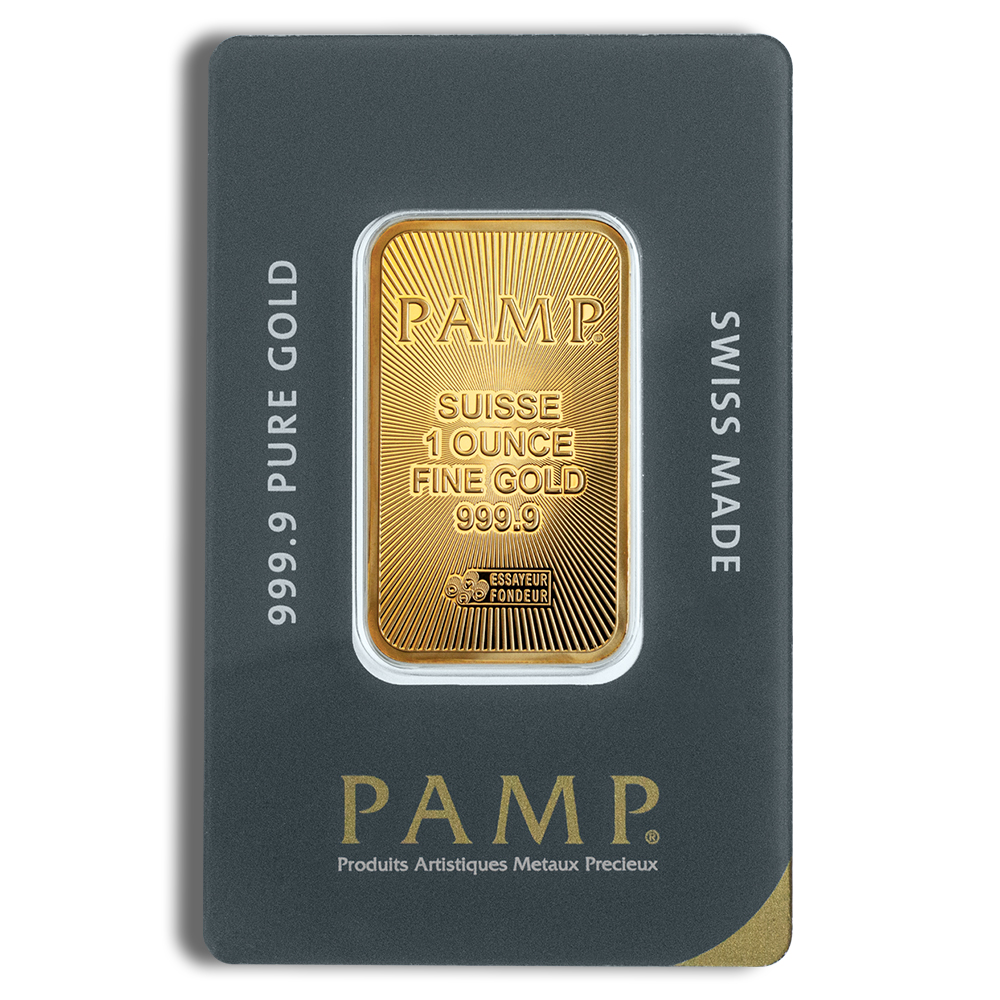
1 oz Gold Bar – PAMP Suisse (Carded)
Compare a named PAMP offering. Check the specific design, packaging, and supported verification features.
View Product & Availability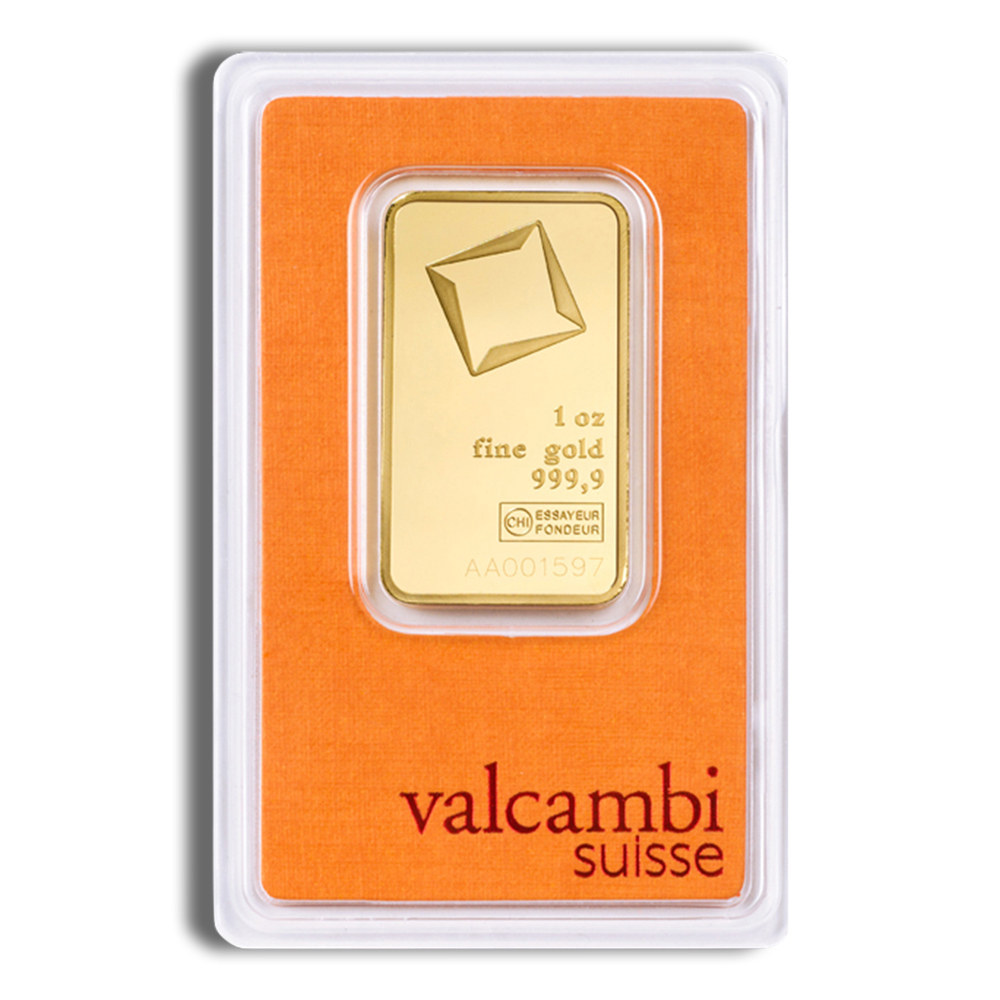
1 oz Gold Bar – Valcambi (Carded)
A named-refiner option for comparing carded one-ounce bars, delivered cost, and packaging terms.
View Product & Availability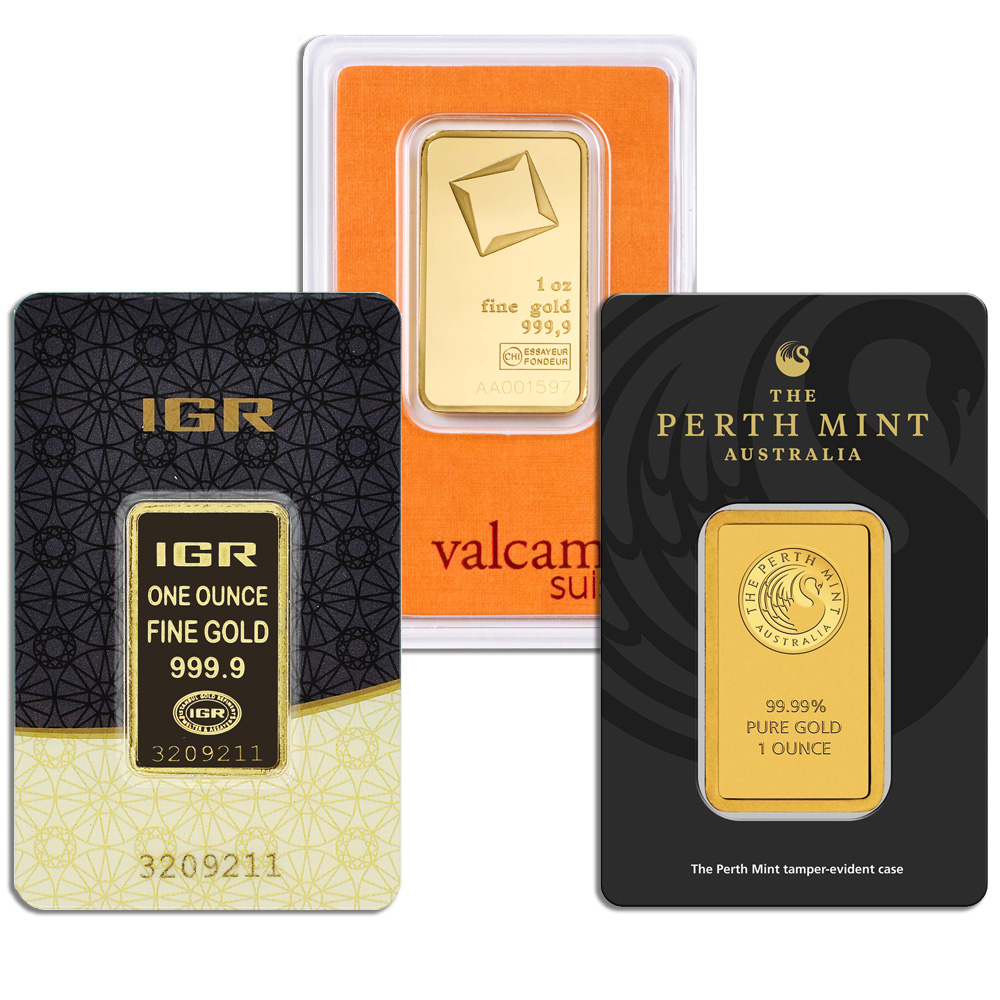
1 oz Gold Bar – Brand Varies .9999 (Carded)
Consider this format when a particular refiner or design is not essential. Read how the delivered brand is selected.
View Product & Availability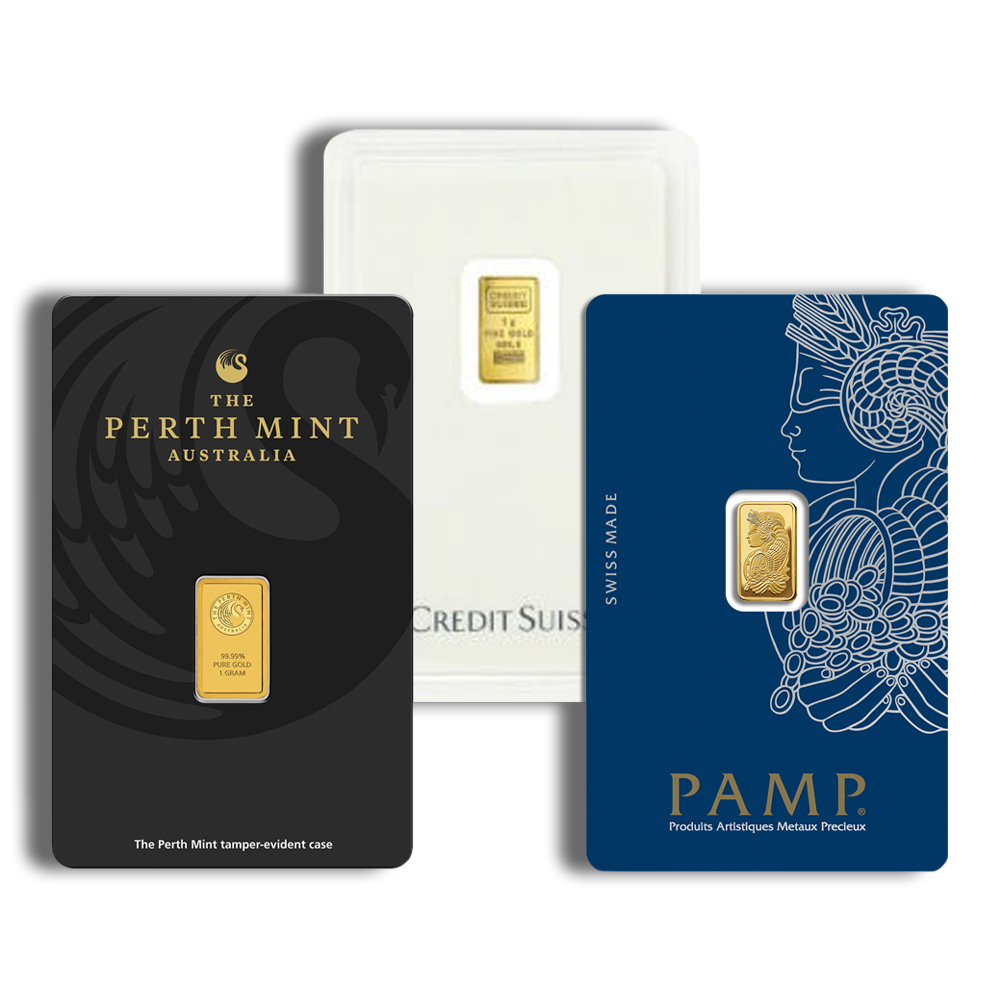
1 Gram Gold Bar – Brand Varies (Carded)
A smaller purchase format. Compare the premium per fine gram as well as the total price per bar.
View Product & AvailabilityImages illustrate the linked listings. Brands, designs, packaging, availability, and prices follow each product page’s current terms.
Frequently Asked Questions About Buying Gold Bars
What is a practical gold bar for a first-time buyer?
A common-weight bar with clearly stated specifications makes comparison simpler. Choose a size within your budget and evaluate the seller, delivered premium, verification process, and delivery terms. No brand makes those checks unnecessary.
Does a serial number prove a gold bar is real?
No. A serial number helps identify a bar, but numbers and packaging can be copied. Match numbers where applicable and combine documentation with appropriate professional verification.
Should I open a gold bar’s assay package?
Preserve the original packaging unless there is a specific inspection or testing reason to open it. Ask the seller or testing professional first. Opening can affect presentation and resale procedures without changing the gold content.
Is a gold bar advertised below spot always a scam?
A low price alone does not establish fraud, but a substantial unexplained discount deserves careful investigation. Confirm the actual fine-gold content, full transaction cost, seller identity, and authenticity before paying.
How can I reduce risk when buying from a private seller?
Arrange inspection with a reputable professional before committing payment. Agree on the product, price, testing, and settlement process in advance, document the transaction, and avoid proceeding if the seller refuses reasonable verification.
Is the lowest advertised price the best deal?
Not necessarily. Compare the full delivered cost, product condition, payment terms, verification, and potential resale deductions. A lower headline price can become a higher total once fees are included.
Sources and Verification References
- CFTC — Ten Things to Consider Before Buying Precious Metals
- LBMA — Current Gold Good Delivery List
- PAMP — VERISCAN
- Valcambi — Minted Bars
Educational information only. Gold prices can fall, and purchase premiums may not be recovered at resale. Verify current product specifications, payment protections, shipping coverage, and transaction terms before purchasing.