
Sales Tax on Gold and Silver: State Examples and Buying Checklist
Sales Tax on Gold and Silver: State Examples and Buying Checklist
Sales tax on gold and silver depends on the applicable jurisdiction, the product, and the transaction. Some rules exempt qualifying bullion; others impose purchase thresholds or distinguish collectible products. An online order is not automatically tax-free. Confirm the delivery details and current exemption requirements before comparing final checkout totals.
Selected official sources reviewed September 18, 2026. This is general educational information, not individualized tax advice. Verify current law and transaction treatment with the relevant tax agency or a qualified adviser before ordering.
What information determines the answer?
Begin with the actual delivery destination and how the transaction is completed. Then identify the product’s metal, form, weight, purity, price, and whether its value is primarily tied to metal or collectibility. State rules may define those categories differently from a store’s navigation menu.
A precious-metals exemption should not be assumed to cover a copper novelty round, jewelry, a display accessory, or every licensed collectible. Mixed orders may contain items with different treatment. Ask the seller to explain an unexpected tax line by item rather than treating the entire cart as one category.
| State example | What the official source establishes | What still needs checking |
|---|---|---|
| New York | Qualifying investment bullion exemption has transaction-value and metal-value conditions | Exact product, premium test, and other statutory conditions |
| California | Qualifying bulk transactions may be exempt under Regulation 1599 | Current adjusted threshold, product definition, and transaction conditions |
| Oregon | No general sales or use/transaction tax | Whether another jurisdiction applies to the actual transaction |
New York: amount and product premium both matter
New York Tax Law §1115(a)(27) addresses qualifying investment bullion sold for more than $1,000 and includes metal-value pricing tests and other conditions. It is not a blanket exemption for every purchase above that amount.
The provision uses different price limits for silver coins, small gold coins, other coins, and bars or ingots. A highly collectible item can therefore need a different analysis from a standard bullion bar. Consult the full provision and current agency guidance rather than applying a generic “tax-free bullion” label.
California: verify the current bulk-sale threshold
California Regulation 1599 sets out conditions for bulk transactions involving specified bullion and numismatic coins. Its text references a $2,000 threshold from July 1, 2023, or an adjusted amount under the governing statute. Do not assume the historical base amount is necessarily the current threshold.
Check the current adjusted amount for the transaction date before relying on an exemption. The regulation also distinguishes an investment purchase from purchases for resale in an actual business. Planning to sell an investment later does not, by itself, make a resale certificate appropriate.
Oregon: no general sales tax is a different rule
The Oregon Department of Revenue states that Oregon has no general sales or use/transaction tax. That is different from having a special bullion exemption.
The same agency advises residents shopping in another state to consult that state’s rules. Where you live alone does not settle every out-of-state transaction. Give the seller accurate delivery and transaction information, and do not assume a different state’s treatment follows you everywhere.
For other states, use this verification checklist
Locate the state revenue department’s guidance and the current law it cites. Check the effective date, covered metals and forms, dollar threshold, any purity or pricing restrictions, and treatment of accessories. If the guidance is ambiguous, obtain a written answer for the exact product.
A third-party map is useful for finding a starting point, but it is not a substitute for the rule in effect on the sale date. Also distinguish a proposal from enacted law and an enacted law from a provision that has already taken effect.
| Record to save | Why it helps |
|---|---|
| Itemized invoice and product description | Identifies what was actually purchased |
| Delivery address and order date | Documents the relevant transaction facts |
| Tax line and exemption explanation | Shows the treatment applied |
| Official source and effective date | Makes the reasoning reviewable later |
Compare the actual checkout total
For an arithmetic example only, a taxable $1,000 purchase at an assumed 6% rate adds $60 before any other taxable charges. An exempt $1,050 product would still cost less than that $1,060 total. Neither example identifies a state’s actual rate or determines whether a real item qualifies.
Avoid increasing your purchase simply to chase a threshold without calculating the whole outlay. A tax saving does not make an unwanted additional purchase free. Confirm any shipping or payment-charge treatment rather than assuming it follows the merchandise automatically.
A gold-bar example to identify correctly
This listing provides a specific product name, weight, and fineness. Those details help identify the item for a tax question; the presence of the product here is not a tax-exemption determination.
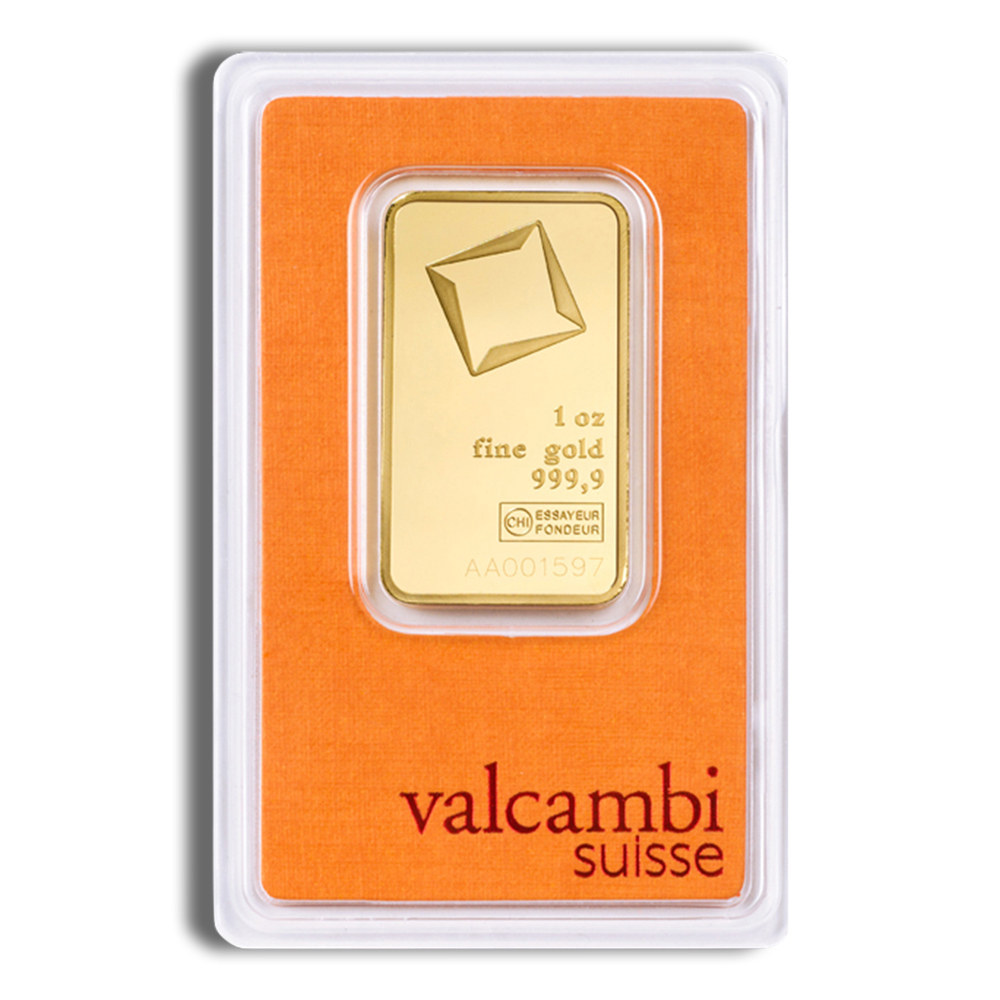
1 oz Gold Bar – Valcambi (Carded)
One-ounce .9999 Valcambi gold bar in carded packaging. Tax treatment depends on the actual order and applicable rules.
Keep purchase tax separate from resale reporting
A sales-tax exemption at checkout does not answer whether a later gain must be reported. Cost basis, income-tax rules, and information-reporting questions are separate. Preserve purchase and sale records and consult a qualified adviser for your circumstances.
Read Agate’s bullion buyback tax and reporting guide for that separate topic. Compare transaction costs with the dealer checklist and review exact product descriptions in the Agate catalog.
Frequently asked questions
Is buying bullion online automatically tax-free?
No. Online ordering does not create a universal exemption. Applicable jurisdiction and transaction details still matter.
Does “IRA eligible” mean sales-tax exempt?
No. Retirement-account eligibility and sales-tax treatment are different questions.
Does a state’s gold exemption automatically cover copper?
No. Read the defined metals and products in the applicable rule.
What if checkout tax looks wrong?
Ask the seller for an itemized explanation before paying, and compare it with the current official rule for the transaction.
Does a sales-tax exemption eliminate tax when I sell?
No. Purchase sales tax and possible tax on resale gains are separate issues.