
Copper Bullion Guide: Kilo Bars, 10-Ounce Bars, Value, and Resale
Copper Bullion Guide: Kilo Bars, 10-Ounce Bars, Value, and Resale
Copper bullion bars and rounds are finished copper products whose retail prices can be much higher than their raw-metal value. A copper kilo or 10-ounce bar may suit collecting, gifting, or display, but buyers should compare weight units, purity, manufacturing premium, and realistic resale options before treating it like gold or silver bullion.
What buyers mean by copper bullion
In retail catalogs, copper bullion can describe bars, rounds, and themed pieces with a stated copper content. The phrase does not make every item a standardized exchange-deliverable commodity. Identify the manufacturer, weight, purity, dimensions, and any surface treatment on the exact listing.
A privately produced round is also not automatically a government-issued coin. If you want a collectible design, that distinction may not affect enjoyment, but it should affect how the product is described and compared. A plated item is different from a solid copper item.
Kilo bars versus 10-ounce bars
A kilo bar has a metric weight of 1,000 grams. A 10-troy-ounce bar represents 311.034768 grams, while ten ordinary ounces represent 283.49523125 grams. The difference is large enough to matter when comparing price per gram.
Do not assume the unit from the word “copper” or from an image. Ask for a manufacturer specification if the listing says only “oz.” Dimensions are product-specific: two bars with the same mass can be shaped differently and need different display or storage space.
| Format | What to confirm | Practical consideration |
|---|---|---|
| Kilo copper bar | 1,000 g stated mass and purity | Larger display piece; heavier shipment |
| 10 oz copper bar | Troy or ordinary ounce definition | Unit choice changes the gram equivalent |
| Copper round | Weight, purity, issuer, finish | Often purchased for its design |
| Colored or antiqued piece | Base metal and applied finish | Compare as a finished collectible, not untreated metal |
Why the raw copper value is only a starting point
A finished product includes fabrication, tooling, design, finishing, packaging, distribution, and retail costs. Those costs can be a large part of a small copper item’s price. That does not make the item unsuitable as a collectible; it means the purchase should be evaluated honestly.
When a commodity quote uses dollars per ordinary pound, convert the copper mass to that same unit. One kilogram is approximately 2.20462 ordinary pounds. At an entirely hypothetical $5 per pound, a pure kilogram’s metal reference would be about $11.02 before any fineness adjustment. This is not a current copper quote or a retail valuation.
Measure the premium in dollars as well as percent
If a hypothetical finished piece contains $10 of metal and costs $35, the amount above metal value is $25. That is a 250% premium over the metal reference. Large percentages can occur when the base-metal value is small, so also consider whether the design and presentation justify the actual dollars to you.
Do not assume a higher commodity price will recover that premium. If the metal reference doubles from $10 to $20, a future buyer still does not have to pay your original $35. Collector demand is a separate market, and shipping or selling fees can materially affect the proceeds.
Agate copper catalog examples
The supplied Agate inventory includes both a Frontier Mint 10-ounce copper bar and a Frontier Mint kilo copper bar. These original catalog images help compare the formats. Current availability and direct product permalinks were not confirmed during this review, so the links below open catalog searches rather than promise an orderable item.
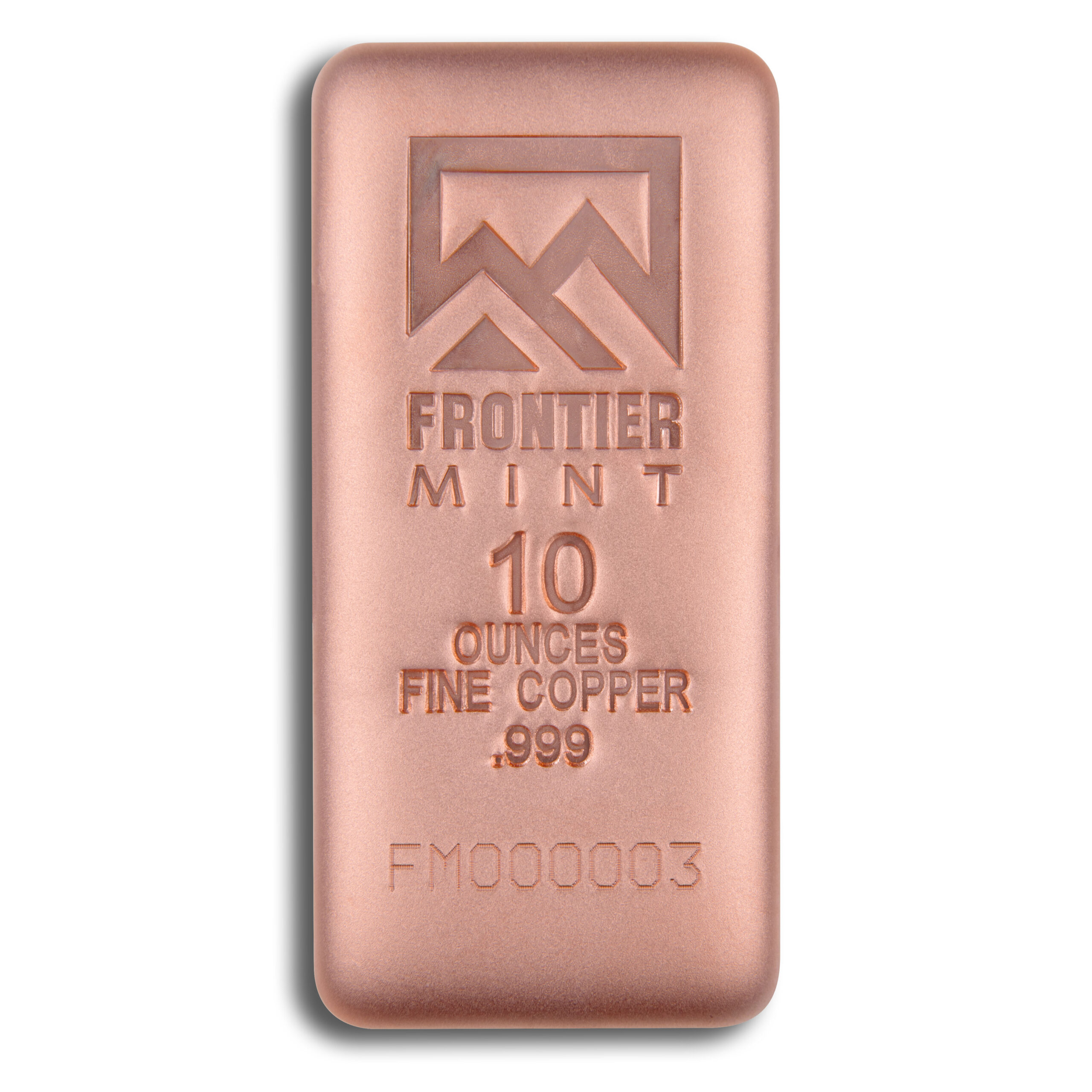
10 oz Copper Bar – Frontier Mint
10 oz Copper Bar — Frontier Mint. Confirm the exact weight unit, specifications, and current listing.
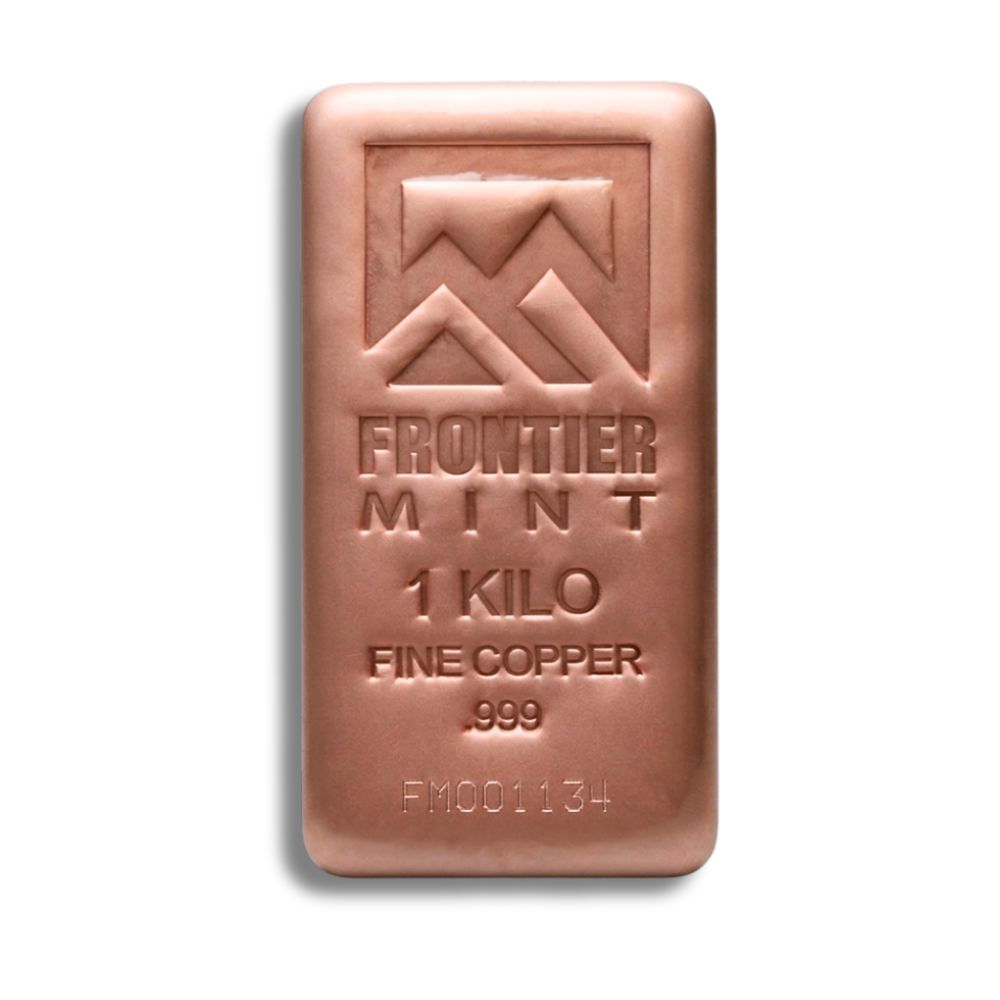
Kilo Copper Bar – Frontier Mint
Kilo Copper Bar — Frontier Mint. Catalog example; confirm current inventory and product details.
Images and names are from the supplied September 14, 2026 inventory export. Live stock was not confirmed on September 18. No price or availability promise is made.
Storage and handling affect appearance
Store copper pieces in suitable holders in a dry environment, and avoid repeated handling of the faces. Copper surfaces can change appearance with exposure and handling. For a themed or treated item, follow the maker’s care instructions rather than applying an improvised polishing method.
Keep original packaging and invoices if the presentation is part of the collector appeal. Do not remove a deliberate antique finish because it looks darker than raw copper. Before buying a larger piece, consider the space it needs and the cost of sending it to a future buyer.
Who is the likely buyer when you sell?
A collector may value the design, while a metal buyer may evaluate only recoverable copper and its processing costs. Those are different sale paths. Ask prospective buyers what they accept and how they price it before relying on a resale assumption.
Compare current catalog options only after deciding whether your goal is collecting, gifting, or commodity exposure. Use Agate’s product catalog for descriptions, the dealer checklist for transaction questions, and the education hub for related metal-format guides.
Frequently asked questions
Is copper a precious metal?
Copper is generally classified as a base metal. A retail “bullion” label does not change that classification.
Is a copper kilo worth the same as its retail price in scrap?
Not necessarily. A scrap buyer may pay based on recoverable metal and processing economics, without recognizing design or packaging.
Does 10 oz always mean troy ounces?
Do not assume it. Confirm the manufacturer’s specification, especially when comparing copper with commodity prices quoted per pound.
Are themed copper pieces unsuitable purchases?
They can suit collecting or gifting. Evaluate the design premium as part of that purpose rather than assuming it will be recovered as metal value.
Should I polish a copper collectible?
Avoid altering its surface without understanding the finish and collector market. Keep original presentation where possible.