
Mexican Silver Libertad Coins: Sizes, Premiums, and Value
Mexican Silver Libertad Coins: Sizes, Premiums, and Value
Mexican Silver Libertad coins are valued for their fine-silver content and the demand for their particular date, size, finish, and condition. To compare offers, calculate the premium over metal value, match the exact issue, and include delivery costs. A lower mintage or higher purchase premium does not guarantee stronger resale value.
Find your next Silver Libertad
Explore Agate's Libertad listings, then compare the year, weight, finish, and condition before ordering.
A Libertad purchase can be about accumulating silver, collecting Mexican designs, or building a date set. Start by deciding how much you want to pay for silver weight and how much extra you are comfortable assigning to collectibility.
What is a Mexican Silver Libertad?
The Silver Libertad is a Mexican silver coin series produced by La Casa de Moneda de México. Silver issues began in 1982. Its imagery brings together Winged Victory and Mexico's national coat of arms; the exact design arrangement varies with the issue and generation. Check photographs of both sides when identifying a particular coin.
Libertads do not display a numerical face value. Their trading prices reflect metal content and market demand rather than a denomination stamped on the coin. A one-ounce .999 fine-silver issue provides a useful starting point for learning the series.
Do not confuse a Libertad with another Mexican silver coin. The name, photographs, and specification table should agree. If a title identifies one weight and its description gives another, resolve that discrepancy before purchasing.
How to choose a Silver Libertad size
The series includes fractional, one-ounce, and larger issues. Availability depends on year and finish; the existence of a size in the series does not mean it is offered for every release. Compare total cost, display preference, and the amount you might want to sell in a single future transaction.
| Format to research | Why a buyer might choose it | What to compare |
|---|---|---|
| Fractional sizes | Smaller silver content or a collection spanning several sizes | Total price and premium per fine ounce |
| 1 oz | A convenient reference size for date comparisons | Same year, finish, and condition |
| Larger issues, such as 2 oz or 5 oz | More silver and a larger design surface | Fine weight, dimensions, holder, and delivered price |
A smaller coin can cost less overall while costing more per ounce. A larger coin provides more room to appreciate the design but requires a suitable holder and a larger budget. Neither feature establishes that one size is a better investment.
What determines Silver Libertad value?
For a coin containing one fine troy ounce of silver, the silver spot price supplies the starting metal reference. The amount above that reference is the product premium. It may reflect fabrication, distribution, available supply, dealer margin, or collector demand for the exact issue.
Date, finish, grade, and surfaces matter when comparing collectible examples. Low mintage can attract interest, but a limited supply only supports a price when buyers want the coin. Examine completed sales for the same issue and condition rather than treating an unsold asking price as established market value.
Several comparable transactions are generally more useful than one unusual sale. Account for buyer fees, shipping, certification, and whether the example sold individually or as part of a set. A scarce date and a common date may carry different premiums even when their silver content is identical.
Keep altered coins in a separate comparison group. Colorization, plating, or other aftermarket treatments may appeal to collectors, but they should not automatically be described as an original mint finish. Ask who performed the treatment and what documentation accompanies it.
A premium calculation you can repeat
Metal reference = fine troy ounces × silver spot price per troy ounce.
Product premium percentage = (product price − metal reference) ÷ metal reference × 100.
Use the stated fine-silver content. If it is already expressed in fine ounces, do not multiply it by purity a second time.
Assume a hypothetical silver spot price of $30 per troy ounce. A one-ounce coin priced at $45 has a $15 premium, equal to 50% of its $30 metal reference. A two-ounce coin at $82 has a $22 premium over a $60 metal reference, or approximately 36.7%.
| Hypothetical purchase | Metal reference | Product price | Premium |
|---|---|---|---|
| 1 fine oz at $30 spot | $30 | $45 | 50.0% |
| 2 fine oz at $30 spot | $60 | $82 | 36.7% |
The two-ounce example costs more dollars but less per fine ounce: $41 compared with $45. That does not establish better future resale. A collector may prefer the one-ounce issue, and a later buyer may not repay the premium you originally paid. Add shipping and other required costs before comparing actual offers.
BU, proof, reverse proof, and certified coins
BU means Brilliant Uncirculated. It is a descriptive condition term, not a specific numerical grade from a third-party grading service. Do not read an ungraded BU listing as a promise of MS70.
Proof describes a production method. Proof and reverse-proof finishes use different arrangements of reflective and frosted surfaces. Compare photographs and the exact issue description; a shiny coin is not automatically a proof, and a proof is not automatically free of handling marks.
Certification adds a grading service's assessment. Record the service, numerical grade, certification number, and designations. Verify the certification record through the grading service and compare it with the coin and holder offered.
For an ungraded example, look for clear photographs and disclosure of spots, scratches, or cleaning. When completing a date set, confirm whether the image shows the actual coin or is representative and whether the listing guarantees your required date.
A practical dealer comparison
Compare a raw BU coin with other raw BU examples of the same issue. Compare a certified coin with the same service, grade, and relevant designation. Mixing those groups can make a reasonable price appear unusually high or low.
An Agate catalog example
The supplied September 14, 2026 inventory export identifies the following BU example. Use it as a format reference, then check Agate's search results for current offerings. This catalog record does not establish today's stock or price.
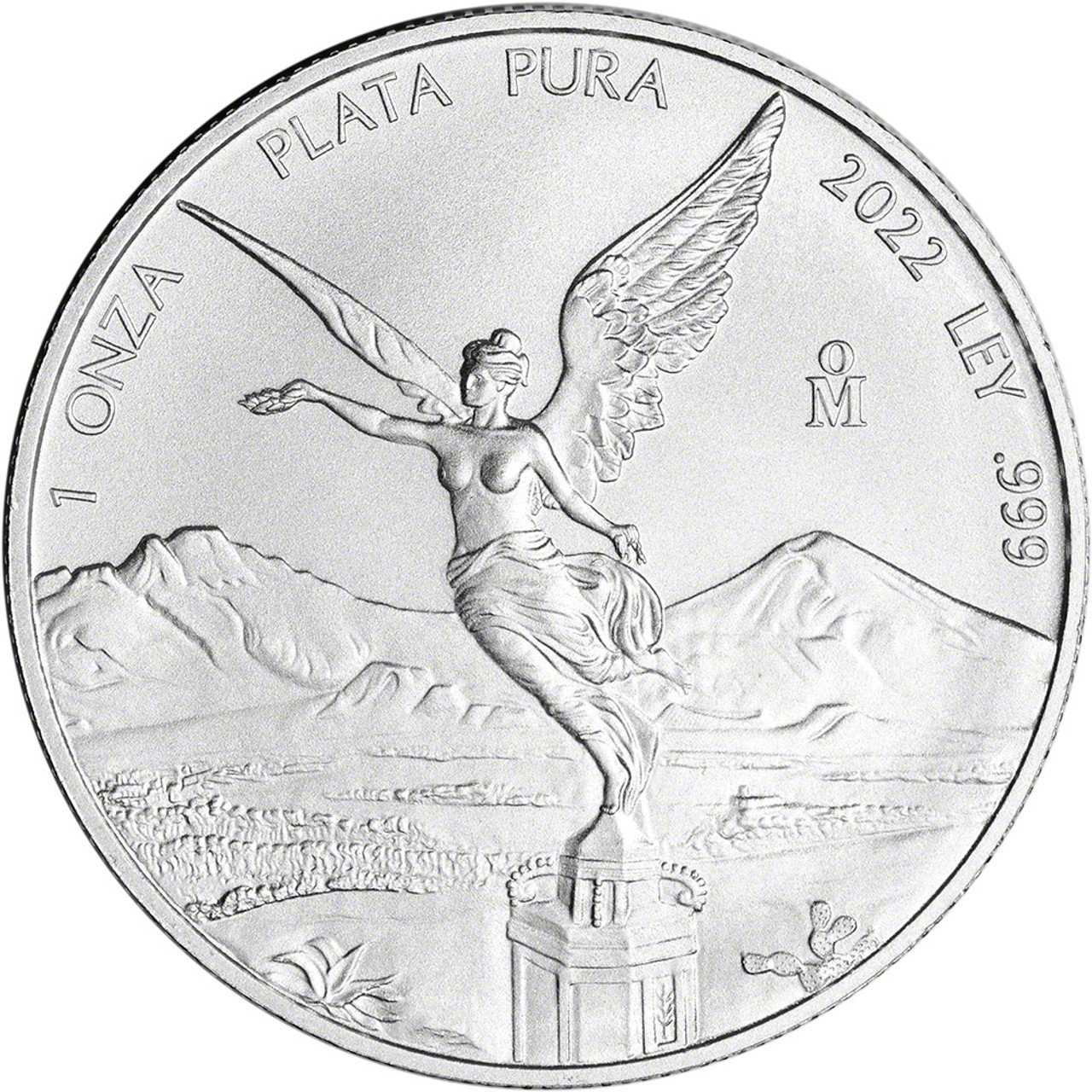
2022 1 oz Silver Mexican Libertad – BU
A one-ounce, dated BU catalog example for comparing standard bullion presentation with proof or certified offerings. Confirm the exact listing and condition before ordering.
Search current Libertad listings →Product image and name are supplied catalog references. Live inventory, image availability, and an exact product-page URL were not independently confirmed for this conversion.
Preserve the coin and plan for resale
Keep the coin in a suitable protective holder and retain the invoice. When handling is necessary, hold it by the edge over a soft surface. Do not polish toning or try to erase spots. Surface changes may reduce collector interest even when silver content is unchanged.
Before selling a scarcer issue, ask whether the buyer is making a generic silver offer or recognizing a collector premium. Compare net proceeds after fees and shipping, along with testing, price-lock, and payment terms.
For broader comparisons, read Agate's guide to silver coins, rounds, and bars and the precious-metals dealer selection guide. Explore the Agate education hub for related coin and pricing resources.
Frequently asked questions
Are all Silver Libertads one ounce?
No. The series includes fractional and larger issues in addition to one-ounce coins. Confirm the available size for the particular date and finish you want.
Does lower mintage guarantee higher value?
No. Mintage is one part of the comparison. Collector demand, condition, available examples, and the prices buyers actually pay also matter.
Is BU the same as MS70?
No. BU is a descriptive condition term. MS70 is a specific grading result assigned by a grading service under its standards. An ungraded BU coin is not guaranteed to receive that grade.
Should I choose a proof or a bullion issue?
Compare standard bullion issues if fine-silver quantity and cost are your priorities. Compare proofs if their finish and presentation interest you. Review actual premiums and condition; either choice can lose value.
Will I recover the collectible premium when I sell?
Not necessarily. A buyer's offer depends on the exact issue, condition, demand, and current market. Ask for an item-specific bid rather than assuming your purchase premium will be repaid.
How should I compare a Libertad with an American Silver Eagle?
Match fine-silver content, date, finish, and condition, then compare delivered prices and actual buyback offers. Their designs and denomination conventions differ, and neither series automatically offers the better purchase for every buyer.
Choose the issue that fits your collection
Start with the date, size, and finish you want. Compare the full purchase cost and keep the silver value separate from the collector premium.
Browse Agate Libertad listings →Educational information. Numerical examples are hypothetical. Prices, premiums, and availability change, and purchase premiums are not guaranteed at resale.