
Goldback Denominations Explained: Gold Content, Sizes, and Buying Guide
Goldback Denominations Explained: Gold Content, Sizes, and Buying Guide
Goldback denominations scale directly with their stated gold content: 1 Goldback contains 1/1,000 of a troy ounce of 24-karat gold. A 5 Goldback contains five times that amount, while a 1/2 Goldback contains half. The printed denomination is not a fixed U.S.-dollar value.
Compare the retail price, published exchange rate, contained-gold value, and intended use before choosing a denomination. Smaller pieces offer more divisibility; larger pieces hold more gold individually. Neither size automatically guarantees a better purchase price or resale offer.
Educational guide for physical-gold buyers and collectors. Availability, exchange rates, premiums, and market conditions can change. Check the exact listing before ordering.
What to Check Before Choosing a Denomination
- The exact denomination and stated fine-gold weight.
- The delivered price per Goldback unit and per fine troy ounce.
- The published exchange rate compared with the seller’s actual price.
- The state series, artwork, condition, and applicable authenticity features.
- Whether you want smaller transaction increments or fewer individual pieces.
- The dealer’s availability and buyback terms for the particular product.
Goldback Denomination and Gold Content Chart
The calculations below use 1/1,000 troy ounce of gold per Goldback unit. Gram weights are approximate, using 31.1034768 grams per troy ounce.
| Denomination | Fine Gold — Troy Oz | Equivalent Fraction | Approx. Fine Gold — Grams |
|---|---|---|---|
| 1/4 Goldback | 0.00025 | 1/4,000 oz | 0.0078 g |
| 1/2 Goldback | 0.00050 | 1/2,000 oz | 0.0156 g |
| 1 Goldback | 0.00100 | 1/1,000 oz | 0.0311 g |
| 2 Goldback | 0.00200 | 1/500 oz | 0.0622 g |
| 5 Goldback | 0.00500 | 1/200 oz | 0.1555 g |
| 10 Goldback | 0.01000 | 1/100 oz | 0.3110 g |
| 25 Goldback | 0.02500 | 1/40 oz | 0.7776 g |
| 50 Goldback | 0.05000 | 1/20 oz | 1.5552 g |
| 100 Goldback | 0.10000 | 1/10 oz | 3.1103 g |
These are stated fine-gold weights, not the gross weight of each finished piece. Denomination availability can vary by series and dealer; do not assume every series has every size in stock.
How the Denomination System Works
Ten 1 Goldbacks and one 10 Goldback represent the same combined stated gold content: 1/100 troy ounce. They are different product arrangements, however. Ten individual pieces provide more ways to divide the total, while one larger piece requires less individual handling.
The printed denomination represents a proportional gold unit rather than a fixed dollar amount. For a voluntary exchange, confirm that the other party accepts Goldbacks and agree on the rate before completing the transaction.
The issuer’s Goldback FAQ provides further information about the product. Check the exact denomination and series when comparing individual pieces.
Smaller Goldback Denominations
1/4 and 1/2 Goldbacks
The quarter and half denominations are the smallest formats shown in this guide. They can appeal to buyers seeking a small gift, an introduction to the format, or finer transaction increments where accepted.
A 1/4 Goldback contains 1/4,000 troy ounce of gold, while a 1/2 contains 1/2,000. Their small gold quantities do not eliminate the costs of artwork, fabrication, protective layers, distribution, and handling. Compare cost per fine ounce rather than judging value from the low total purchase price alone.
1 and 2 Goldbacks
The 1 Goldback is the reference point for the denomination system, containing 1/1,000 troy ounce. A 2 Goldback doubles that amount to 1/500 ounce.
These formats provide small-unit flexibility without requiring as many separate pieces as quarter or half denominations. Their suitability for payments depends on the recipient’s acceptance and the agreed exchange terms.
Middle Goldback Denominations
5 and 10 Goldbacks
A 5 Goldback contains 1/200 troy ounce, while a 10 contains 1/100 ounce. These denominations allow buyers to hold the same total gold amount with fewer individual pieces than smaller formats.
Compare the price per Goldback unit. If a 10 Goldback costs exactly ten times the price of a 1 Goldback, their unit costs are equal. If the 10 costs less per unit, it offers a lower acquisition cost for the same stated gold amount. If it costs more, compare the series, condition, and availability before deciding whether the difference suits your collecting goals.
Larger Goldback Denominations
25 and 50 Goldbacks
The 25 Goldback contains 1/40 troy ounce, and the 50 contains 1/20 ounce. They reduce the number of individual pieces needed to hold a given amount of gold and may appeal to buyers collecting the artwork or completing a series.
The tradeoff is divisibility. A single 50 Goldback cannot be separated into smaller spendable denominations by cutting it. Keep the piece intact and arrange an exchange for smaller denominations if needed.
100 Goldback
The largest denomination shown here is the 100 Goldback, containing 1/10 troy ounce of gold. That makes one-tenth-ounce bullion products a useful weight comparison.
Compare the total price and potential resale terms of the Goldback with conventional gold bars or coins containing a similar amount of fine gold. Artwork, series collecting, and the physical format may still matter to you, but the comparison helps identify what you are paying beyond metal value.
Which Denomination Fits Your Purpose?
| Buyer Purpose | Denominations to Compare | Main Tradeoff |
|---|---|---|
| Small introduction or gift | 1/4, 1/2, or 1 | Smaller purchase amount; compare the cost per ounce carefully. |
| Small voluntary exchanges | 1, 2, or 5 | More flexible increments, with more individual pieces to handle. |
| Building a denomination set | 5, 10, or 25 | Choose according to the series and denominations you want to collect. |
| Artwork and larger-format collecting | 25, 50, or 100 | More gold per piece, with less divisibility. |
| Lowest acquisition cost per ounce | Compare Goldbacks with conventional bars and coins. | The Goldback format may carry a higher premium over contained-gold value. |
How to Compare Prices Across Denominations
- Identify the denomination, using 0.25 for a quarter or 0.5 for a half.
- Divide the denomination by 1,000 to calculate stated fine troy ounces.
- Multiply that weight by a timestamped gold spot price per troy ounce to estimate contained-gold value.
- Add applicable shipping, payment charges, and taxes to determine the delivered purchase cost.
- Divide delivered cost by the denomination to calculate cost per Goldback unit.
- Compare that result with the published Goldback exchange rate and an actual dealer buyback quote.
Fine gold in troy ounces: Denomination ÷ 1,000
Contained-gold reference value: Fine troy ounces × gold spot price per troy ounce
Cost per Goldback unit: Delivered purchase price ÷ denomination
Premium above metal value: (Delivered purchase price ÷ contained-gold reference value − 1) × 100%
Keep three figures separate: contained-gold value, the published exchange rate, and a specific dealer’s retail price or bid. A published rate is not a guarantee that every business or buyer will transact at that rate.
Series and Artwork Still Matter
Two Goldbacks with the same denomination have the same stated gold proportion, but their prices may differ because of series, design, release, condition, or availability.
Decide whether you are buying gold content, smaller transaction increments, a particular design, or a complete series. That helps prevent an accidental collector-premium purchase when your main goal is metal weight.
For a closer look at state-series differences, read Idaho vs. Arizona, Florida, and Oklahoma Goldbacks. For the pricing calculation, continue to Goldback premium versus gold content.
Choose by Purpose and Total Cost
Start with the base relationship: 1 Goldback represents 1/1,000 troy ounce of gold. Then choose the denomination that fits your intended use, compare its delivered cost, and understand the resale or voluntary-exchange terms. The largest number and the lowest sticker price answer different questions.
Shop Featured Goldbacks
Explore these Florida Goldback listings across the denominations discussed above. Open each product page for current pricing, specifications, and availability.
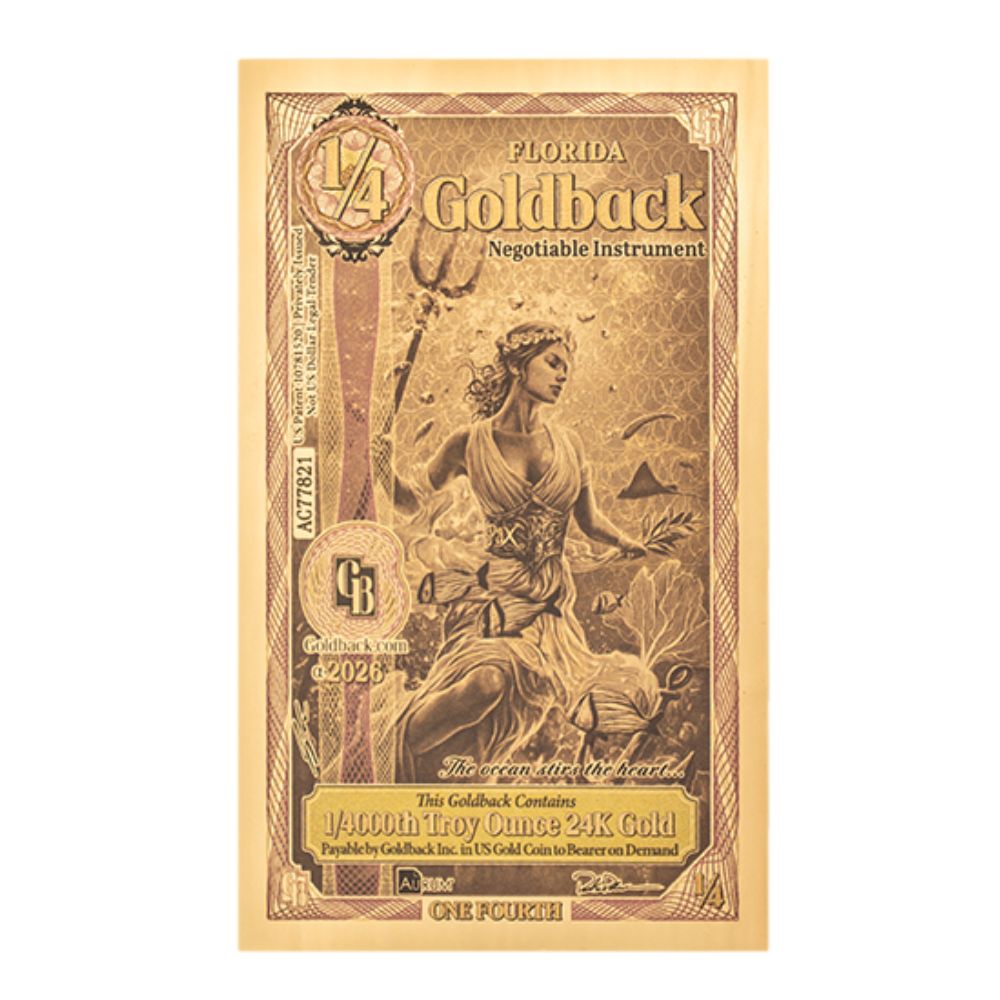 1/4 Goldback
Florida 1/4 Goldback
Stated fine-gold content: 1/4,000 troy ounce, approximately 0.0078 gram.
View Price & Availability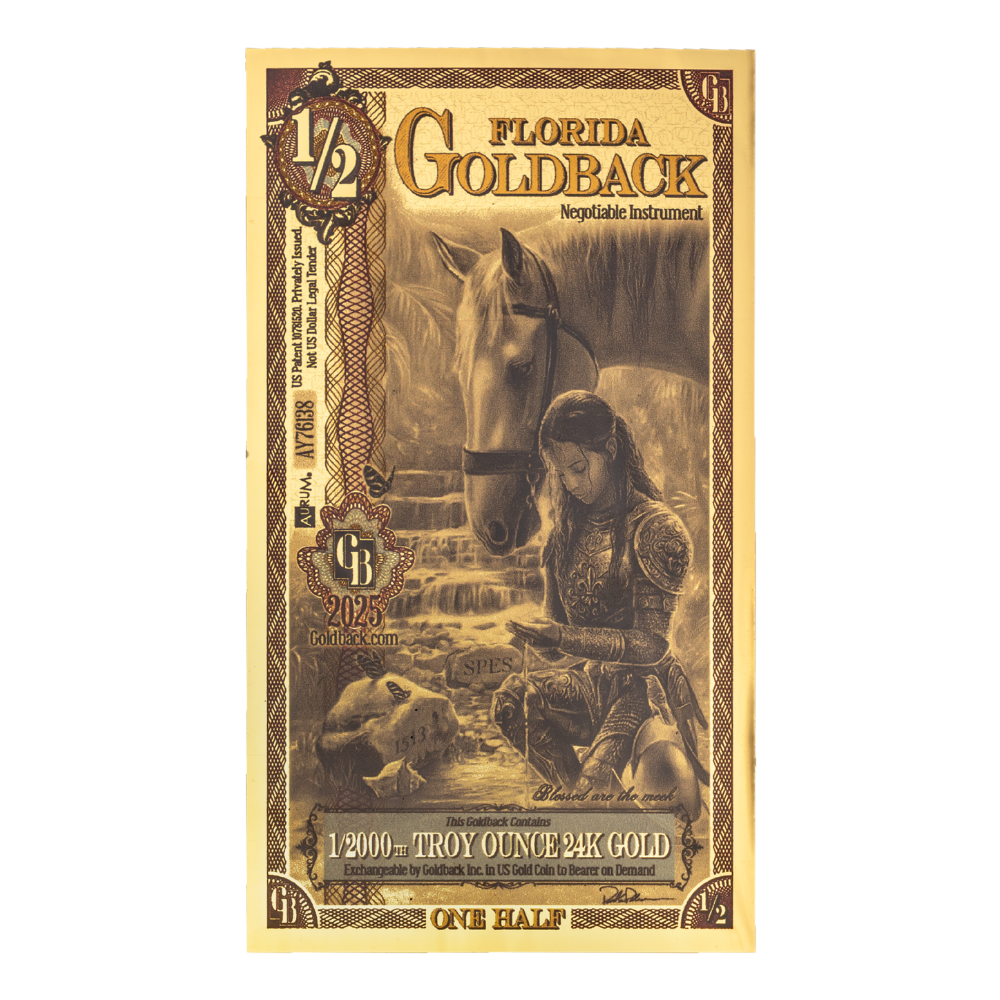 1/2 Goldback
Florida 1/2 Goldback
Stated fine-gold content: 1/2,000 troy ounce, approximately 0.0156 gram.
View Price & Availability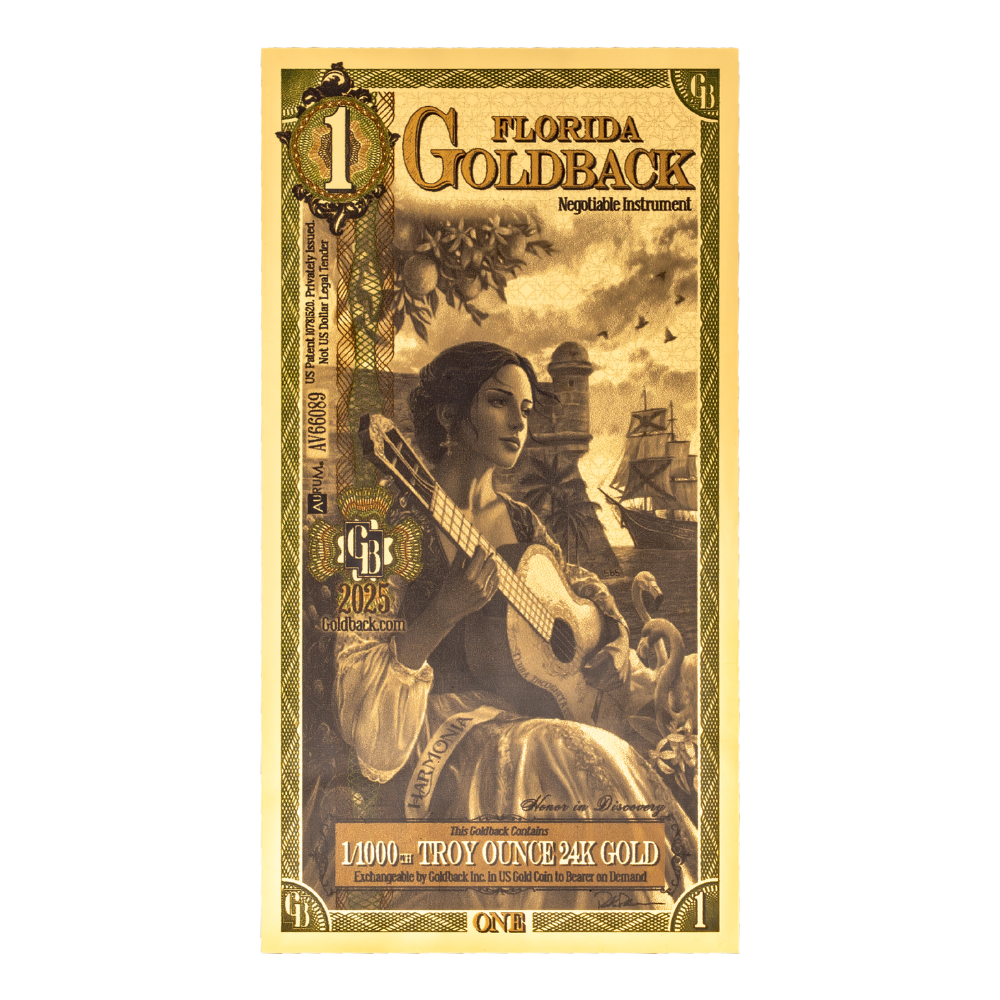 1 Goldback
Florida 1 Goldback
The base denomination: 1/1,000 troy ounce of gold, approximately 0.0311 gram.
View Price & Availability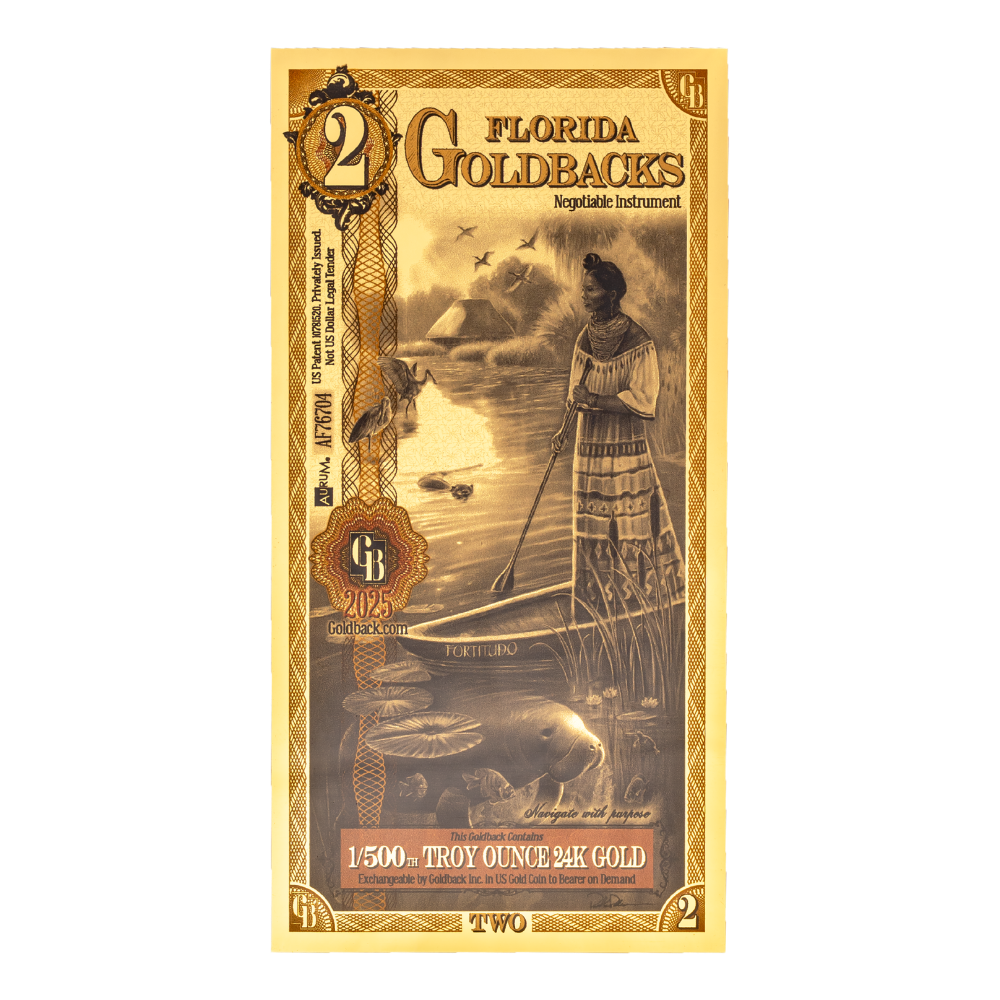 2 Goldback
Florida 2 Goldback
Stated fine-gold content: 1/500 troy ounce, approximately 0.0622 gram.
View Price & Availability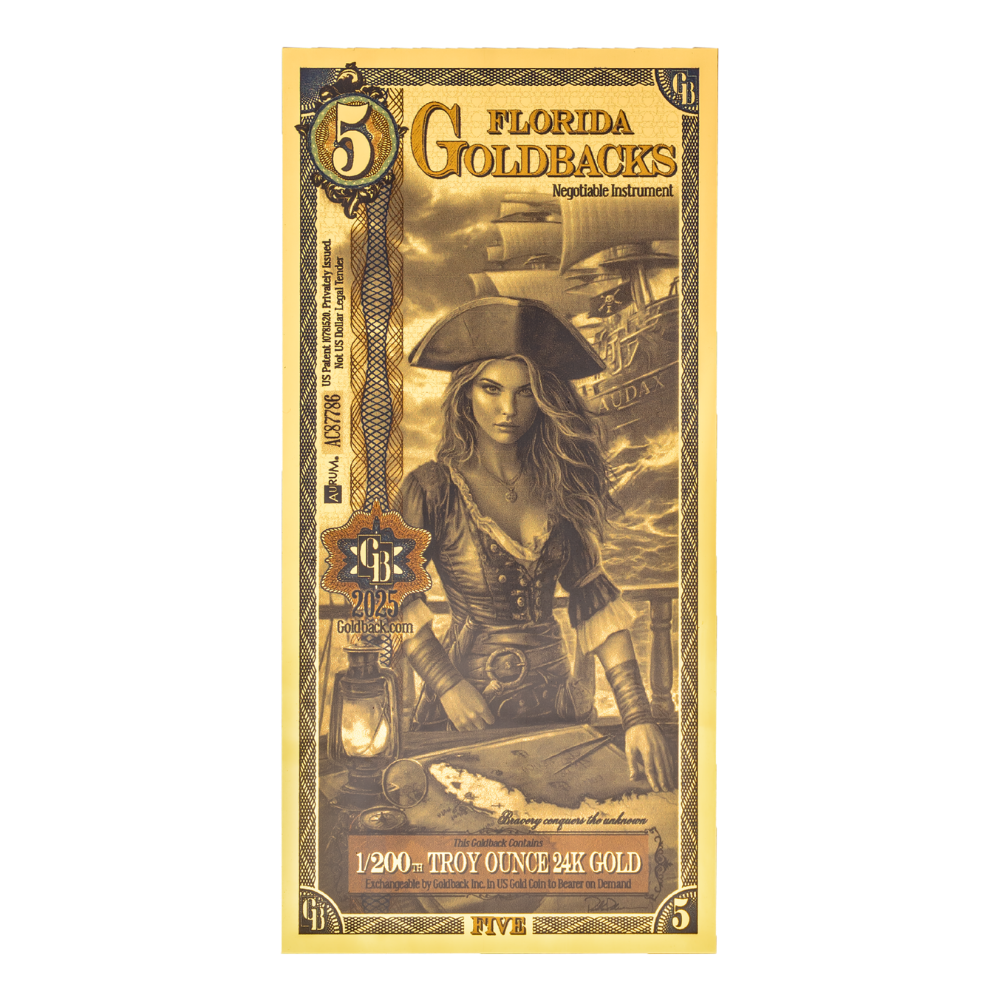 5 Goldback
Florida 5 Goldback
Stated fine-gold content: 1/200 troy ounce, approximately 0.1555 gram.
View Price & Availability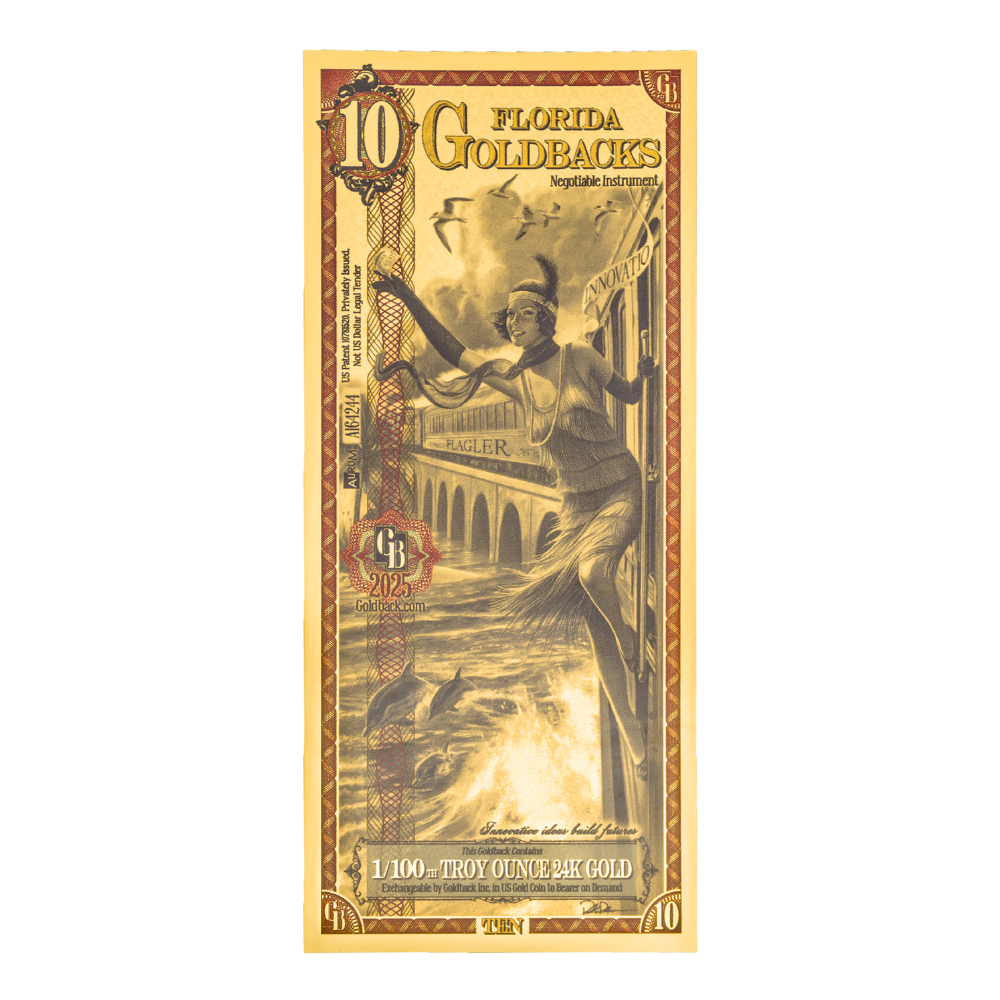 10 Goldback
Florida 10 Goldback
Stated fine-gold content: 1/100 troy ounce, approximately 0.3110 gram.
View Price & Availability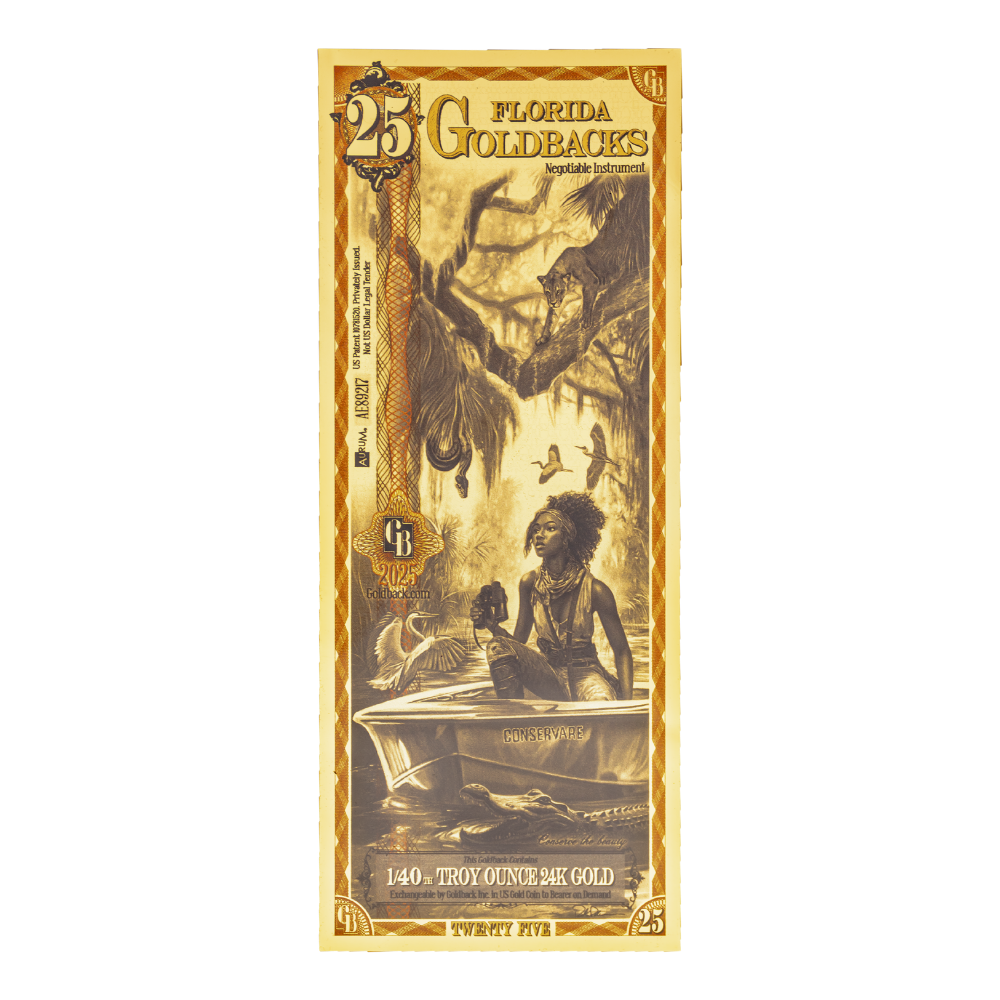 25 Goldback
Florida 25 Goldback
Stated fine-gold content: 1/40 troy ounce, approximately 0.7776 gram.
View Price & Availability 50 Goldback
Florida 50 Goldback
Stated fine-gold content: 1/20 troy ounce, approximately 1.5552 grams.
View Price & Availability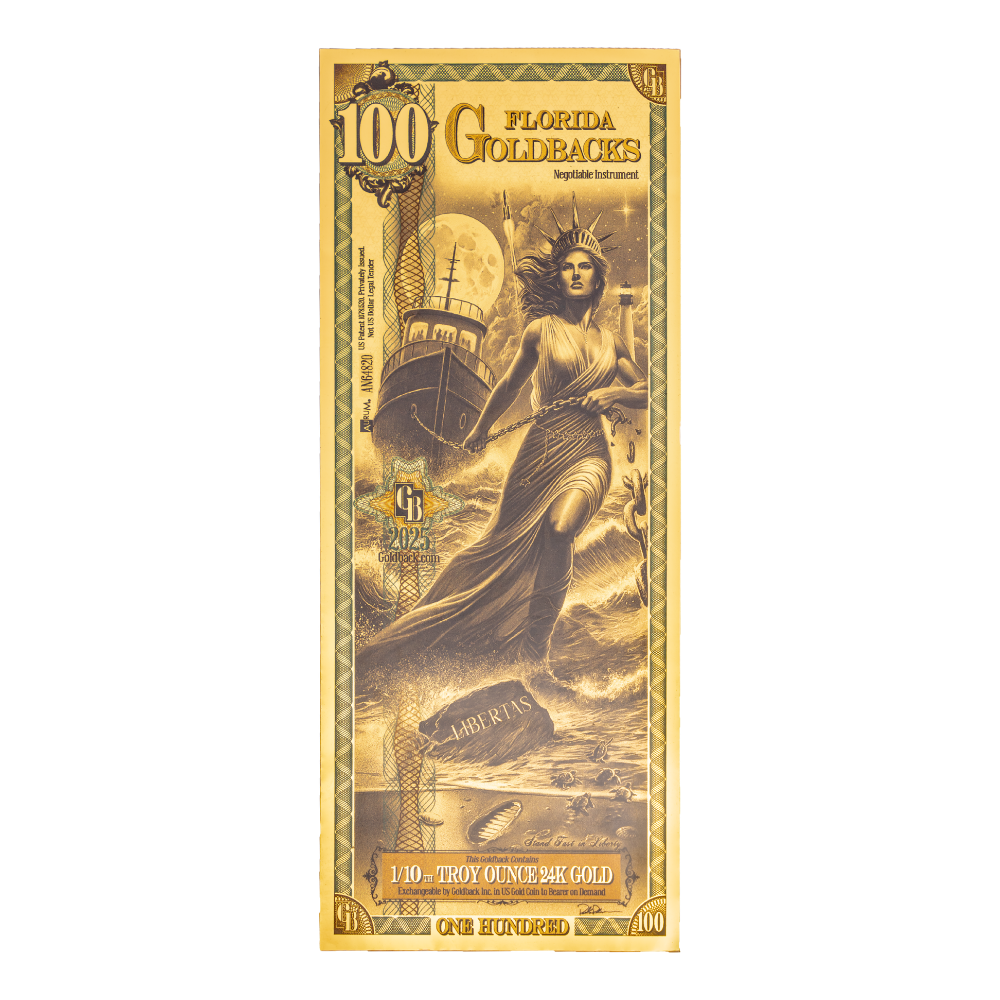 100 Goldback
Florida 100 Goldback
Stated fine-gold content: 1/10 troy ounce, approximately 3.1103 grams.
View Price & AvailabilityProduct images illustrate the linked listings. Prices and availability can change; confirm the exact item and current terms on its product page.
Frequently Asked Questions
How much gold is in one Goldback?
According to the issuer’s denomination system, one Goldback contains 1/1,000 troy ounce of 24-karat gold, approximately 0.0311 gram. That is the stated gold content, not the gross weight of the finished piece.
What is the smallest Goldback denomination shown here?
The smallest denomination in this guide is the 1/4 Goldback, containing 1/4,000 troy ounce of gold. Check the exact state series and dealer listing because denomination availability can vary.
How much gold is in a 100 Goldback?
A 100 Goldback contains 100/1,000, or 1/10, troy ounce of gold. That is approximately 3.1103 grams of fine gold.
Do ten 1 Goldbacks contain the same gold as one 10 Goldback?
Yes. Both arrangements represent a combined 1/100 troy ounce of gold. Ten individual pieces provide more divisibility, while their combined retail price may differ from the price of a single 10 Goldback.
Which Goldback denomination has the lowest premium?
There is no permanent answer. Compare delivered cost per Goldback unit and per fine troy ounce for the actual listings. Inventory, series demand, and dealer pricing can change the comparison.
Can I spend Goldbacks at any business?
Do not assume universal acceptance. Confirm that the business accepts Goldbacks and agree on the exchange rate and any change arrangements before making a purchase.
Sources and Buyer References
Agate Metals disclosure: This guide provides educational information. Gold prices, exchange rates, premiums, dealer bids, product availability, and transaction terms can change. A published exchange rate or contained-gold calculation does not guarantee a resale offer, merchant acceptance, or investment return.