
Goldback Premium vs. Gold Content: What Buyers Are Really Paying For
Educational guide for physical-gold buyers and collectors. Product availability, exchange rates, premiums, and market conditions can change.
A Goldback’s retail price is usually higher than the melt value of its contained gold because buyers are paying for more than raw metal. The difference can include extremely small-scale fabrication, layered construction, artwork, anti-counterfeiting features, distribution, dealer costs, and demand for a particular series. To judge the premium fairly, calculate the exact fine-gold value, add the full delivered cost, compare the published exchange rate, and ask what a dealer would pay to buy the same piece back.
What to Check Before Paying a Goldback Premium
- Denomination divided by 1,000 equals fine troy ounces
- Live gold spot price and timestamp
- Retail price, quantity tier, payment fee, shipping, and tax
- Published Goldback exchange rate versus dealer sale price
- State series, artwork, condition, and availability
- Current buyback price and where you realistically plan to resell
Start With the Gold Content
One Goldback contains 1/1,000 troy ounce of 24-karat gold according to the issuer. The content for any denomination follows this formula:
Fine troy ounces = Goldback denomination ÷ 1,000
A 10 Goldback contains 10 ÷ 1,000, or 0.01 troy ounce. A 50 contains 0.05 ounce. This simple conversion prevents vague comparisons.
Calculate Goldback Melt Value
Melt value = fine troy ounces × current gold spot price
For example only, if gold spot were $4,000 per ounce, the underlying gold in a 1 Goldback would equal $4.00, a 10 would equal $40.00, and a 50 would equal $200.00. Those are illustrations—not current quotes. Always insert the live spot price used by the dealer when you calculate.
| Denomination | Fine Gold | Melt-Value Formula |
|---|---|---|
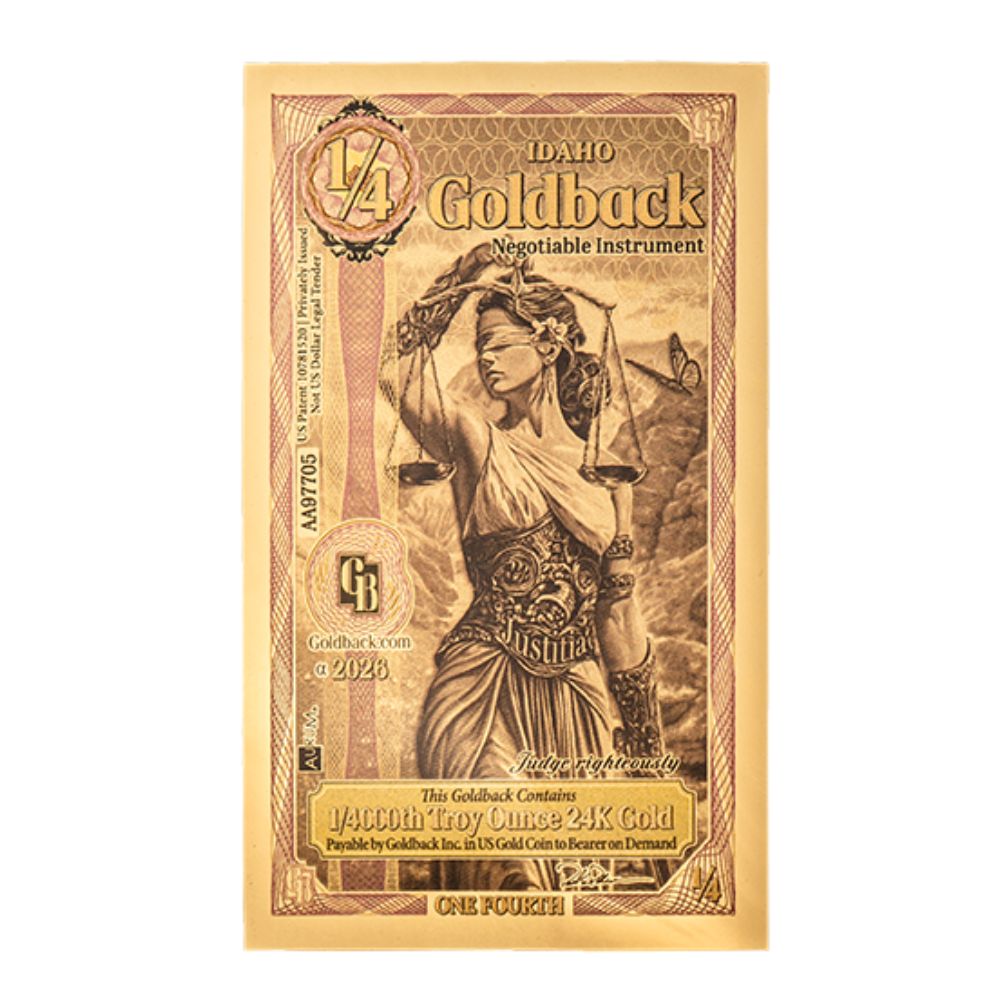
| 1/4 | 0.00025 oz | Spot × 0.00025 |
| 1/2 | 0.00050 oz | Spot × 0.00050 |
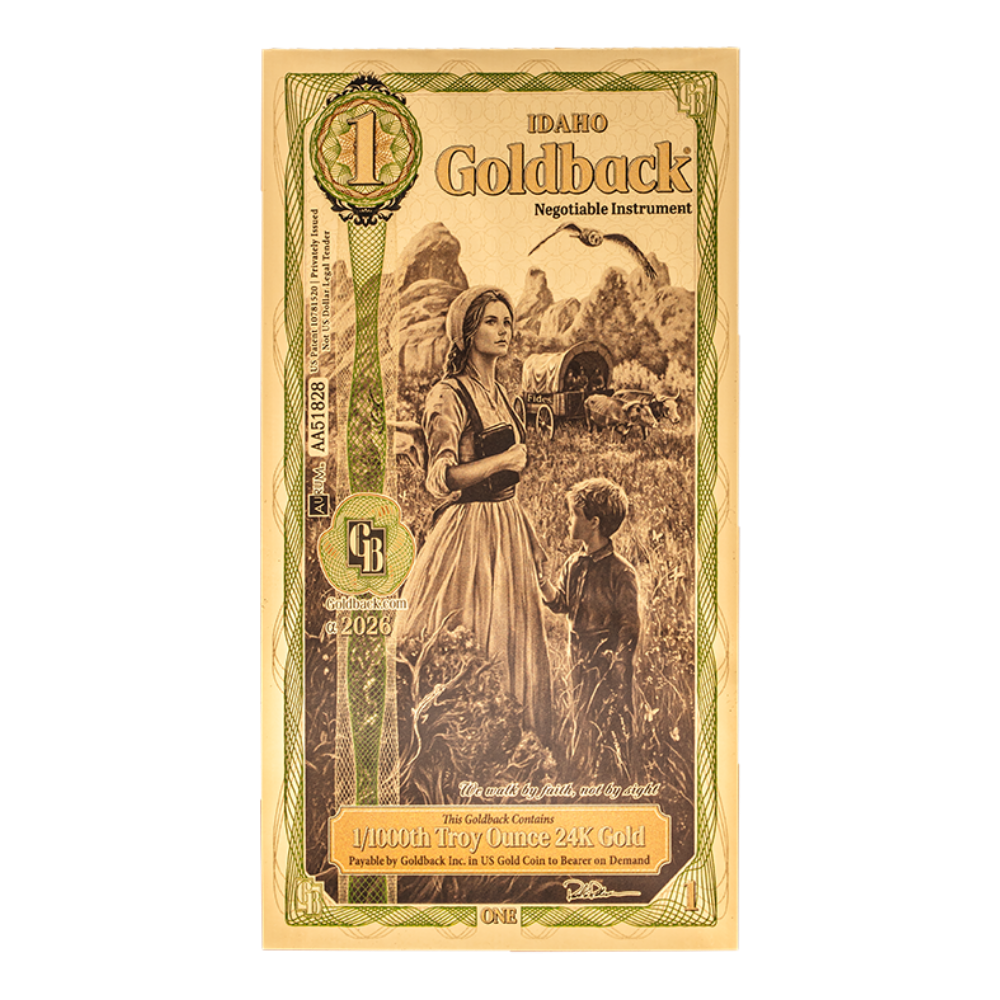
| 1 | 0.00100 oz | Spot × 0.00100 |
| 2 | 0.00200 oz | Spot × 0.00200 |
| 5 | 0.00500 oz | Spot × 0.00500 |
| 10 | 0.01000 oz | Spot × 0.01000 |
| 25 | 0.02500 oz | Spot × 0.02500 |
| 50 | 0.05000 oz | Spot × 0.05000 |
| 100 | 0.10000 oz | Spot × 0.10000 |
Calculate the Dollar and Percentage Premium
Use the total amount required to receive the product—not only the first number advertised.
Delivered price = product price + payment cost + shipping + applicable tax
Dollar premium = delivered price − melt value
Premium percentage = dollar premium ÷ melt value × 100
Percentage premiums can look unusually large when the underlying gold value is only a few dollars. That is mathematically expected for extremely small fractional products, but it still deserves transparent disclosure.
Why Tiny Gold Products Carry High Premiums
Fabrication Does Not Shrink With the Gold Weight
A manufacturer must still create artwork, deposit and encapsulate the gold, inspect the piece, package it, track inventory, and distribute it. Those costs are spread over very little metal in a 1/4, 1/2, or 1 Goldback.
The Format Provides Divisibility
Conventional one-ounce bars are efficient, but they cannot be divided into one-thousandth-ounce units without destroying the product. Goldbacks package tiny fractions into a recognizable, handleable format.
Artwork and Series Demand Add Non-Metal Value
A buyer may prefer Idaho, Florida, Arizona, or Oklahoma artwork, a certain denomination, or a complete run. That preference can add demand beyond melt value. It is a collectible component, not extra gold.
Distribution and Dealer Costs Remain
Payment processing, shipping materials, insurance, staffing, fraud prevention, inventory financing, and dealer margin affect the retail price. Small items are not costless to sell merely because their gold weight is low.
Exchange Rate Is Not the Same as Melt Value
Goldback publishes a daily exchange rate intended as a reference for voluntary transactions. Melt value measures the gold alone. Retail price is what a particular seller charges. Buyback is what a particular buyer will pay. These four numbers can be different.
| Number | What It Measures | What It Does Not Guarantee |
|---|---|---|
| Melt value | Contained gold at spot | A retail or resale price |
| Published exchange rate | Issuer-provided reference for exchange | Universal merchant acceptance |
| Dealer retail price | What you pay the seller | What another dealer will pay later |
| Dealer buyback | A current bid under stated conditions | A future price |
The Round-Trip Spread Matters
Suppose a Goldback costs $X delivered and a dealer would buy it today for $Y. The difference, X − Y, is the current round-trip spread. The gold price, exchange rate, and collector demand would have to move enough to overcome that gap before the transaction breaks even.
A seller who discusses only upside but will not explain buyback is giving you half a market. Ask for both sides.
Joe’s dealer note: The premium is not hidden once you do the math. The honest question is whether the product’s divisibility, artwork, construction, and exchange use are worth that premium to you.
Do Larger Denominations Reduce the Premium?
They may reduce the price per Goldback unit because fewer individual pieces are needed for the same total denomination. They do not always do so. Limited inventory, state-series demand, and dealer supply can cause temporary exceptions.
Compare a basket with equal total units. For example:
- Fifty individual 1 Goldbacks
- Ten 5 Goldbacks
- Five 10 Goldbacks
- Two 25 Goldbacks
- One 50 Goldback
Each basket states a combined 1/20 troy ounce of gold. Compare the delivered total, number of pieces, condition, and buyback. That reveals the actual price of divisibility.
Goldbacks Versus Fractional Coins and Bars
A 100 Goldback contains 1/10 ounce, making a 1/10-ounce sovereign coin or comparable fractional bar a useful benchmark. A conventional product may offer a lower per-ounce premium and broader bullion resale. The Goldback may offer more distinctive artwork, a different physical format, and connection to its exchange network.
Neither comparison is complete without the buyback side. Recognized bullion can trade on metal value plus a market premium, while a Goldback buyer may price using exchange demand, condition, or a dealer’s own policy.
When the Premium May Make Sense
- You specifically want very small physical-gold units.
- You plan to use them in voluntary exchanges where they are accepted.
- You collect the art or state series.
- You want an approachable gold gift.
- You understand that the purchase is not a low-premium substitute for every bullion bar.
When to Choose a Conventional Bullion Product
- Your main goal is maximum gold weight per dollar.
- You prioritize broad dealer liquidity.
- You do not value the artwork, denomination, or exchange format.
- You need a tighter bid-ask spread.
- You would be uncomfortable if the collectible portion of the premium declined.
A Transparent Goldback Buying Checklist
- Write down the denomination and calculate fine-gold ounces.
- Record the current spot price and melt value.
- Record the published exchange rate.
- Calculate complete delivered price.
- Convert the premium into dollars and percentage.
- Ask for a current buyback quote.
- Compare an equal-gold-weight conventional coin or bar.
- Decide whether the non-metal features justify the difference.
Use Goldback Denominations Explained for the full weight table and the four-state comparison when artwork or series choice affects your decision.
Joe Agate’s Bottom Line
Goldbacks contain real, measurable gold, but the retail price is not just a melt-value calculation. Treat the premium as the price of turning a microscopic gold fraction into a designed, protected, recognizable product. Calculate it openly, compare buyback, and purchase only when the purpose is worth the spread.
Shop Featured Goldbacks
Compare current Agate Precious Metals inventory across the denominations and state series discussed in this guide.
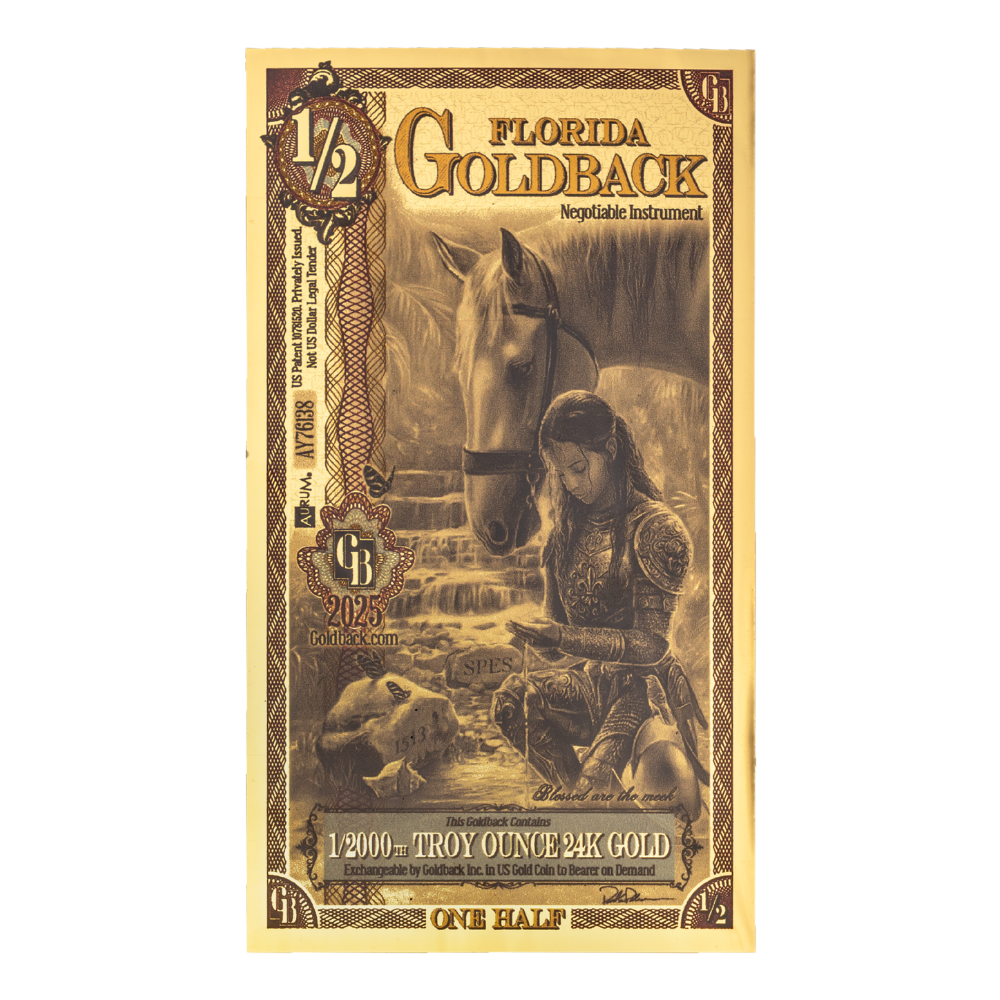
Florida 1/2 Goldback
A Florida fractional-gold piece containing 1/2,000 troy ounce of gold.
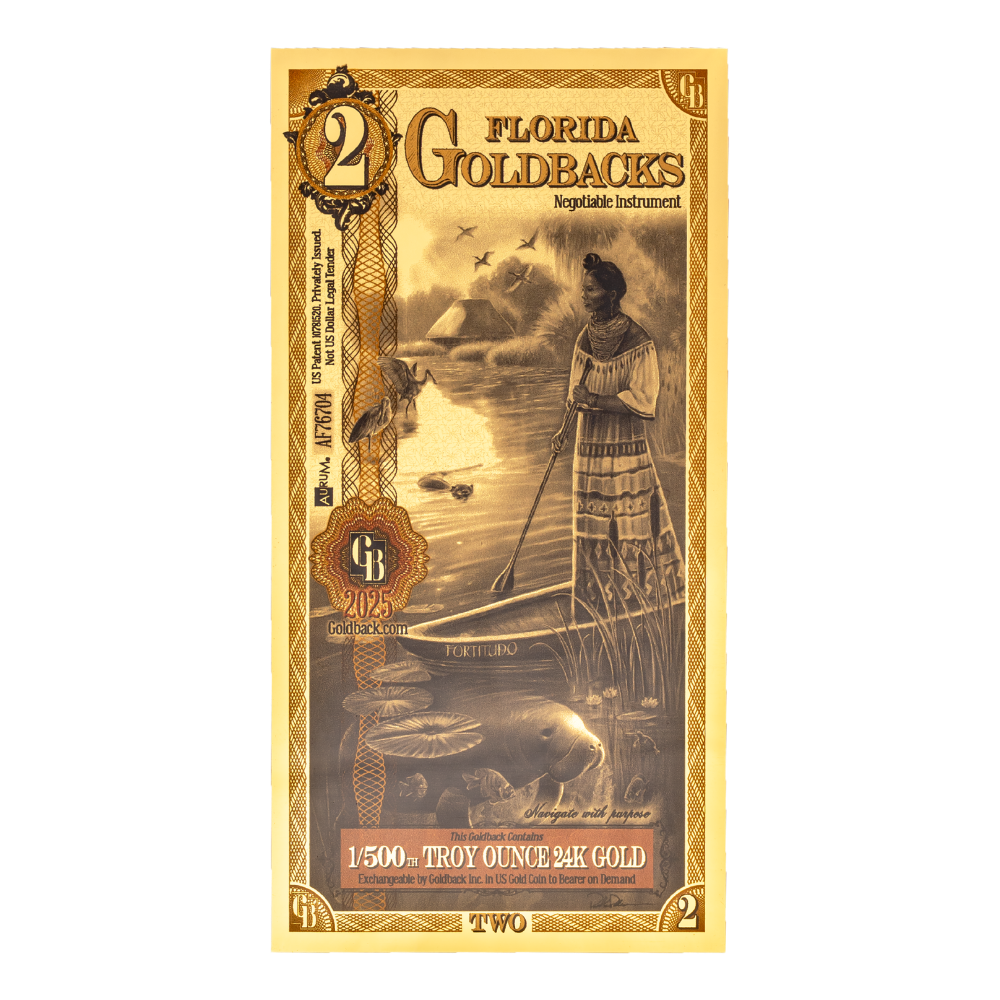
Florida 2 Goldback
A two-denomination Florida Goldback containing 1/500 troy ounce of gold.
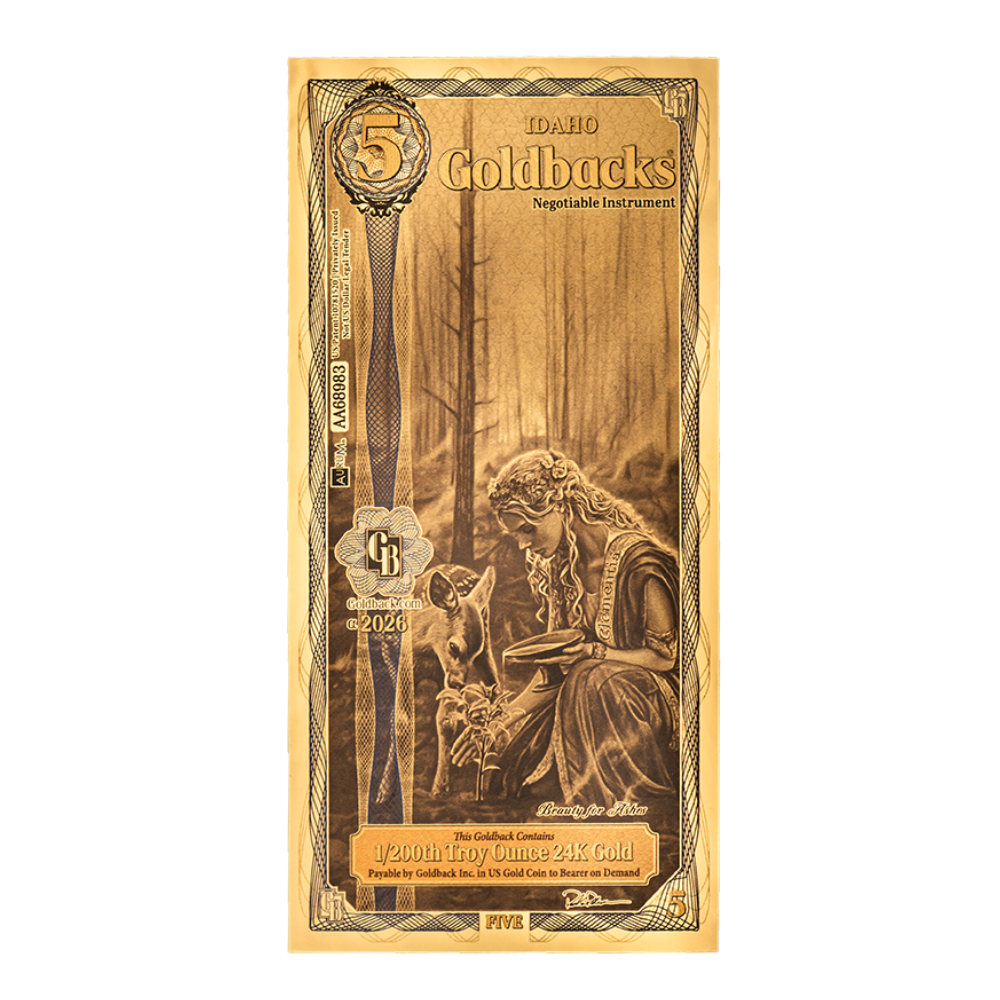
Idaho 5 Goldback
A five-denomination Idaho Goldback containing 1/200 troy ounce of gold.
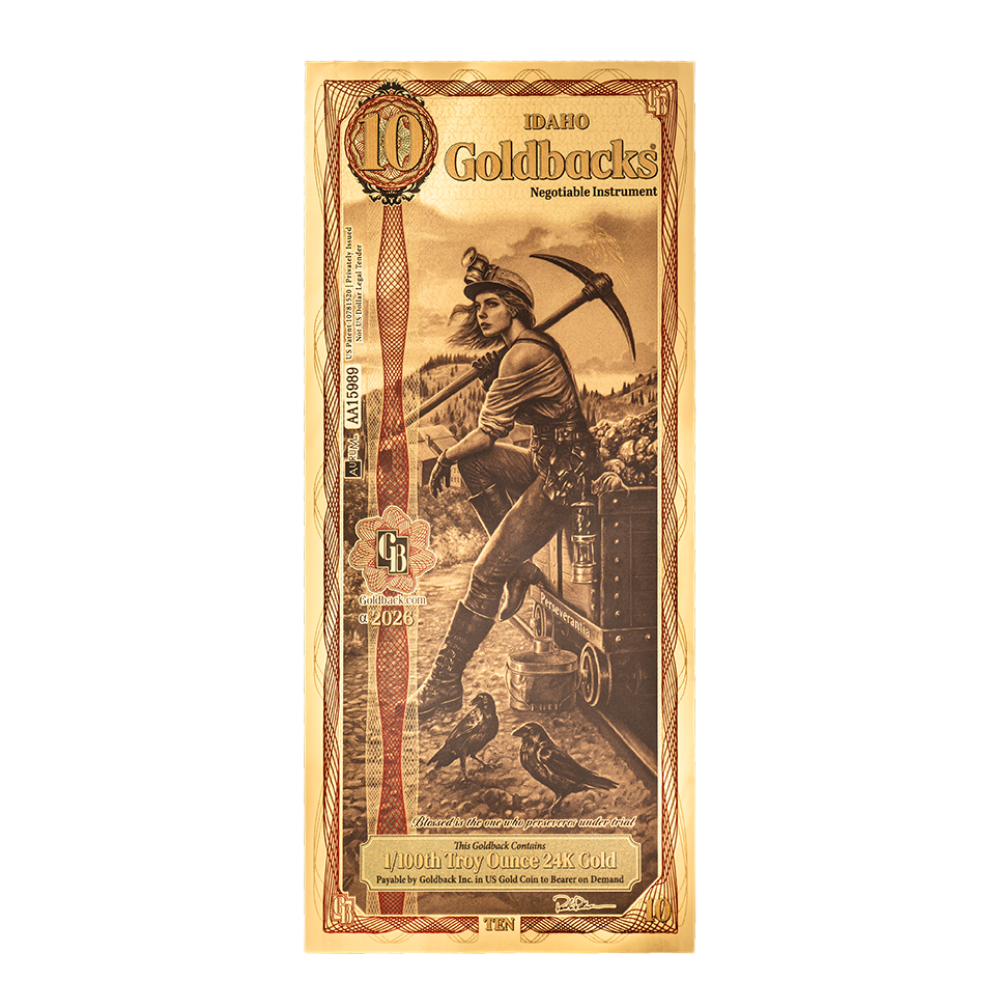
Idaho 10 Goldback
A ten-denomination Idaho Goldback containing 1/100 troy ounce of gold.
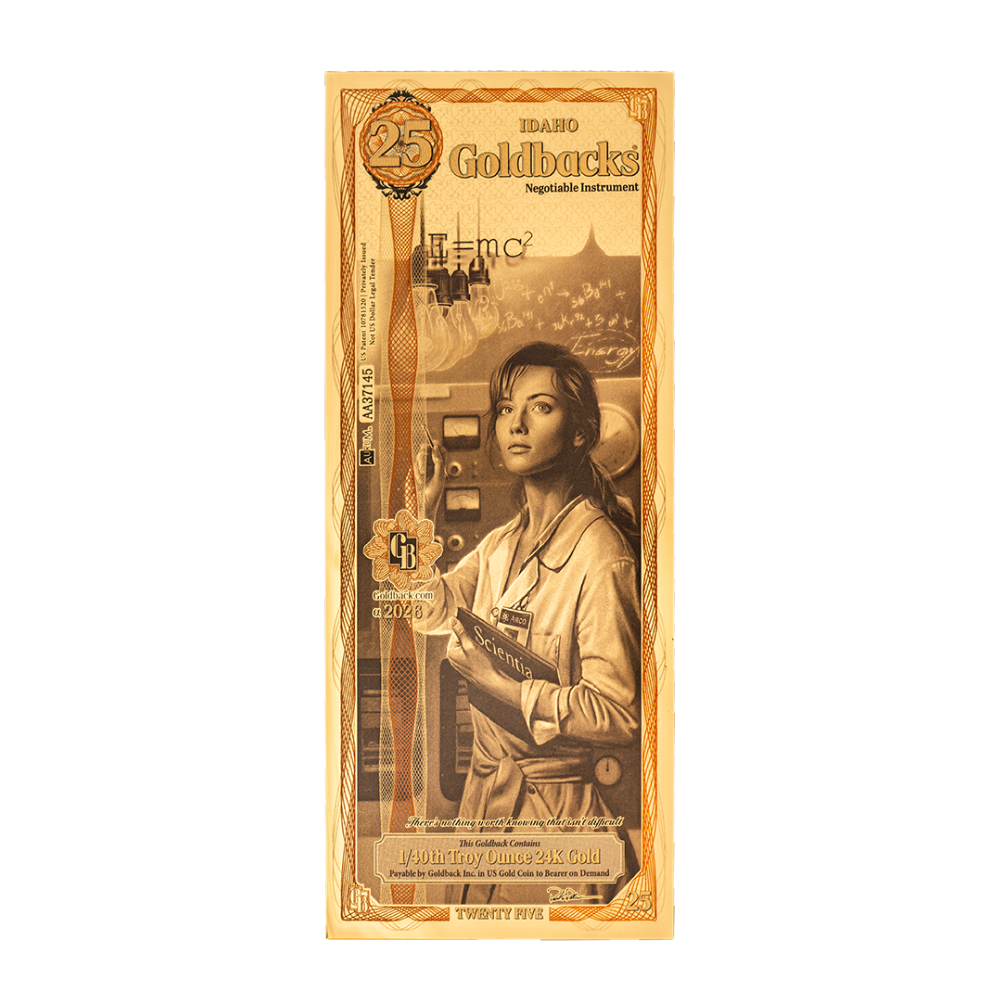
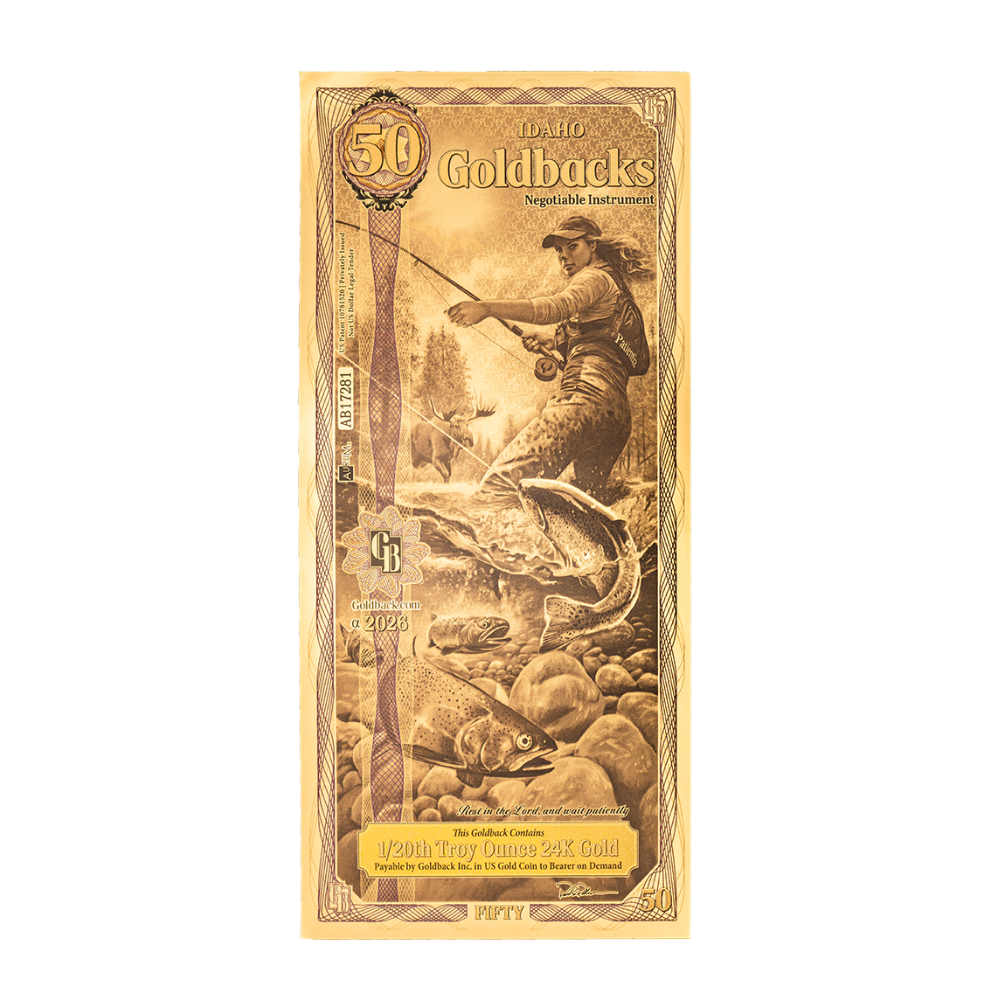
Idaho 50 Goldback
A fifty-denomination Idaho Goldback containing 1/20 troy ounce of gold.
Product availability and pricing can change with inventory and precious-metal markets. Open each product page for current information.
Frequently Asked Questions
Why are Goldbacks worth more than their gold content?
Their price can include small-scale fabrication, layered construction, artwork, security features, distribution, dealer costs, and demand in addition to the contained gold.
How do I calculate a Goldback’s melt value?
Divide the denomination by 1,000 to get fine troy ounces, then multiply by the current gold spot price. A 10 Goldback contains 0.01 troy ounce.
Is the Goldback exchange rate the same as spot price?
No. Spot price values raw gold per troy ounce. The published Goldback exchange rate is a separate reference for voluntary exchange and can include value beyond melt.
Do larger Goldbacks have lower premiums?
They can have a lower cost per Goldback unit, but not always. Compare live delivered prices because inventory, state series, condition, and demand can alter the relationship.
Are Goldbacks a good investment?
No return is guaranteed. Goldbacks may appeal for fractional use, artwork, collecting, or gifting, while conventional bullion may offer lower per-ounce costs. Evaluate the premium and buyback for your own purpose.
Sources and Buyer References
This article provides general educational information and does not constitute individualized investment, tax, legal, appraisal, or financial advice. Gold prices, exchange rates, premiums, inventory, and buyback terms fluctuate. Confirm current product specifications and transaction terms before purchasing.