
Silver Coin Melt Value Calculator: U.S. Denomination Chart and Formula
Agate Metals • Silver value guide
Silver Coin Melt Value Calculator: U.S. Denomination Chart and Formula
Silver coin melt value is the estimated market value of the silver inside a coin: silver weight multiplied by the silver spot price. Enter a spot price and quantity in the calculator below. The result estimates metal value; it is not a dealer offer, retail price, grade, or collector appraisal.
If you are buying, selling, or collecting U.S. silver coins, this gives you a starting point before comparing dealer offers and collectible premiums. Use the denomination chart to identify the right silver-content assumption for your coins.
By Joe Agate • Coin dealer, Buffalo, New York
Calculator methodology and source review:
Silver Coin Melt Value Calculator
Enter a silver spot price in U.S. dollars per troy ounce. This calculator uses your entry; it does not retrieve or automatically update a live market quote. Record the quote source and time when comparing offers.
The calculator is not active in this view. You can still use the formula and silver-content chart below.
Enter a spot price and quantity to calculate.
Metal-value estimate only. Presets do not measure wear or authenticate coins, and the results exclude fees, dealer spreads, taxes, and collector premiums.
U.S. Silver Coin Denomination Chart
These are the rounded silver-content constants used by the individual-coin presets. They represent original specification-based estimates, not the measured content of a worn coin. The chart covers the named issues; it is not a complete list of every U.S. silver coin.
| Coin type | Qualifying dates or issue | Silver purity | Silver per coin (troy oz) | Common pricing unit |
|---|---|---|---|---|
| Mercury / Roosevelt dime | Mercury: 1916–1945; Roosevelt: 1946–1964 | 90% | 0.07234 | Coin or face value |
| Washington quarter | 1932–1964 | 90% | 0.18084 | Coin or face value |
| Walking Liberty / Franklin / 1964 Kennedy half | Walking Liberty: 1916–1947; Franklin: 1948–1963; Kennedy: 1964 | 90% | 0.36169 | Coin or face value |
| Kennedy half | 1965–1970 silver-clad issues | 40% | 0.14790 | Coin or qualifying face value |
| Historic Morgan / Peace dollar | Morgan: 1878–1904 and 1921; Peace: 1921–1928 and 1934–1935 | 90% | 0.77344 | Individual coin |
| Silver war nickel | Qualifying 1942–1945 Jefferson nickels with large P, D, or S above Monticello | 35% | 0.05626 | Individual coin |
| American Silver Eagle | 1986 onward | .999 fine | 1.00000 fine troy oz | Individual coin |
See NGC’s silver coin specifications and melt-value reference for coin weights and compositions. The U.S. Mint explains the 1965 change from 90% to 40% silver half dollars.
The Formula Behind the Calculator
For example only, one coin containing 0.36169 troy ounce at an entered silver price of $50 has a silver melt value of $18.08 after rounding. This is a teaching example, not a current Agate price or offer. Use the calculator’s example button to reproduce it.
For custom items, multiply gross metal weight by the purity fraction to find fine-silver weight, then convert grams to troy ounces before applying a price quoted per troy ounce. Exclude stones, packaging, and other non-metal components. Do not apply purity again when the weight is already stated as fine-silver content.
Why 0.715 and 0.7234 give different results
For circulated 90% dimes, quarters, and halves sold by face value, dealers commonly use 0.715 troy ounce per $1 face value as an allowance for ordinary wear. At original full weight, those denominations total approximately 0.7234 troy ounce per $1 face. The seller and buyer should agree which assumption applies.
At a hypothetical $50 silver price, $10 face value produces an estimate of $357.50 using 0.715, compared with $361.70 using 0.7234. Neither method measures the actual wear of your lot. Small differences between the full-weight face-value method and sums of individual presets also reflect rounding of the constants.
The 0.715 convention applies to qualifying 90% dimes, quarters, and halves. It does not apply to silver dollars, war nickels, 40% halves, or Silver Eagles. A dealer’s 90% silver face-value listing provides an example of this market convention; it is not an assay of your coins.
Melt Value, Dealer Offer, and Collector Value
| Value | What it measures | Why it can differ |
|---|---|---|
| Melt value | Contained silver × spot price | Changes with the silver price and actual metal weight. |
| Dealer offer | What a dealer will pay under stated terms | Authentication, handling, resale demand, condition, quantity, and spread. |
| Retail bullion price | What a buyer pays for the product | Metal content, sourcing, operations, and market premiums. |
| Collector value | Numismatic market value | Date, mint mark, grade, originality, variety, eye appeal, rarity, and collector demand. |
Why a Dealer Offer Can Be Below Melt
Spot is a market benchmark, not a promise that every transaction clears at that number. A dealer may need to authenticate, sort, count, insure, ship, hedge, refine, or hold the material. Worn, damaged, mixed, or difficult-to-resell items can require more work. Current demand and the dealer’s inventory also matter.
Some desirable products can trade above melt when both bought and sold. Ask for the exact quote unit—per coin, per dollar face value, per fine troy ounce, or as a percentage of melt—and request the spot-price source and timestamp. Compare net proceeds after disclosed deductions.
Coins That Need Separate Treatment
Do not put every old U.S. coin into a 90% formula. Cents and most nickels are not silver coins. Kennedy halves dated 1965 through 1970 use a 40% silver composition, but not all were issued for circulation: the 1970-D was distributed in Mint Sets.
Historic Morgan and Peace dollars contain more silver per $1 denomination than $1 face value of 90% dimes, quarters, or halves. They are commonly evaluated individually because date, mint mark, condition, and collector demand can add substantial value. The U.S. Mint distinguishes the historic 90% dollars from modern .999 silver renditions.
Silver war nickels need positive identification. Check the large mint mark above Monticello and the composition for the issue; PCGS describes the wartime silver-alloy series. World coins, commemoratives, and later collector issues have their own weights and purities.
Do not clean a coin before seeking an opinion. Cleaning can disturb its surfaces and reduce collector appeal. Separate unusual dates, mint marks, high-grade examples, proofs, errors, and certified coins before valuing a bulk lot.
How to Use the Result
- Enter a silver spot price per troy ounce and record its source and quote time.
- Select the exact coin type or face-value assumption.
- Count accurately. Enter dollars of face value only when a face-value method is selected.
- Keep different coin types separate and calculate each group using the correct preset.
- Compare the metal estimate with a current written dealer quote.
- Ask what remains subject to authentication, inspection, or price movement.
- Set aside coins with possible collector value before accepting a bulk bullion offer.
Read 90% Silver Coins Explained for face-value buying details and Agate’s explanation of spot prices, premiums, and market value for help comparing quotes.
Use melt value as a starting point. Keep the metal calculation, dealer offer, and collector appraisal separate. Even commonly traded circulated silver can have changing premiums and buyback spreads.
Compare Silver Coins by Denomination and Format
These Agate product links let you compare mixed 90% silver, specific dime, quarter, and half-dollar lots, and a modern one-ounce bullion coin. The calculator does not replace the selected listing’s specifications.
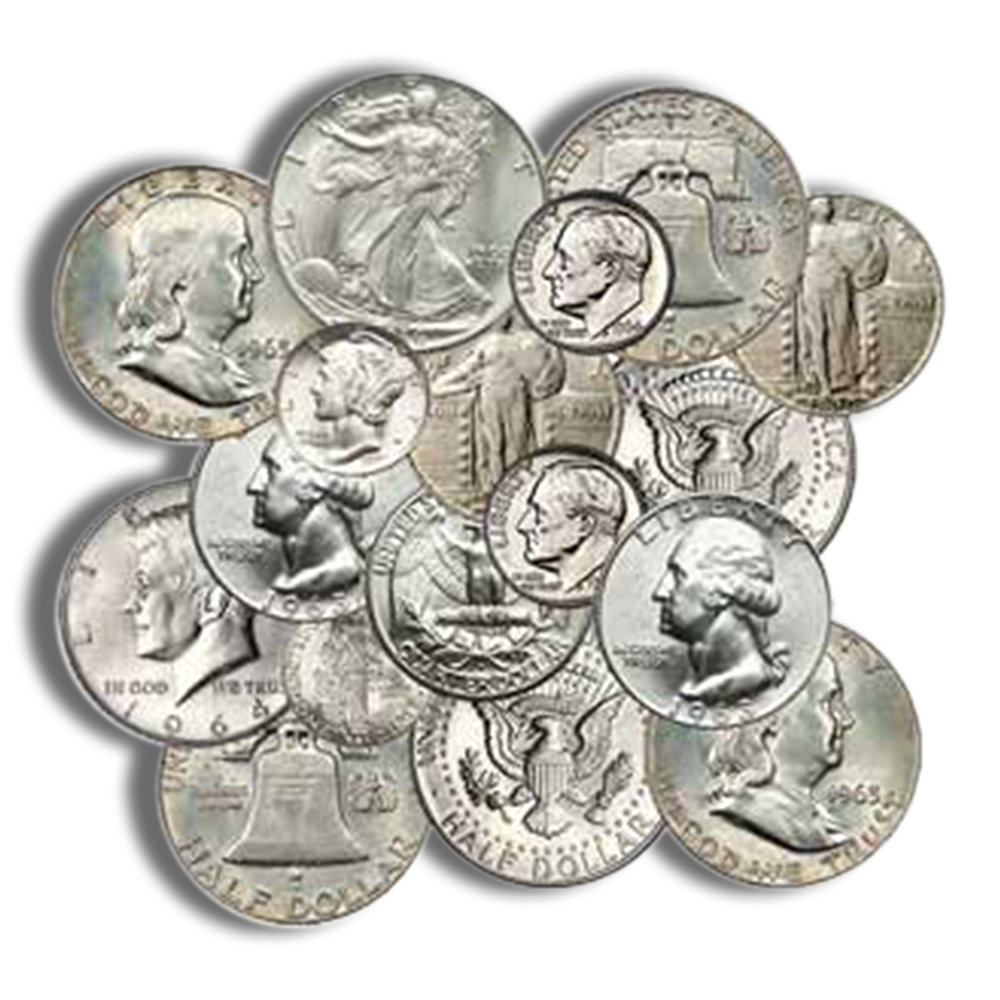
$1 FV 90% Silver Coin Various Denominations (Pre-1965)
A one-dollar face-value lot of qualifying 90% silver denominations. Check the offered mix and condition.
View Current Price & Availability →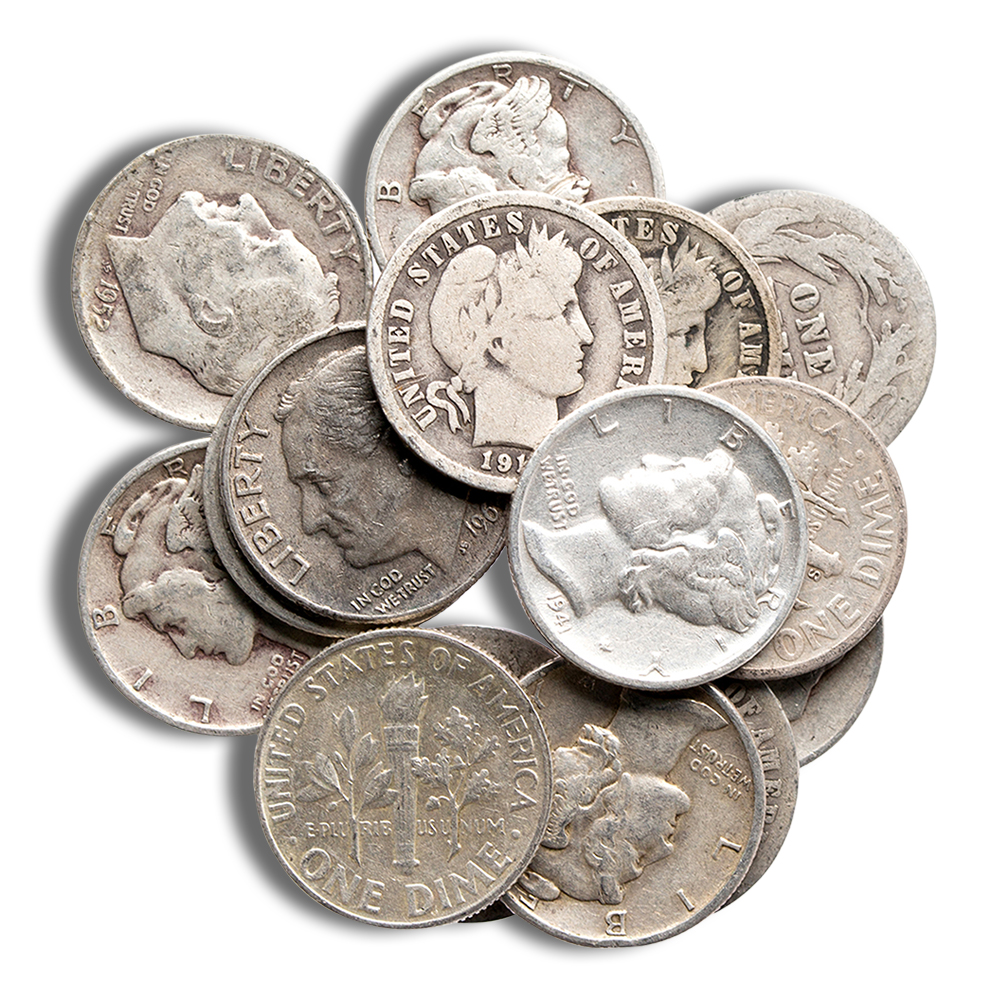
$1 FV 90% Silver Roosevelt Dimes
Ten qualifying Roosevelt dimes total one dollar in face value. Review the listing’s dates and condition terms.
View Current Price & Availability →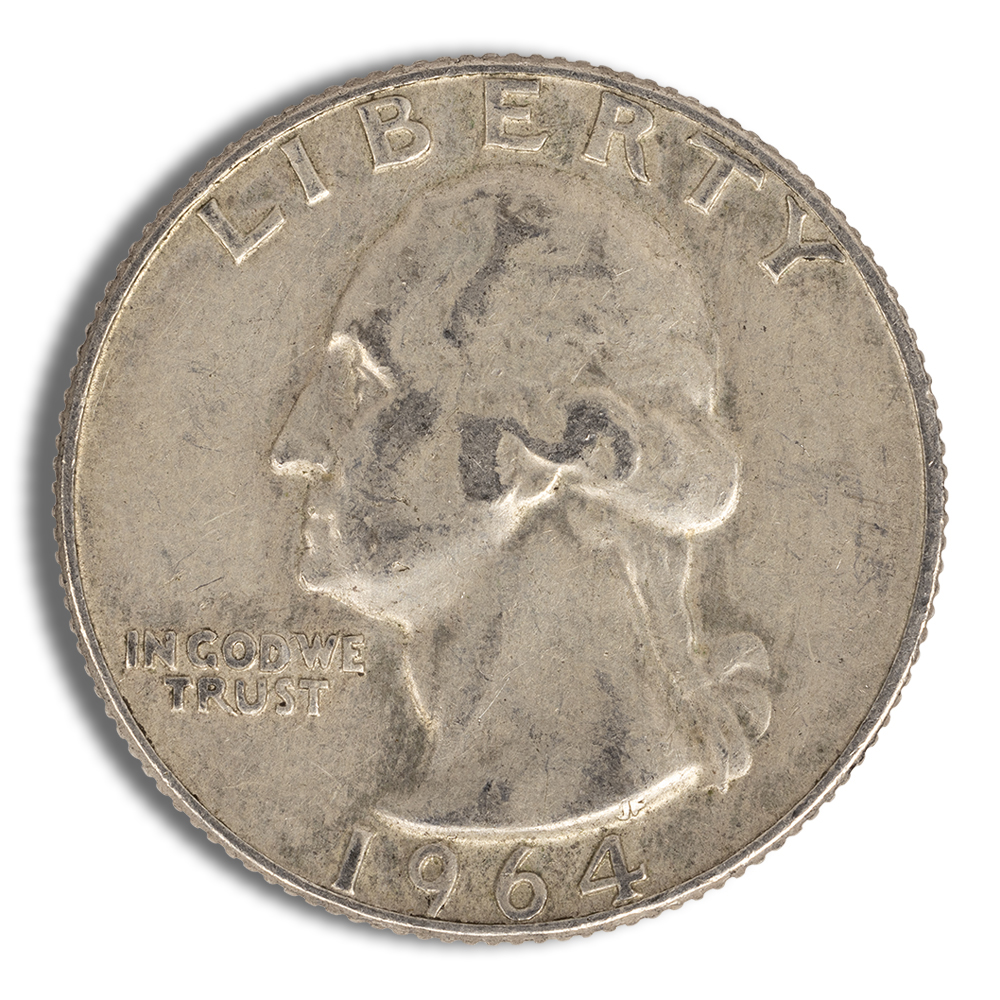
$1 FV 90% Silver Washington Quarters
Four qualifying Washington quarters total one dollar in face value.
View Current Price & Availability →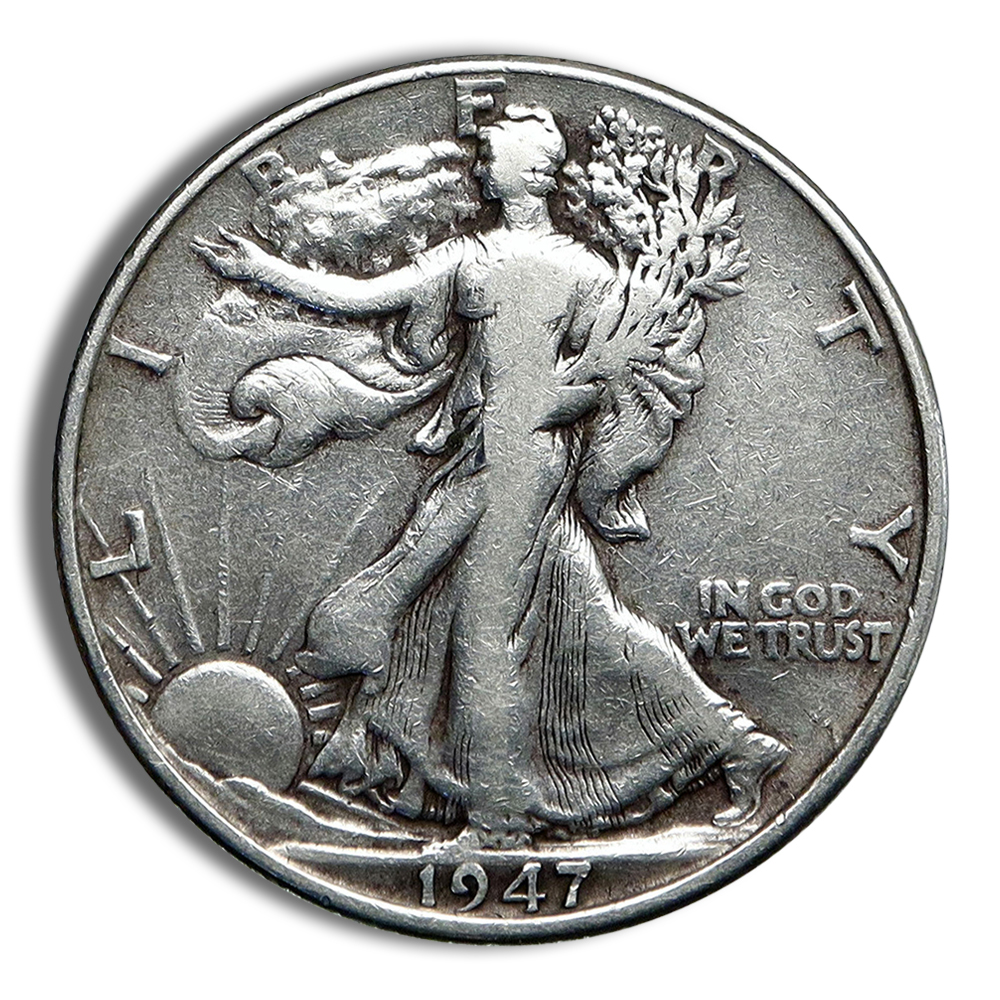
$1 FV 90% Silver Walking Liberty Half Dollar
Walking Liberty halves sold by face value under the listing terms. Two half dollars total $1 face.
View Current Price & Availability →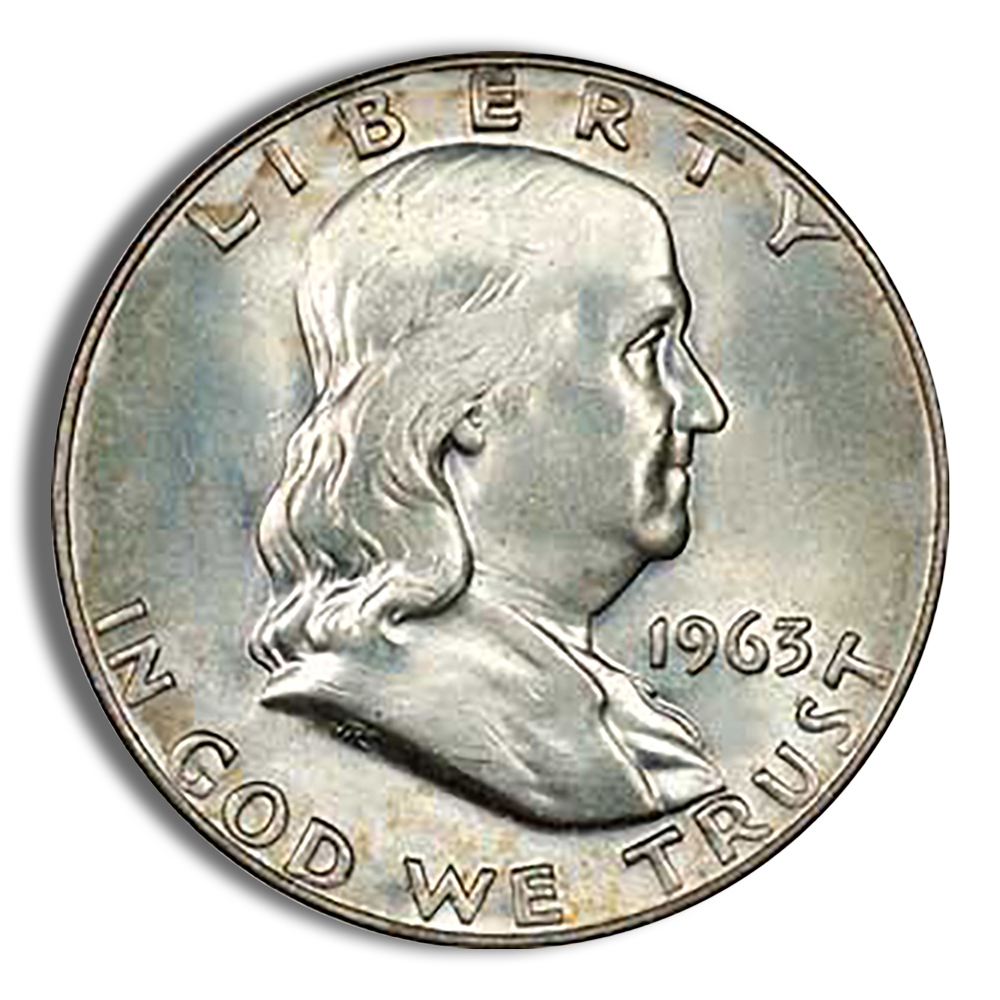
$1 FV 90% Silver Franklin Half Dollars
Two Franklin halves per dollar of face value. Compare dates, wear, and total delivered cost.
View Current Price & Availability →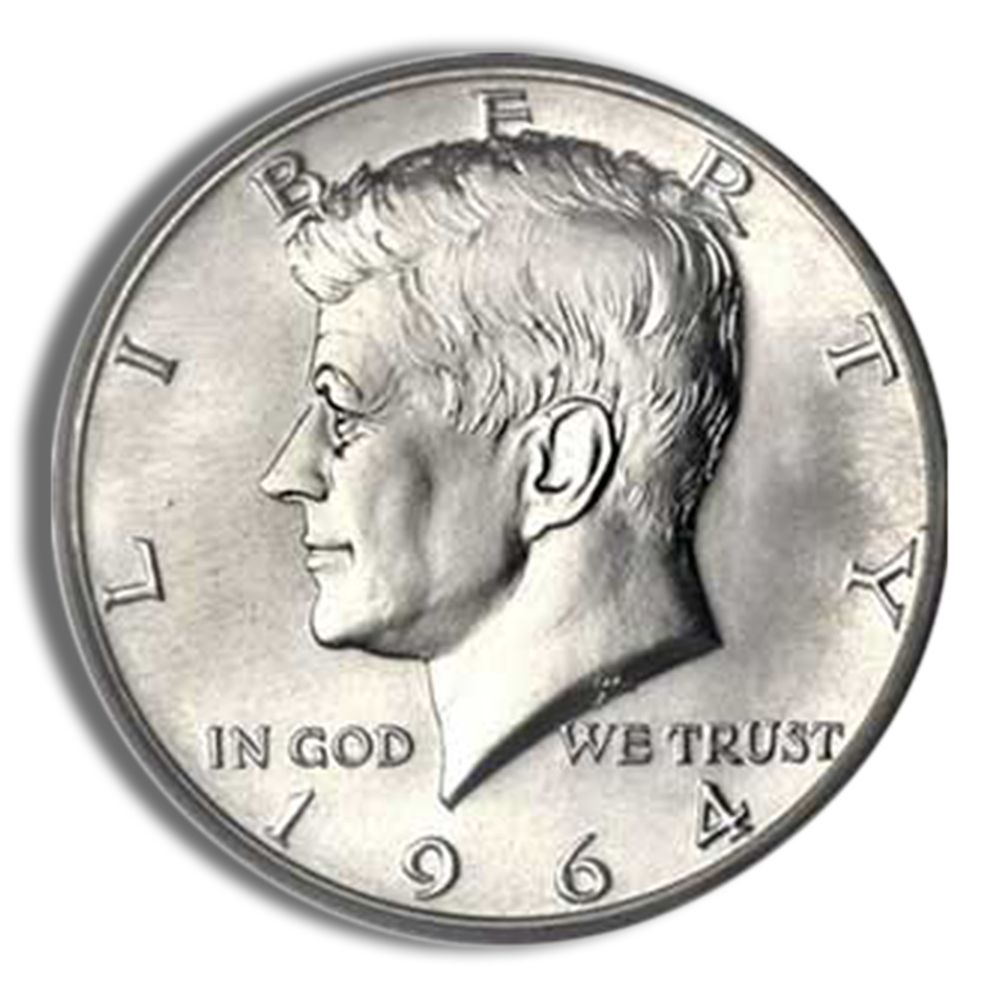
$1 FV 90% Silver 1964 Kennedy Half Dollars
The 1964 90% silver issue, distinct from the 40% silver halves dated 1965–1970.
View Current Price & Availability →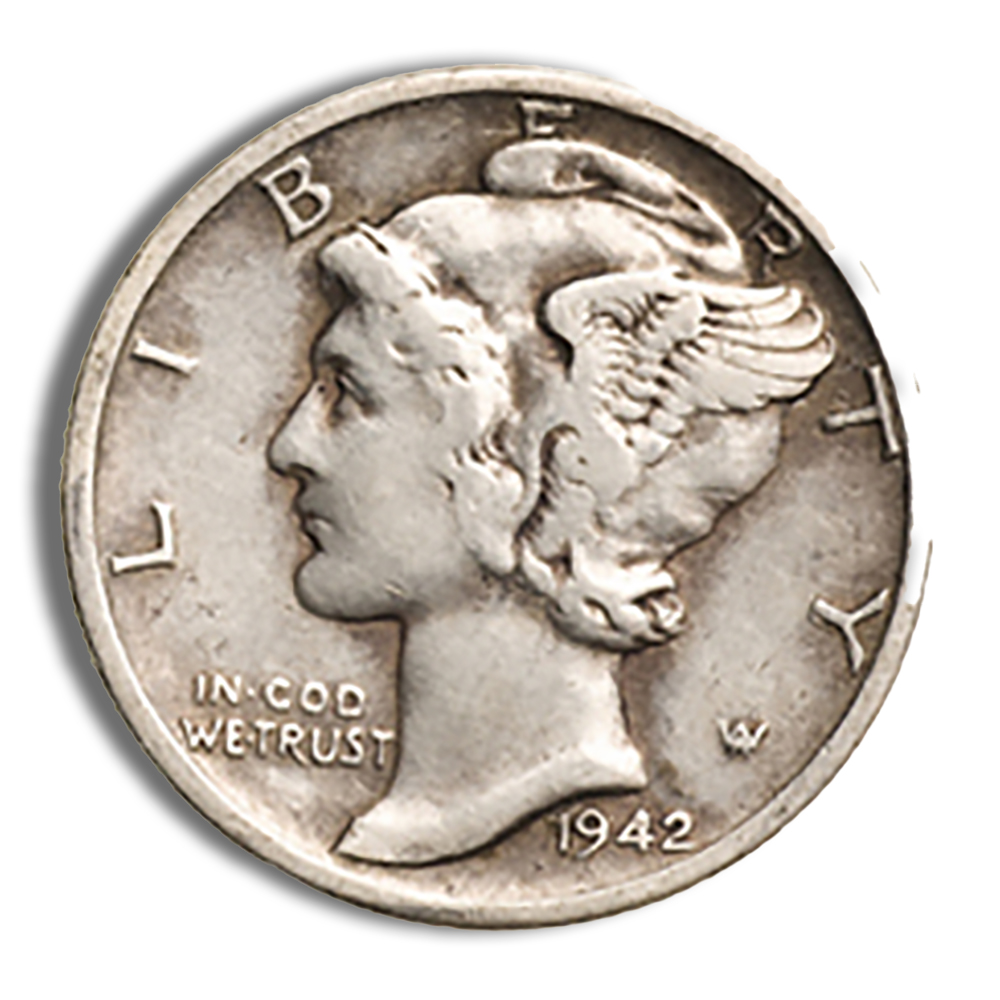
$1 FV 90% Silver Mercury Dimes
Mercury dimes sold by face value. Check dates, mint marks, and wear before treating a lot solely as bullion.
View Current Price & Availability →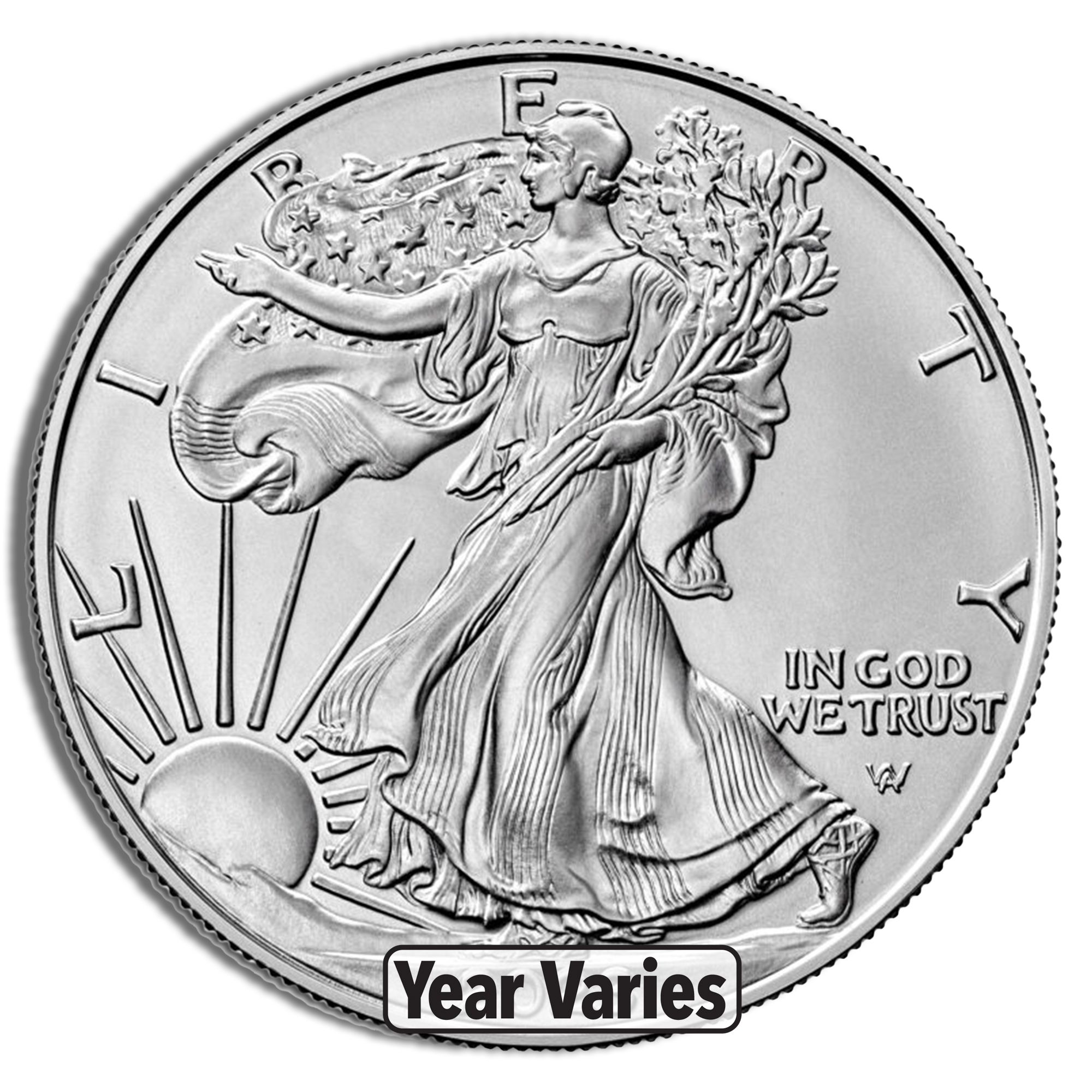
Silver American Eagle – BU (Year Varies)
A .999 fine American Silver Eagle with one troy ounce of fine silver. Use the per-coin preset, not the 90% face-value method.
View Current Price & Availability →Images may be representative. Prices, premiums, years, packaging, order quantities, and availability can change. Open each product page for current specifications and checkout terms.
Frequently Asked Questions
What is silver coin melt value?
It is the estimated market value of the silver contained in a coin: fine-silver weight multiplied by a silver spot price. It excludes collector premiums and does not promise what a dealer will pay.
How much silver is in $1 face value of 90% coins?
Common 90% dimes, quarters, or halves total approximately 0.7234 troy ounce at original full weight. A common circulated trading estimate is 0.715 troy ounce per $1 face value. The latter is a convention for wear, not a measurement of every lot.
Why is a dealer offer different from melt value?
A dealer may account for authentication, sorting, condition, quantity, demand, handling, shipping, refining, and resale costs. Compare the complete written offer with the calculator using the same spot reference and weight assumptions.
Does this calculator determine rare-coin value?
No. It estimates silver content value only. It cannot evaluate a date, mint mark, variety, grade, originality, or eye appeal. Set aside potentially collectible coins for a separate assessment.
What silver price should I enter?
Enter a current silver spot quote in U.S. dollars per troy ounce and record the provider and quote time. When comparing a dealer’s offer, ask whether its calculation uses a bid, ask, or another reference. This calculator does not fetch live prices.
Why does the per-coin result differ from the face-value estimate?
Individual presets use rounded original specification-based silver weights. Circulated face-value mode uses 0.715 troy ounce per $1 to allow for ordinary wear. The full-weight face-value mode uses 0.7234; small differences from adding individual presets can result from rounding.
Sources and Buyer References
- NGC — U.S. Silver Coin Melt Values and Coin Specifications
- U.S. Mint — Historic Coin Production
- U.S. Mint — First Striking of New Half Dollars
- U.S. Mint — Historic and Modern Morgan and Peace Dollars
- PCGS — Wartime Silver-Alloy Jefferson Nickels
- NIST — Precious-Metals Weight Conversions
- Agate — Silver Rate per Ounce
Educational information only. The calculator does not authenticate, grade, or appraise coins and does not provide an offer to buy or sell. Product specifications and transaction terms should be confirmed before acting.