
A 100g gold price starts with the live gold spot quote, but spot alone is not the amount a buyer pays. To estimate the metal value of a 100 gram gold bar, convert its stated fine-gold content to troy ounces and multiply by spot. Then compare that result with the listing’s retail ask and all required checkout charges to identify the premium and total cost.
Key Takeaways
- A 100 gram bar is about 3.21507 troy ounces by gross weight; use the bar’s stated fineness to calculate its fine-gold content precisely.
- For a bar marked 100 g, .9999 fine, the spot-based metal reference is:
(100 × 0.9999 ÷ 31.1034768) × spot price per troy ounce.- Dollar premium is the total purchase cost minus the spot-based metal reference. Premium percentage is that difference divided by the metal reference.
- A retail ask is not the same as spot value or a future buyback offer. Compare like-for-like listings using the same spot timestamp, purity, and total required costs.
Price-method note, reviewed September 5, 2026: This article intentionally does not publish a cached “current” gold price. Gold quotes and retail listings can move during the day. Enter a timestamped quote from a reliable market-data source and the exact bar’s stated weight and fineness before relying on any result. For the bigger picture, see Agate’s guide to how spot prices and bullion premiums work.
The 100 gram gold bar formula
Use the bar’s fine-gold content, not its label alone. The standard conversion is 31.1034768 grams per troy ounce. NIST’s precious-metals conversion reference uses the same factor and shows that a troy-ounce price can be divided by 31.1034768 to obtain a price per gram.1
Fine gold in troy ounces = (bar weight in grams × stated fineness) ÷ 31.1034768

Spot-based metal reference = fine gold in troy ounces × gold spot price per troy ounce

Dollar premium = total purchase cost − spot-based metal reference

Premium percentage = (dollar premium ÷ spot-based metal reference) × 100
For a bar marked 100 g, .9999 fine, the calculation is:
Fine gold in troy ounces = (100 × 0.9999) ÷ 31.1034768
                           ≈ 3.214753 troy ounces

Spot-based metal reference = 3.214753 × live gold spot price per troy ounce
If a manufacturer explicitly states a different fine-gold weight, use that stated fine weight. If the bar has a different purity, substitute its decimal fineness. For example, .999 is 0.999; .995 is 0.995. Do not assume fineness from appearance, packaging, or a seller’s photograph.
Start with the right number: 100 grams is not 100 regular ounces
Gold spot is conventionally quoted per troy ounce, not the regular avoirdupois ounce used for many everyday goods. A 100 gram bar equals approximately 3.215075 troy ounces before a fineness adjustment. That distinction prevents a common error: multiplying a dollar-per-troy-ounce quote by an ordinary-ounce conversion or rounding the bar to “three ounces.”
| Calculation input | What to use | Why it matters |
|---|---|---|
| Bar weight | The weight stamped by the manufacturer, such as 100 g | Establishes the amount being valued |
| Fineness | The stated purity as a decimal, such as .9999 | Converts gross metal weight to a fine-gold basis |
| Spot quote | A timestamped USD-per-troy-ounce quote | Creates a consistent market reference |
| Listing price | The exact retail ask for the exact bar | Reveals the product premium when compared with metal value |
| Required checkout costs | Any mandatory charges shown for the transaction | Needed to calculate total acquisition cost fairly |
This calculation produces a spot-based metal reference, sometimes called a melt-value reference in bullion comparisons. It is a mathematical estimate of the contained fine gold at the selected spot price. It does not mean the bar should be melted, and it is not an appraisal, authentication finding, guaranteed resale offer, or forecast.
What a 100g gold price includes—and what it does not
A listing may present one number while readers use the word “price” to mean several different things. Keeping the terms separate makes comparisons much clearer.
| Term | Meaning | What it does not tell you |
|---|---|---|
| Spot price | A market reference price for gold, generally quoted per troy ounce | The retail price of a specific physical bar |
| Spot-based metal reference / melt value | Fine-gold content multiplied by the chosen spot quote | The exact amount a buyer will pay or a dealer will offer |
| Retail ask | The seller’s listed price for the specified bar before any required checkout additions | The full transaction cost or future resale value |
| Bullion premium | The amount above the spot-based metal reference for a standard physical bar | A permanent charge that is guaranteed to be recovered later |
| Collector premium | A value above bullion content tied to rarity, condition, special packaging, or collector demand | A universal feature of all gold bars |
| Dealer bid / possible buyback offer | A live offer a buyer may make after reviewing the exact item and terms | A promise that every dealer will pay the same amount |
| Buyback spread | The difference between a dealer’s sell-side price and its buy-side price, or between comparable retail and bid quotes | A fixed, universal percentage across dealers or dates |
The LBMA Gold Price is one recognized benchmark, administered independently by ICE Benchmark Administration, but a benchmark is still different from a retailer’s physical-product ask.2 Likewise, the CFTC advises buyers to compare actual metal weight and the retail price, and to ask about a dealer’s buyback price before committing.3
Why a physical 100 gram bar can cost above spot
The difference between a bar’s metal reference and its retail ask is not automatically a sign that something is wrong. A physical bar must be refined, fabricated, packaged when applicable, distributed, handled, and offered for sale. The exact premium can also reflect the refiner, product format, brand recognition, demand, inventory conditions, payment method, and the seller’s published terms.
A 100 gram format is substantially larger than a one-gram bar, so fixed per-piece costs may be spread over more gold. That can make the percentage premium lower in some comparisons, but it is not a rule that replaces a live calculation. Use the same method across formats; Agate’s one-gram gold bar value guide shows the smaller-format version of the calculation.
A worked example using hypothetical numbers
The following example demonstrates the math only. It is not a live quote, a current Agate price, a fee schedule, a bid, or a forecast.
Assume all of the following:
- Gold spot: $4,000.00 per troy ounce
- Bar marking: 100 g, .9999 fine
- Hypothetical retail ask: $13,175.00
- Hypothetical required checkout additions for this example: $0.00
- Taxes are excluded because rules and treatment depend on the transaction and jurisdiction.
| Step | Formula | Hypothetical result |
|---|---|---|
| Fine-gold grams | 100 × 0.9999 |
99.99 g |
| Fine-gold troy ounces | 99.99 ÷ 31.1034768 |
3.214753 oz t |
| Spot-based metal reference | 3.214753 × $4,000.00 |
$12,859.01 |
| Total purchase cost before any excluded taxes | $13,175.00 + $0.00 |
$13,175.00 |
| Dollar premium | $13,175.00 − $12,859.01 |
$315.99 |
| Premium percentage | ($315.99 ÷ $12,859.01) × 100 |
2.46% |
The useful question is not whether $315.99 is inherently “good” or “bad.” It is whether the same calculation, performed with the same spot timestamp, shows a reasonable difference relative to comparable 100 gram bars with similar purity, brand, condition, and terms. If a purchase has mandatory handling, payment, or other disclosed transaction charges, add them before calculating the premium. Confirm any taxes or policy-dependent charges directly with the seller or a qualified adviser; they are outside this educational example.
How to compare two 100g bars fairly
A lower product-page number does not always mean a lower total cost. Apply the following sequence to two listings viewed at the same time.
- Verify the metal specification. Record the gross weight, stated fineness, refiner or mint, and whether the product is standard bullion or has a collectible feature.
- Capture one spot quote and timestamp. Use the exact same market reference for both calculations. Do not compare Monday’s spot calculation with Friday’s retail ask.
- Calculate the contained-metal reference. Use the formula above and the stated fineness for each bar.
- Record the actual retail ask. Note whether the listing is for a named refiner, an “our choice” bar, sealed packaging, or another specified format.
- Add only mandatory, disclosed transaction costs. Total the amounts required to complete the purchase. Do not guess at charges that have not been presented.
- Calculate dollars and percentage above the metal reference. Both measures matter: dollar premium shows the absolute difference; percentage makes bar sizes easier to compare.
- Ask about the other side of the transaction. If future resale flexibility matters to you, request a current, item-specific buyback quote or explanation of the dealer’s process. A quote can change and is not guaranteed merely because a bar is commonly recognized.
For a broader sense of how bar weights fit together, use Agate’s gold bar size and weight guide. It is a format reference, while this article is specifically about pricing a 100 gram bar from a live spot quote.
Brand, packaging, and collector features can change the comparison
Two bars with the same calculated metal reference may not command the same retail price. A recognized refiner, intact assay card, special design, limited edition, or presentation packaging may influence the product premium. That added amount is better described as a product or collector premium than as additional gold content.
Do not automatically treat packaging as proof of authenticity or assume a collector premium will be returned on resale. Authentication and appraisal are separate services and judgments. If verification is needed, work with an appropriate professional or dealer who can inspect the actual item. For buyers deciding between very small fractional gold products, the 1 gram gold bar versus 1/10 oz gold coin premium comparison explains why sticker price alone is not a fair metric.
A simple 100g gold price worksheet
Use this fill-in worksheet with current information. It is designed to make assumptions visible before you compare listings.
| Field | Your entry |
|---|---|
| Spot source and timestamp | |
| Gold spot price per troy ounce | |
| Bar weight in grams | 100 g or actual listed weight |
| Stated fineness | |
Fine-gold troy ounces: (grams × fineness) ÷ 31.1034768 |
|
| Spot-based metal reference | |
| Retail ask | |
| Mandatory, disclosed checkout additions | |
| Total purchase cost before any excluded tax treatment | |
| Dollar premium | |
| Premium percentage | |
| Current item-specific buyback information, if obtained |
Keep the listing URL, product description, invoice, and date with your worksheet. If the bar is later evaluated or sold, the original information helps distinguish the original retail purchase from a new dealer’s live assessment.
100 Gram Gold Bars to Compare
Use one spot timestamp and compare the exact purity, brand, packaging, total delivered cost, and current premium for each live listing.
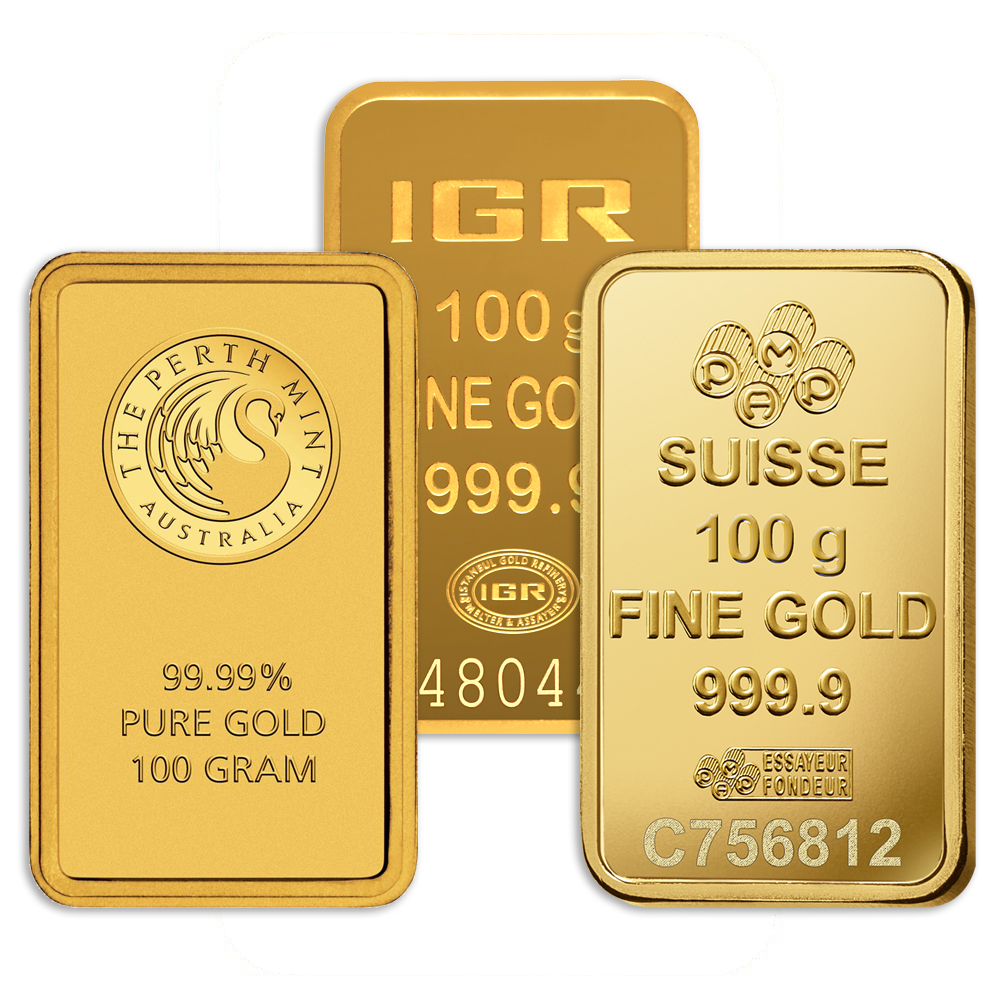
100 gram Gold Bar – Brand Varies (No Card)
A 100-gram gold bar where the qualifying brand is selected from available inventory.
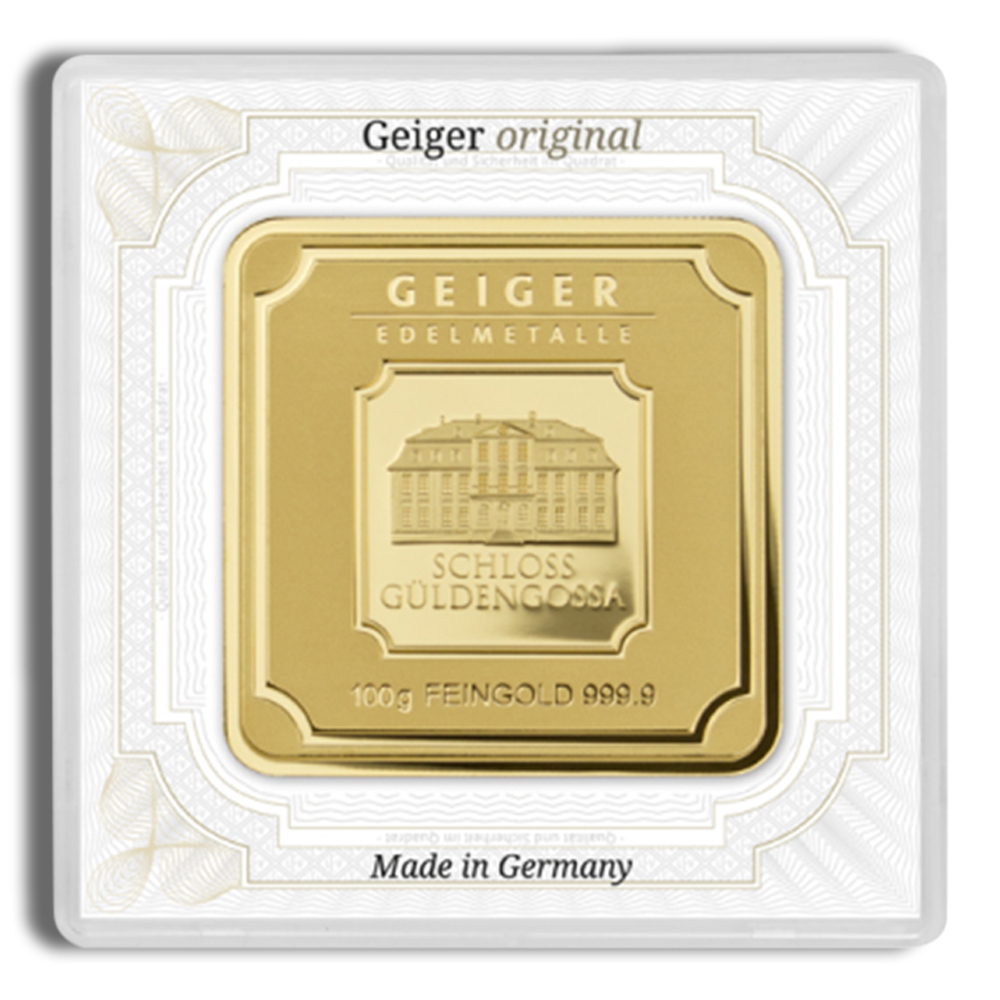
100 gram Gold Bar – Geiger (In Assay)
A 100-gram Geiger gold bar presented in assay packaging.
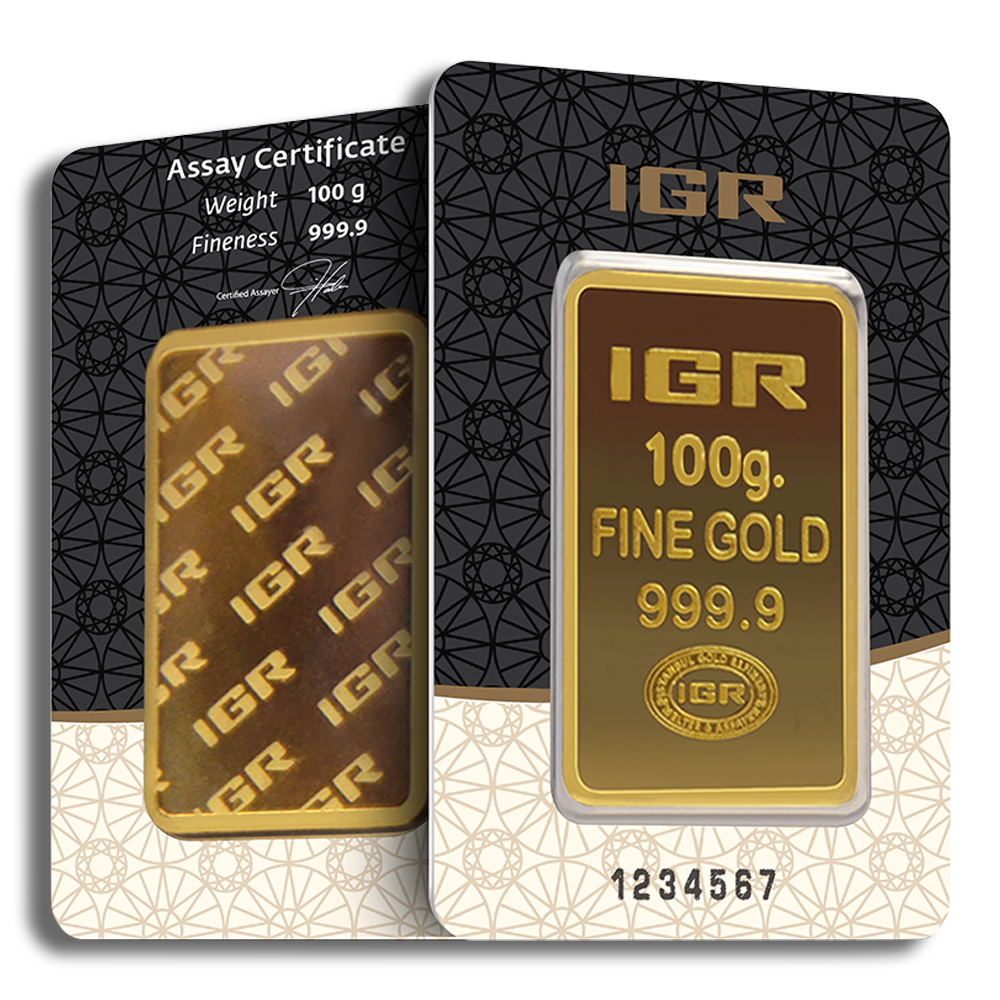
100 gram Gold Bar – IGR Metals (Carded)
A 100-gram IGR Metals gold bar in carded presentation.
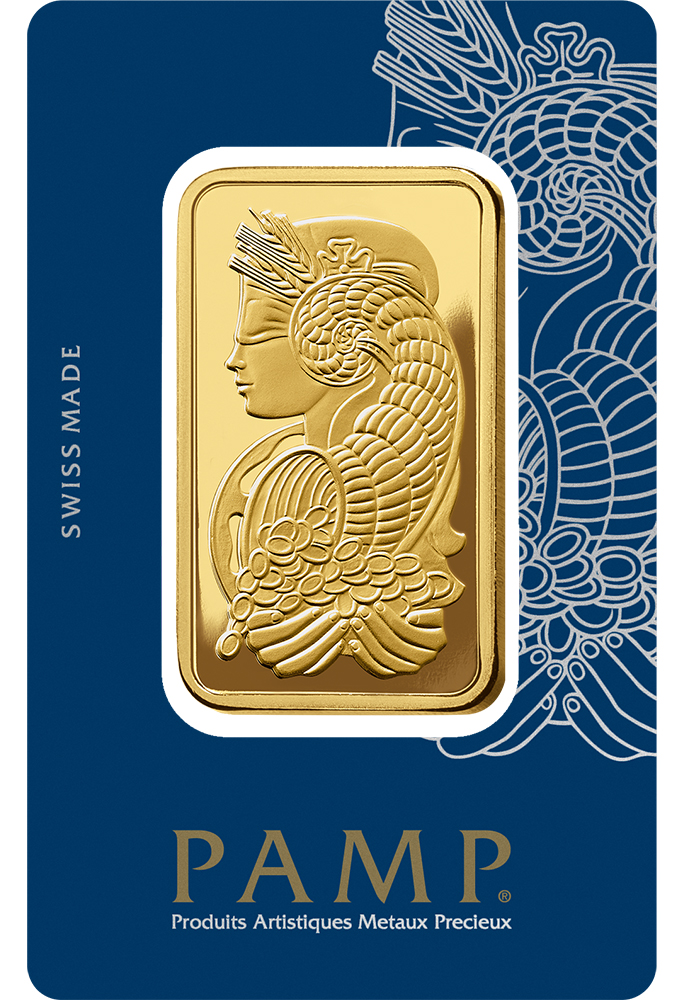
100 gram Gold Bar – PAMP Fortuna (Carded)
A 100-gram PAMP Fortuna gold bar in carded presentation.
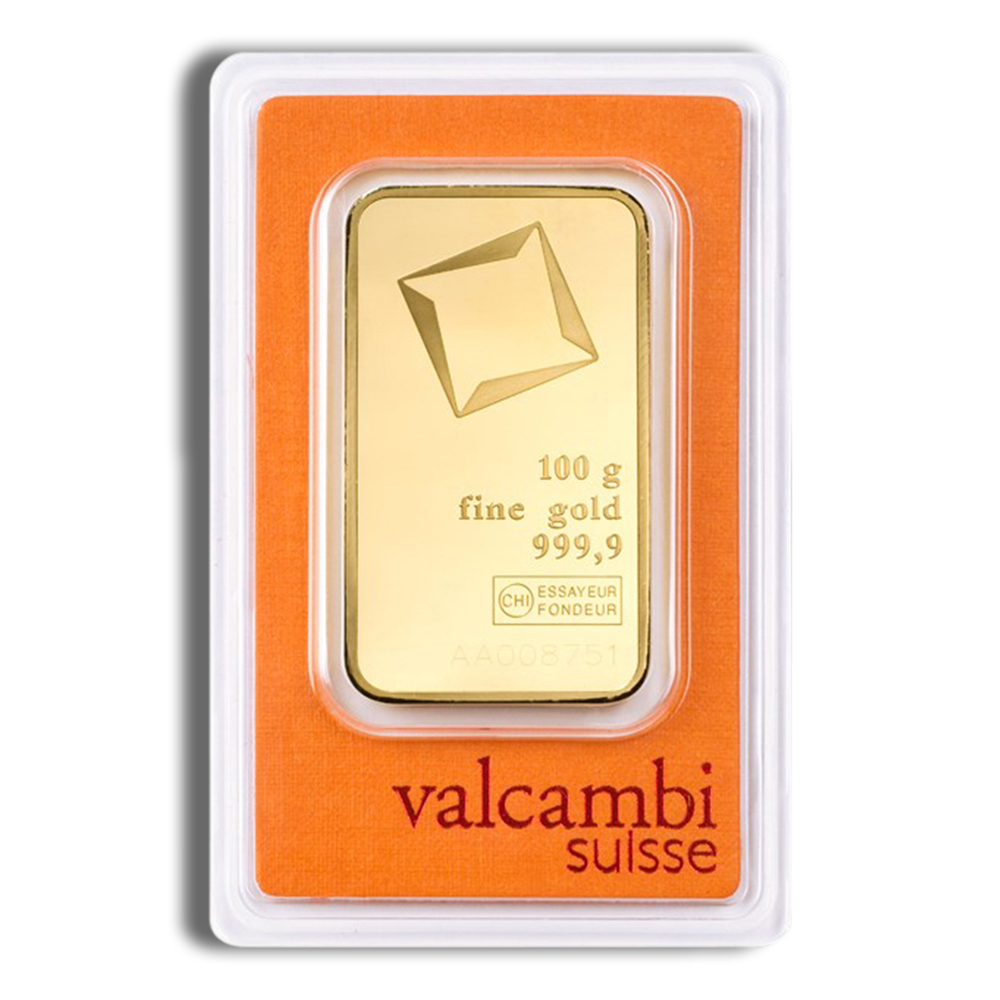
100 gram Gold Bar – Valcambi (Carded)
A 100-gram Valcambi gold bar in carded presentation.
Product pages, images, specifications, prices, premiums, packaging, and stock were reviewed September 5, 2026 and can change. The live listing controls the order.
What Agate Can Verify
Agate can verify the product name, stated metal, weight, purity, condition, packaging, and current transaction terms shown on its live listing. Availability, prices, premiums, payment methods, shipping, returns, and buyback conditions can change. Confirm the exact listing and applicable policies before ordering.
Frequently Asked Questions
How much is a 100 gram gold bar worth at spot?
A spot-based value is calculated by multiplying the bar’s fine-gold content in troy ounces by a timestamped spot quote. For a 100 g bar marked .9999 fine, use (100 × 0.9999 ÷ 31.1034768) × spot price per troy ounce. The result is a metal reference, not necessarily the retail price or a buyback offer.
How many troy ounces are in a 100 gram gold bar?
One hundred grams equals about 3.215075 troy ounces by gross weight. If the bar is marked .9999 fine and you adjust for stated fineness, the calculation uses about 3.214753 fine troy ounces. Check the manufacturer’s specifications if it states a fine-gold weight differently.
Why is the retail price of a 100g gold bar higher than spot value?
Retail pricing can include fabrication, packaging, distribution, inventory, transaction processing, and dealer margin, as well as refiner, format, and market-demand differences. The amount above the spot-based metal reference is the premium. Compare the premium in both dollars and percentage terms after adding mandatory disclosed purchase costs.
Is a 100 gram gold bar’s melt value the same as its resale price?
No. A melt-value or spot-based reference is math based on stated fine content and a selected market quote. A resale offer depends on the live bid, buyer, product verification, brand, condition, packaging, quantity, and local market conditions. A dealer may quote below, near, or in some situations differently from the bare metal reference; obtain a current item-specific quote.
Does a lower premium percentage guarantee a better choice?
No. Premium percentage is a useful comparison tool, but it is only one factor. Total cash outlay, product recognition, condition, packaging, seller terms, and possible resale options can matter. This article is educational information, not individualized investment or financial advice.
Should a special-edition gold bar be valued only by gold content?
Its gold content provides a transparent baseline, but a special edition may also have a collector premium. Whether that premium has resale value depends on the specific item and market at the time. That assessment should not be confused with a bullion calculation or assumed to be permanent.
Bottom line
To calculate a 100 gram gold bar price, begin with a timestamped spot quote and convert the bar’s stated fine-gold content into troy ounces. Then add the exact retail ask and any mandatory disclosed checkout costs. The difference from the spot-based metal reference is the premium—not a prediction of a future return or a guaranteed buyback amount.
The calculation is simple enough to repeat every time a listing changes. That repeatability is the point: it lets you compare a 100g bar with another bar on the same terms rather than relying on a headline price alone.
Sources
Disclosure
This article is for general educational purposes only and is not individualized investment, financial, tax, legal, insurance, appraisal, or authentication advice. Prices, spot quotes, premiums, bids, inventory, availability, product specifications, payment options, fees, shipping terms, and policies change. Verify the live listing, the exact bar’s markings, all transaction terms, and applicable rules before acting. No calculation in this article predicts market movement, resale proceeds, or tax outcomes.