
How to Start Coin Collecting: Types, Grades, and Budget
How to Start Coin Collecting: Types, Grades, and Budget
Start coin collecting by choosing one manageable theme, setting a comfortable budget, and learning how to identify a coin’s date, mint mark, type, and condition. Buy slowly, keep records, and protect original surfaces. You can build an interesting collection without chasing rare dates or paying for the highest grade.
The best first collection is one you enjoy enough to study. A handful of inexpensive coins you can explain is a stronger foundation than a box of impulse purchases. Give yourself a clear starting point and permission to leave expensive gaps unfilled.
Choose a collection you can finish—or enjoy building
A date set aims to collect different years within one series. A mint-mark set adds another layer. A type set gathers representative designs rather than every date. A theme collection might focus on animals, a country, historical figures, or a period you find interesting.
The U.S. Mint’s getting-started guide introduces different approaches to collecting. Use those ideas as a menu. You do not need an expensive specialty before you have learned the basics.
| Approach | Useful first step | Budget trap to avoid |
|---|---|---|
| Pocket-change collection | Identify designs and dates already available to you | Paying for common coins without checking change first |
| Type set | Select a few representative designs | Assuming every example must be a top grade |
| Date set | Research the difficult dates before buying the easy ones | Discovering late that one key date exceeds your budget |
| World-coin theme | Pick a country or subject and learn identification | Confusing a souvenir token with an official coin |
| Bullion-coin collection | Separate silver or gold content from collector premium | Treating every premium as recoverable investment value |
Set a budget before opening a product page
Decide on a total amount for the next month or quarter. Include holders, reference books, shipping, and any applicable tax. If you plan to buy certified coins, the holder does not eliminate the need for research or make a high price reasonable.
For a hypothetical $100 hobby budget, you might reserve $20 for storage and learning materials and keep $80 available for coins and order costs. That is a budgeting example, not a claim about what any particular coin costs today. The useful habit is leaving room for ownership expenses instead of spending every dollar on the first purchase.
Write down a maximum price for each planned acquisition. If the right example is unavailable, wait. A collecting plan should help you say no to an unsuitable coin, even when a sales page suggests urgency.
Learn to describe a coin accurately
Record its country, denomination, year, mint mark if present, and design or series. Photograph both sides. Use a dependable reference to distinguish a normal issue from a variety. A small mark may be a mint mark, part of the design, a scratch, or post-mint damage; do not turn every unfamiliar feature into an error claim.
Understanding parts of a coin helps you ask precise questions. The obverse and reverse are its two main faces; the edge is the outer side. A seller who can clearly identify the item is easier to evaluate than one relying on adjectives such as “rare” or “investment quality.”
Grades, proofs, and holders: what the words mean
A grade is an assessment of condition. Proof refers to how a coin was produced, not a guarantee that it is undamaged or exceptionally valuable. An uncirculated coin can still have contact marks from manufacture or handling. A protective capsule is not the same as professional certification.
Professional services use defined grading standards; consult PCGS grading terminology when reading a certified label. Compare coins within the same series because wear patterns and striking characteristics differ. Learning to notice surfaces is more useful than memorizing a grade number without looking at examples.
A graded coin can provide a useful reference specimen, but there is no requirement to begin with one. If you buy a slabbed coin, check the certification record and ask for clear holder photographs. Certification does not promise that you can resell at your purchase price.
Make the first purchase deliberate
- Identify the exact coin you want and why it fits your collection.
- Compare similar examples, including condition and packaging.
- Read the seller’s contact, payment, delivery, and return terms.
- Ask whether the image shows the actual coin or a representative example.
- Save the listing and invoice after purchase.
Our guide to evaluating a precious-metals dealer helps frame seller questions. If your theme includes silver bullion, use the coins, rounds, and bars comparison to avoid confusing a private round with the coin type you intended to collect.
Use a certified product as a learning example
The product below shows how date, series, grading company, and grade combine in a listing. It is an example to study, not a requirement for a beginner’s collection or a promise that a top-grade coin is the best use of your budget.
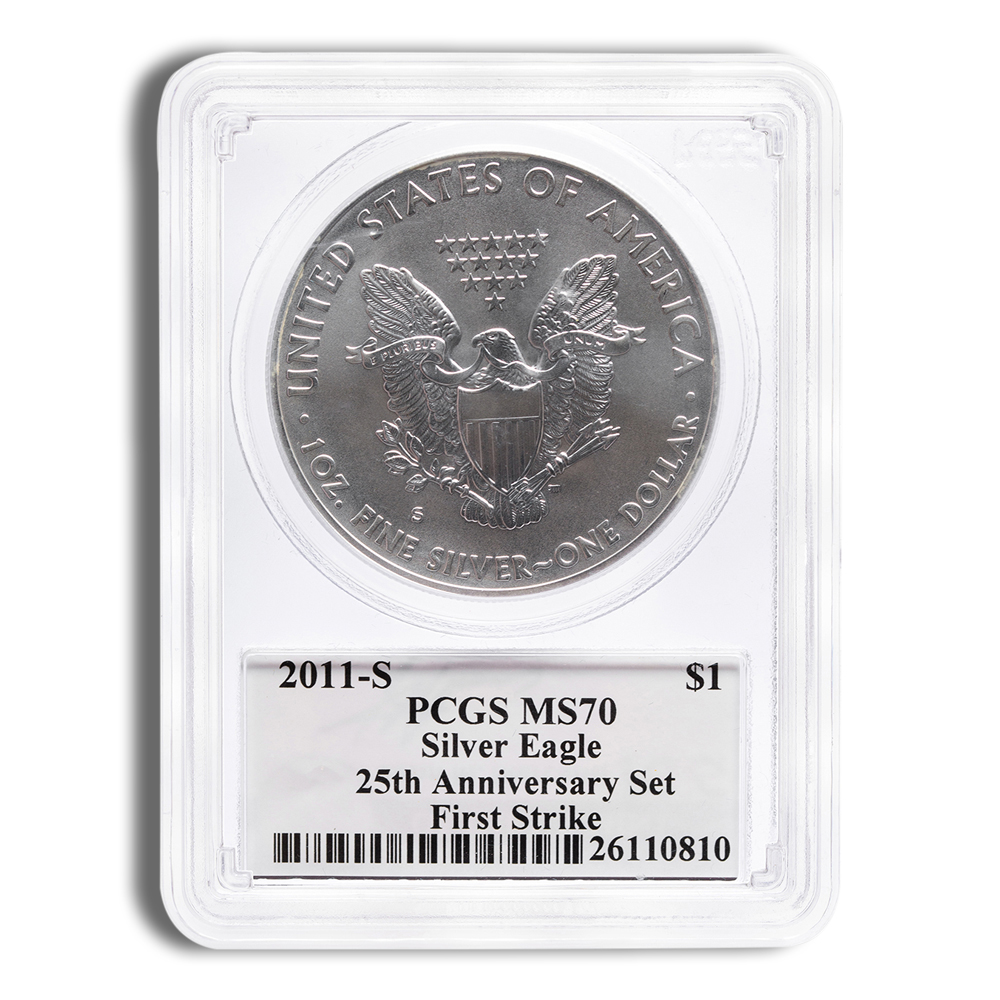
2011 Silver Eagle PCGS MS70
Read the 2011 date, Silver Eagle series, PCGS certification, and MS70 grade as separate identifying details.
View product details and availability →Product listing reviewed September 18, 2026. Price and availability can change. Collector demand and future resale premiums are not guaranteed.
Store and record what you buy
Choose holders intended for coins and avoid materials that can damage surfaces. Handle coins by the edges over a soft surface, keep them dry, and retain original packaging when available. The U.S. Mint’s care guide explains why suitable holders and careful handling matter. Do not polish a collectible coin to make it look newer.
Your inventory can be a simple spreadsheet: item number, description, purchase date, seller, total cost, certification number, and photograph filename. Keep a backup separate from the collection. Do not post storage locations or sensitive invoice details when sharing pictures online.
A sensible first-month plan
Spend the first week choosing a theme and reviewing a reference. In the second week, compare examples without buying. Make one small, deliberate acquisition when you can explain the date, type, condition, and cost. At the end of the month, review what you learned and whether the theme still interests you.
Browse Agate’s coin and bullion catalog with that plan in hand, and return to the education hub when a term needs explaining. A collection grows through better decisions as much as through more coins.
Frequently asked questions
How much money do I need to start collecting coins?
There is no fixed minimum. You can begin by organizing coins you already own, then set a budget for purchases and suitable storage.
Should a beginner buy rare coins immediately?
There is no need. Learning identification and condition on affordable examples can make later decisions more informed.
Is every old coin valuable?
No. Age is only one characteristic. Demand, scarcity, condition, metal content, and authenticity all matter.
Should every coin be graded?
No. Submission and shipping costs may exceed any benefit. Research likely value and your reason for certification first.
Can I clean coins before putting them in an album?
Avoid polishing or abrasive cleaning. It can change original surfaces and reduce collector interest. Ask a qualified professional if conservation seems necessary.