
How to Buy Gold Bars Safely: Assays, Dealers, Premiums, and Fraud Warnings
Agate Metals • Gold bar buying guide
How to Buy Gold Bars Safely: Assays, Dealers, Premiums, and Fraud Warnings
To buy gold bars safely, verify the dealer before paying, compare the total delivered price with the bar’s fine-gold value, review its markings and packaging, and obtain payment, delivery, and buyback terms in writing. A sealed assay card supports identification, but it does not replace a trustworthy seller and appropriate verification.
This guide is for U.S. buyers of physical gold bars, from first purchases to established holdings. It explains how to compare formats, evaluate dealers, understand premiums, inspect documentation, plan for resale, and recognize fraud. It also distinguishes ordinary bullion purchases from retirement-account transactions.
1. Decide What Type of Gold Bar You Actually Need
Define the product before comparing sellers. Gold bars differ by weight, refiner, purity, manufacturing method, packaging, and likely resale market. A 1 gram bar, 1 oz bar, 100 gram bar, and kilogram bar can have different premiums and transaction requirements.
For a first purchase, write down:
- Weight in grams or troy ounces, and whether it describes gross weight or fine-gold content.
- Stated purity, such as .9999 fine gold.
- The named refiner or the terms of a brand-varies listing.
- Minted or cast format.
- Sealed assay packaging, loose-bar condition, or other presentation terms.
- Your intended holding period and likely resale route.
- Your maximum total budget, including delivery and payment charges.
Smaller bars can fit a lower purchase budget and allow you to sell part of a holding without selling a larger bar. They often carry a higher premium per ounce. Larger bars may reduce the premium per ounce but require a larger transaction when resold.
Common bullion bars may carry lower premiums than comparable bullion coins, but this is not universal. Compare the exact products and current bids. Legal-tender status or a familiar design does not by itself guarantee easier resale or authenticity.
| Your priority | Format to compare | Tradeoff to check |
|---|---|---|
| Lower purchase amount | Small gram bars | Compare the higher per-ounce premium and packaging terms. |
| A standard one-ounce holding | Recognized 1 oz bullion bars | Compare delivered price and bids for the exact brand and condition. |
| More metal in fewer pieces | 100 gram or kilogram bars | Check resale transaction size, testing, storage, and divisibility. |
2. Verify the Dealer Before Sending Money
A polished website, social following, or award claim is not enough to establish reliability. Verify the business independently and make sure the seller you checked is the seller receiving your payment.
- Identify the legal business name and physical address.
- Confirm a working customer-service channel and written order terms.
- Read payment, cancellation, return, shipping, and buyback policies.
- Look for operating history and customer experiences outside the seller’s own website.
- Check complaint history and verify any claimed professional memberships or registrations with the relevant organization.
- Match the business identity across the website, invoice, payment recipient, and email domain.
FINRA’s physical-metals buyer guidance recommends checking online dealers’ addresses and operating histories, along with complaint information from consumer organizations and state regulators. A retail bullion purchase should not be assumed to carry the same oversight or protections as a brokerage account.
If a salesperson gives investment recommendations, ask about the relevant qualifications and registration, then verify them independently. Selling a gold bar and providing regulated investment advice are different activities.
Apply the same checks to marketplace sellers. A platform name does not authenticate a listing or establish the seller’s identity. Avoid purchases when the seller, ownership of the item, or transaction terms cannot be verified.
3. Compare the Full Price with Spot Value
Gold spot is a market reference commonly quoted in U.S. dollars per troy ounce. It is not the final retail price of a specific bar. Compare quotes using the same currency, fine-gold weight, and market timestamp.
Include these costs when comparing the amount due:
- Product price.
- Shipping, insurance, and handling.
- Payment-method surcharges or discounts.
- Applicable transaction taxes.
Review ongoing storage, account, insurance, and administrative charges separately as ownership costs. Also read cancellation and market-loss provisions before locking a price.
The dealer’s spread is the difference between its selling price and buying price for a comparable product at a given time. Ask for a current buyback price and all fees in writing. A small advertised purchase premium does not reveal the whole cost of entering and exiting the position.
Worked Example
Suppose a bar containing one fine troy ounce is advertised at $2,100, shipping is $20, and the observed spot reference is $2,000. Assume no other charges for this example.
| Item | Calculation | Result |
|---|---|---|
| Delivered price | $2,100 + $20 | $2,120 |
| Price per fine troy ounce | $2,120 ÷ 1 | $2,120 |
| Delivered premium | $2,120 − $2,000 | $120 |
| Premium percentage | $120 ÷ $2,000 × 100 | 6% |
The example makes two offers easier to compare. It does not predict gold’s price or establish that a 6% premium is appropriate for every bar.
4. Understand the Assay Card and Bar Markings
An assay card typically presents the manufacturer’s stated metal, weight, and fineness, sometimes with a serial number and security features. Packaging supports identification and may show evidence of tampering, but it can be copied or altered.
- Compare serial numbers when the product prints a number on both the bar and card.
- Match weight and fineness to the exact listing.
- Compare the refiner name, logo, markings, and packaging generation with appropriate manufacturer references.
- Check for unexplained cuts, lifting, resealing, or damaged packaging.
- Confirm that the invoice identifies the product you receive.
Not every genuine bar uses an individual visible serial number or a sealed card. The expected markings and presentation depend on the product, size, and production generation.
LBMA’s explanation of London Good Delivery describes the role of weight, fineness, markings, and assay standards in wholesale bullion. Those standards do not automatically certify each retail bar made by a listed refiner.
Follow official refiner verification instructions where available. If something does not match, preserve photographs and contact the seller before opening or altering the package. Ask an independent professional which tests are appropriate for the bar and packaging.
Read what an assay card tells you and what a precious-metal verifier can and cannot prove before relying on any single signal.
5. Check the Dealer’s Buyback Terms Before Purchase
Understanding how you could sell a bar later helps you compare its full transaction cost. Ask:
- Does the dealer buy the exact product, or quote generic gold by weight?
- Which spot reference and timestamp support the bid?
- Is there a minimum quantity or account requirement?
- Could shipping, testing, or processing deductions apply?
- What remains subject to inspection or authentication?
- When is the price locked, and when is payment issued?
- Do sealed and opened assay packages receive different treatment?
A larger bar may be economical to purchase but require a buyer willing to handle a larger transaction. Recognition, condition, demand, and the dealer’s inventory can all influence an offer.
A current buyback quote is not a guaranteed future price. Obtain the terms in writing and compare expected net proceeds after deductions.
6. Use a Documented Payment and Delivery Process
Use the dealer’s official website or independently verified contact information. Treat unexpected payment changes sent by email, text, or social media as a reason to stop and confirm directly. A secure connection protects transmitted information; it does not prove the business is legitimate.
Before paying, read the rules for the chosen payment method, including fees, clearance, cancellation, and any applicable dispute rights. Save:
- The exact product listing and price timestamp.
- The order confirmation, invoice, and payment record.
- Shipping, insurance, and signature requirements.
- Tracking details and delivery evidence.
- Return, damage, shortage, and non-delivery reporting instructions.
- Photos of the package and product when received.
Confirm that the shipping arrangement covers bullion, the shipment value, and the selected destination. Ask who bears the risk, when coverage ends, and how quickly a problem must be reported. Do not assume declared value, tracking, or a signature alone guarantees an insurance payment.
Follow the seller’s current inspection and reporting process. Preserve the outer packaging, labels, seals, and contents if anything appears damaged or incomplete.
7. Recognize Fraud and High-Pressure Sales Tactics
The CFTC’s precious-metals fraud advisory describes warning signs involving profit promises, manufactured urgency, unclear financing, and metal supposedly held in storage.
Pause a purchase when a caller or promoter:
- Guarantees that gold will rise or cannot lose value.
- Claims a secret event requires immediate action.
- Pressures you to move retirement savings quickly.
- Cannot clearly explain financing obligations or additional payment demands.
- Cannot identify where purchased metal is held or how ownership is recorded.
- Refuses written fees, commissions, or buyback terms.
- Redirects payment to an unexplained person or account.
- Tells you to buy bars and hand them to a courier for “safekeeping.”
8. Be Careful with Gold IRA and Storage Claims
A “gold IRA” generally refers to a self-directed IRA that holds permitted precious metals. It is not simply an ordinary retail bullion order. Product eligibility, custody, transactions, distributions, and tax treatment require separate attention.
The IRS explains the limited exceptions for certain coins and bullion . Its bullion exception includes fineness requirements and physical possession by a bank or approved non-bank trustee. A carded bar or a dealer’s sales label does not establish compliance on its own.
Confirm the exact product and custody arrangement with the receiving IRA custodian and a qualified independent adviser before using retirement funds. Compare dealer spreads, custody charges, storage, insurance, transaction fees, and potential tax consequences. Do not treat a sales representative as your tax or financial adviser.
Plan Storage for Personally Owned Gold
For gold purchased outside a retirement account, compare suitable home storage, a professional vault, or a bank safe deposit box according to your circumstances. Review theft and fire protection, access, documented ownership, fees, and insurance exclusions. A fire rating is not a burglary rating, and no storage method eliminates every risk.
For third-party storage, obtain the provider’s legal name and location, an explanation of how your ownership is recorded, inventory statements or audit arrangements, withdrawal terms, and coverage details. Do not accept vague assurances that the metal is “in a bank” or insured without reviewing the applicable agreement.
9. A Practical Pre-Purchase Checklist
Before submitting payment, confirm that you can answer “yes” to these questions:
- Do I know the exact weight, fineness, refiner, format, and packaging terms?
- Did I calculate the delivered price per fine troy ounce?
- Did I compare it with a dated spot-price observation?
- Are payment, cancellation, shipping, return, and buyback terms written down?
- Did I independently verify the seller’s identity and contact information?
- Does the invoice match the business, product, price, and payment recipient?
- Do I know which markings, serial details, and packaging to expect and how to report discrepancies?
- Is an appropriate storage or custody arrangement ready before delivery?
- Am I buying without a guaranteed-return promise, emergency story, or pressure tactic?
- If retirement funds are involved, have I obtained independent professional guidance?
- Does the purchase fit my budget, liquidity needs, and ability to bear a loss?
If several answers are “no,” pause until the missing information is clear. There is no single gold allocation or bar size suitable for every buyer.
Compare Carded Gold Bars
Use these Agate listings to compare smaller and one-ounce formats. Review the exact specifications, packaging, and delivered cost before ordering.
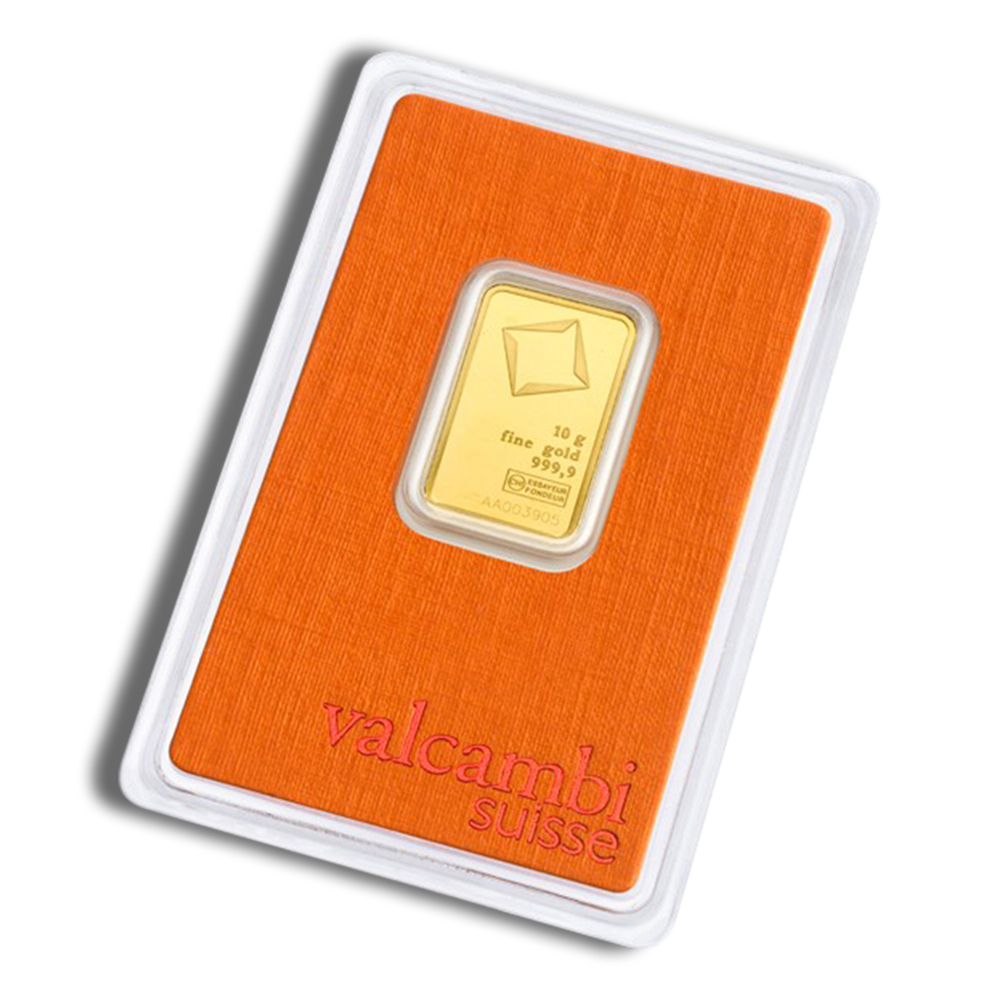
10 gram Valcambi Gold Bar — Carded
Carded gold in a smaller format. Review the listing, packaging details, and total delivered price.
View Current Price & Availability →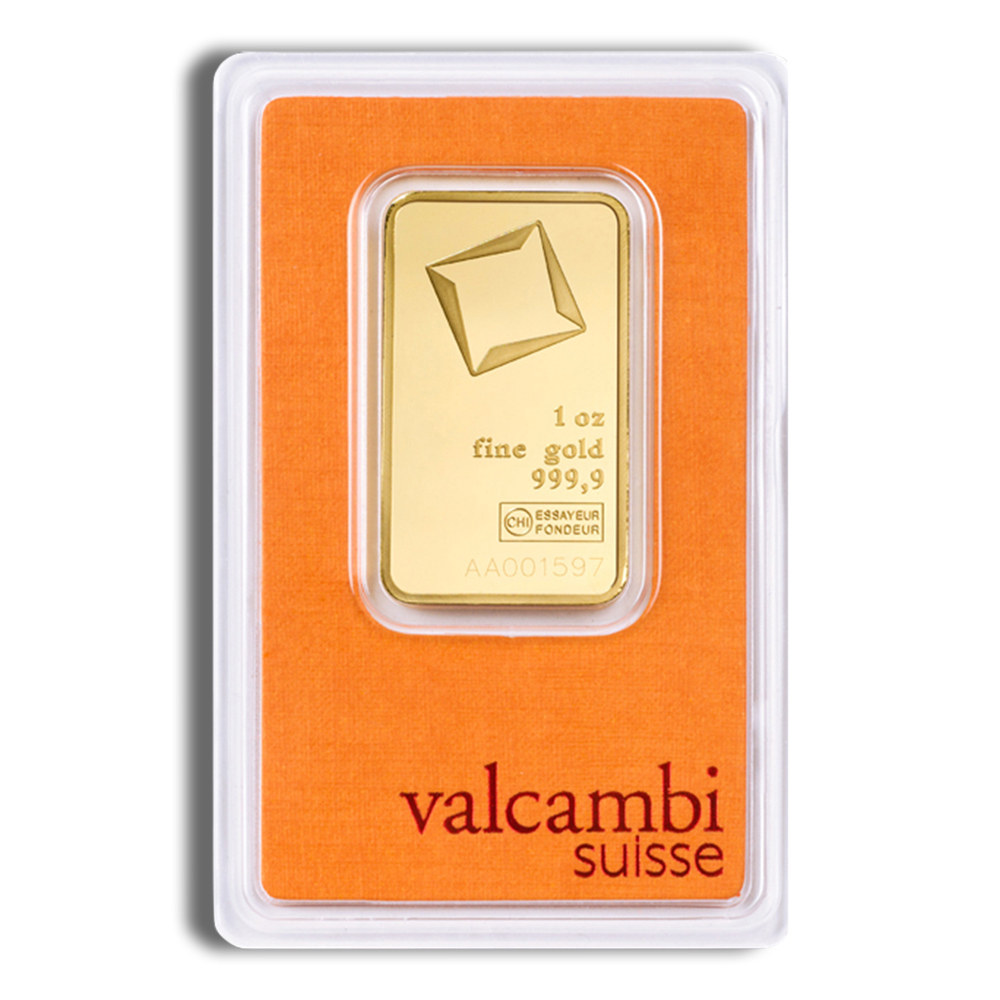
1 oz Valcambi Gold Bar — Carded
A one-ounce format for comparing delivered premiums and future resale options.
View Current Price & Availability →Images may be representative. Pricing, packaging, availability, and order terms can change. These links do not constitute an IRA-eligibility claim or a future buyback guarantee.
Frequently Asked Questions
Is it safe to buy gold bars online?
It can be, depending on the seller and transaction. Verify the business independently, compare the complete price, read payment and delivery terms, and preserve your records. A professional-looking website, secure connection, or sealed package does not by itself establish authenticity or reliability.
Does an assay card prove a gold bar is genuine?
No. It supports product identification and may provide tamper evidence, but cards and markings can be copied. Compare the bar, packaging, invoice, seller, and applicable serial numbers, and use appropriate professional testing when needed.
What is a fair premium for a gold bar?
There is no permanent percentage that fits every bar. Premiums vary with weight, refiner, product availability, payment method, and market conditions. Compare delivered price per fine troy ounce at the same spot-price timestamp, then ask for a current buyback quote and deductions.
Should I buy a larger gold bar to get a lower premium?
A larger bar may have a lower premium per ounce, but it requires a larger purchase and cannot be sold in smaller pieces without altering it. Compare your budget and likely resale needs with the price difference. Neither a larger bar nor a smaller coin is automatically the better choice.
Can a dealer guarantee that I will make money on gold?
Do not rely on a guaranteed-profit pitch. Gold prices can fall, and purchase premiums, buyback spreads, and ownership costs affect the result. A dealer’s current willingness to buy a product does not guarantee a profitable future sale.
Should I use a gold IRA to buy bars?
That requires a separate retirement, tax, and financial assessment. Confirm current rules, permitted products, custody, and fees with an appropriate IRA custodian and independent qualified professionals before moving funds. An ordinary retail purchase does not automatically become a compliant IRA transaction.
Make the Transaction Clear Before You Buy
Identify the exact bar, verify the dealer, calculate the delivered price per fine troy ounce, and obtain policies in writing. Understand what the assay and markings tell you, how the bar can be tested, and how a future sale would work. Stop when urgency or guarantees replace clear documentation.
This process helps first-time buyers and experienced owners identify questions before money changes hands. It reduces avoidable uncertainty without promising a risk-free purchase or a profitable investment.
Related Agate Guides
Sources and Review Information
- FINRA and CFTC — Questions to Ask Before Buying Physical Precious Metals
- LBMA — London Good Delivery: Gold and Silver
- CFTC — Precious Metals Fraud Advisory
- FTC — Gold-Bar Government Impersonation Scams
- IRS — Collectibles and Precious-Metals Exceptions
- Evident — Gold Bullion Testing and Surface-Analysis Limits
References reviewed . The worked example is hypothetical. Rules, provider terms, and product listings can change; source review does not establish current stock or a locked price.